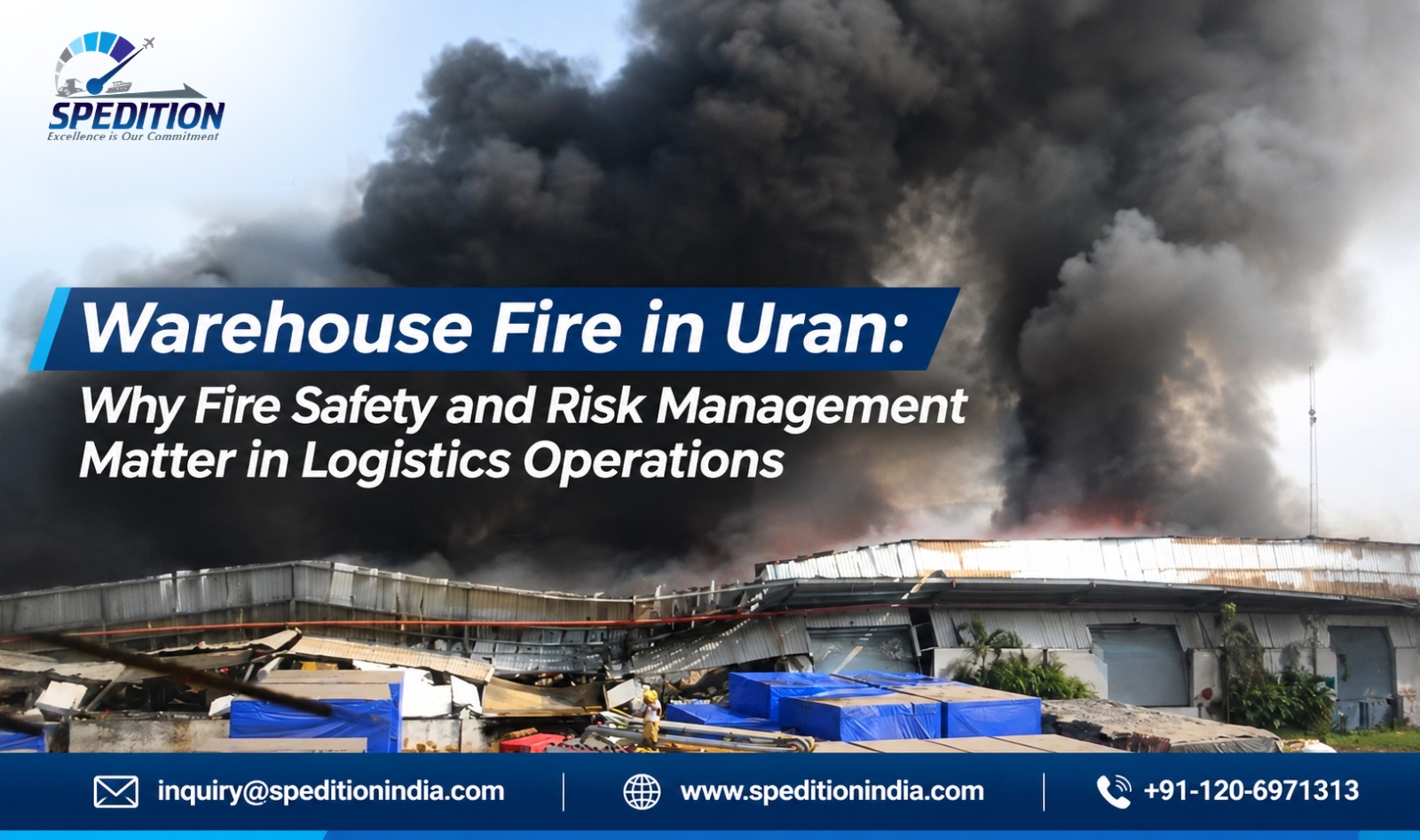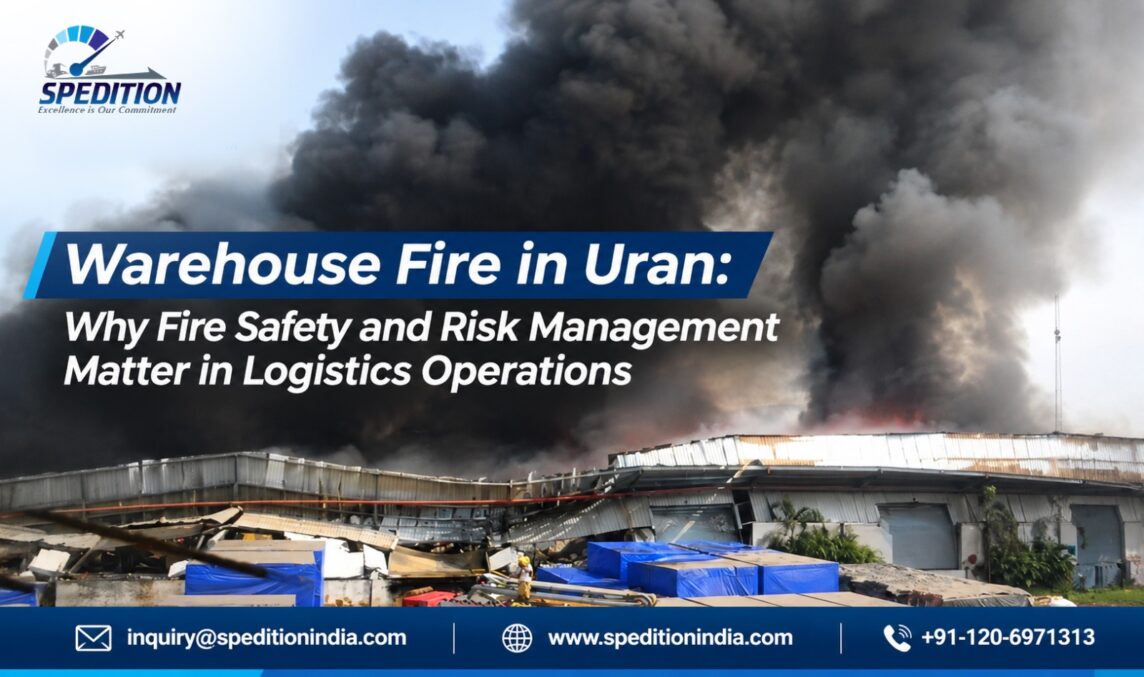
Warehouse Fire in Uran: Why Fire Safety and Risk Management Matter in Logistics Operations
The logistics industry depends on more than efficient transportation and timely deliveries. Behind every successful supply chain is a network of warehouses, storage facilities and distribution centres that must operate with safety, precision and preparedness.
A recent warehouse fire in Uran, Navi Mumbai, has once again brought attention to the importance of fire safety and risk management in logistics infrastructure.
What Happened in Uran?
On November 16, 2026, a major fire broke out at a warehouse operated by Platinum Logistics Solutions in Veshvi village, Uran, near Navi Mumbai. The facility reportedly stored imported consignments, including compressor oil, heavy-duty batteries and other goods awaiting customs clearance.
According to media reports, the fire spread across a significant portion of the premises, prompting a large-scale emergency response. Multiple fire tenders and water tankers were deployed to control the blaze. No casualties were reported in the initial coverage.
The presence of chemical goods and reports of oil barrels exploding during the incident added to the complexity of firefighting operations. The exact cause of the fire remains subject to investigation.
Why Warehouse Fire Safety Deserves Greater Attention
Warehouses play a critical role in the movement of goods across domestic and international supply chains. However, storing different categories of cargo under one roof also brings operational responsibilities.
Certain materials, including chemicals, oils, batteries and other potentially hazardous goods, require specialised storage conditions and appropriate safety measures.
Without adequate precautions, even a localised incident can escalate into a major operational disruption.
Here are some important areas that logistics operators and warehouse managers need to prioritise.
1. Proper Storage and Segregation of Cargo
Different cargo categories come with different storage requirements. Hazardous materials should be identified, classified and stored according to their compatibility and safety requirements.
Proper segregation helps minimise the risk of chemical reactions, leaks and fire-related incidents.
2. Fire Detection and Emergency Response Systems
Warehouses should have suitable fire detection systems, firefighting equipment, emergency exits and clearly defined evacuation procedures.
Regular inspections and maintenance are equally important to ensure that safety systems remain functional when needed.
3. Safe Handling of Hazardous Materials
Handling chemicals, flammable liquids, batteries and other sensitive cargo requires trained personnel and appropriate operating procedures.
From loading and unloading to storage and movement, every stage should follow relevant safety protocols.
4. Regular Safety Audits and Staff Training
Safety cannot depend on equipment alone. Periodic fire safety audits, emergency drills and employee training help ensure that warehouse teams understand potential risks and know how to respond during an emergency.
5. Business Continuity and Risk Preparedness
Warehouse incidents can affect inventory, transportation schedules, cargo movement and customer commitments.
Having emergency response plans, appropriate insurance coverage, alternative storage arrangements and clear communication protocols can help businesses manage disruptions more effectively.
The Bigger Picture: Safety Is an Essential Part of Supply Chain Management
The Uran warehouse fire is a reminder that supply chain efficiency and operational safety must go hand in hand.
As India’s logistics and warehousing sector continues to expand, the need for well-planned storage infrastructure, responsible cargo handling and stronger risk management practices becomes increasingly important.
For logistics companies, warehouse operators, freight forwarders and businesses handling sensitive cargo, safety should be an integral part of every operational decision.
A resilient supply chain is not defined only by how efficiently goods move, but also by how effectively risks are identified, managed and prevented.
At Spedition, we believe that responsible logistics begins with informed decisions, operational preparedness and a commitment to safer supply chain practices.
📩 inquiry@speditionindia.com 🌐 www.speditionindia.com 📞 +91-120-6971313