Skip to Content

Category Archives: Uncategorized

The Capacity Illusion: Why More Ships Don’t Always Mean More Availability

The Capacity Illusion: Why More Ships Don’t Always Mean More Availability

Every few months, the shipping industry announces another wave of new vessel deliveries. The natural assumption is simple: more ships should mean lower freight rates, easier bookings and smoother supply chains.

However, that’s not always how the market works.

Despite global container shipping capacity growing faster than trade demand in 2026, freight costs remain firm, schedules continue to fluctuate, and securing space on some trade lanes is still a challenge.

The reason lies in a concept that often goes unnoticed – Effective Capacity.

The Difference Between Fleet Capacity and Effective Capacity

One of the biggest misconceptions in shipping is that more ships automatically mean more available capacity.

  • Fleet Capacity refers to the total carrying capability of all vessels.
  • Effective Capacity is the space that’s actually available to move cargo efficiently.

And today, that’s where the gap lies.

Why Effective Capacity Is Still Limited?

Longer Shipping Routes

Many carriers continue avoiding the Red Sea, opting for longer voyages around the Cape of Good Hope. Longer transit times mean ships complete fewer trips each year, reducing available capacity.

Port Congestion

When vessels spend additional days waiting at ports, they can’t return to their next voyage on time. Even small delays across multiple ports create ripple effects throughout the supply chain.

Gradual Fleet Expansion

New vessels are delivered and deployed over time. Increased fleet size doesn’t instantly translate into excess capacity across global trade lanes.

Market Uncertainty

Seasonal demand, changing trade policies and geopolitical developments continue to influence booking patterns, keeping vessel space in demand despite fleet growth.

What This Means for Shippers

For importers and exporters, looking only at the number of new ships can be misleading.

A larger fleet doesn’t automatically guarantee:

  • Lower freight rates
  • Faster transit times
  • Easier equipment availability
  • Greater schedule reliability

Understanding Effective Capacity helps businesses make realistic logistics decisions instead of relying solely on market headlines.

The Bottom Line

In today’s shipping landscape, it’s not just about how many ships exist—it’s about how many are effectively moving cargo.

As global trade continues to evolve, businesses that understand this distinction will be better equipped to:

  • Plan shipments more effectively
  • Manage logistics costs
  • Build more resilient supply chains

At Spedition, we believe informed decisions create stronger supply chains. By keeping a close watch on market trends and translating them into practical insights, we help businesses navigate global logistics with greater confidence.

📧 inquiry@speditionindia.com 🌐 www.speditionindia.com 📞 +91-120-6971313
0 0 Continue Reading →

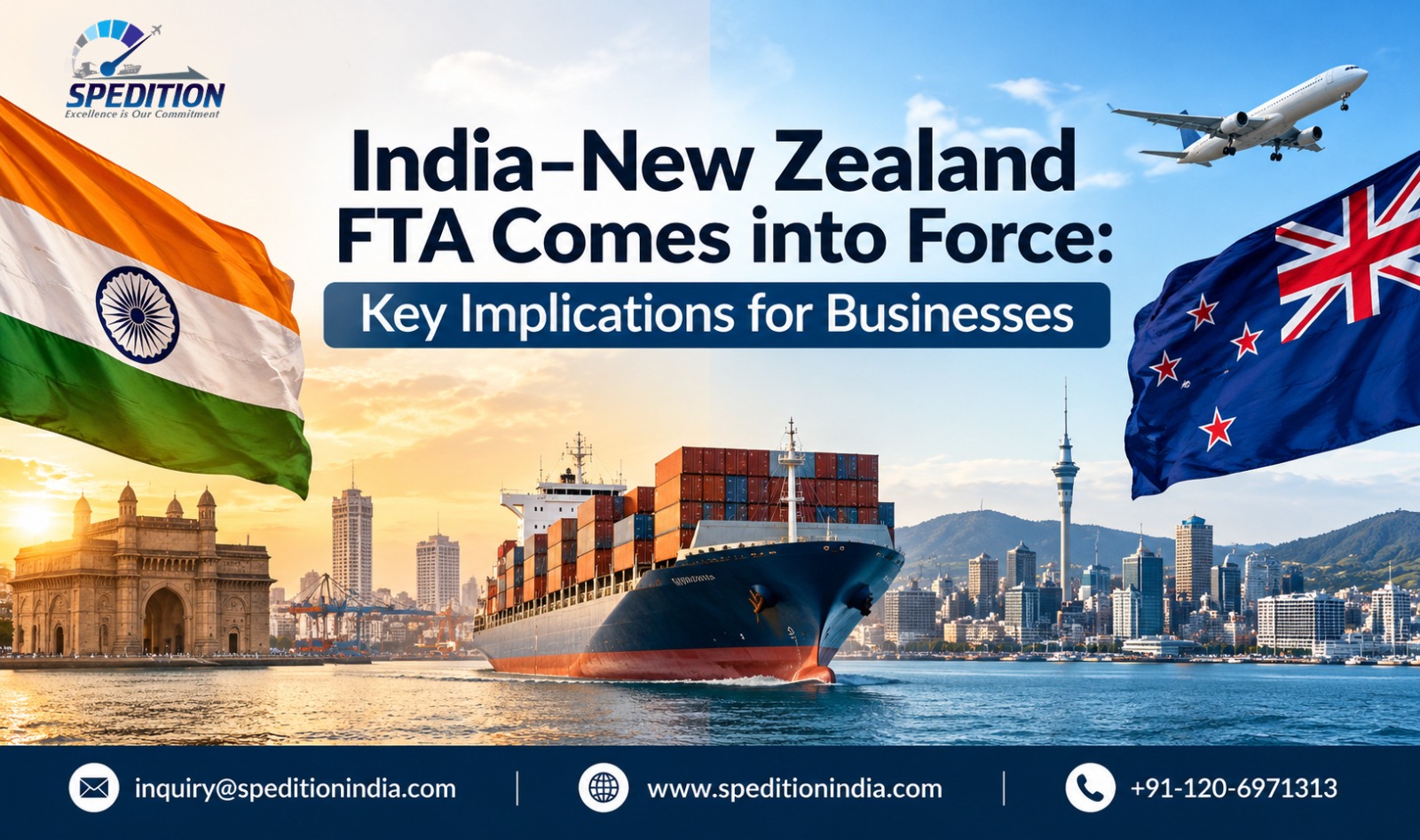
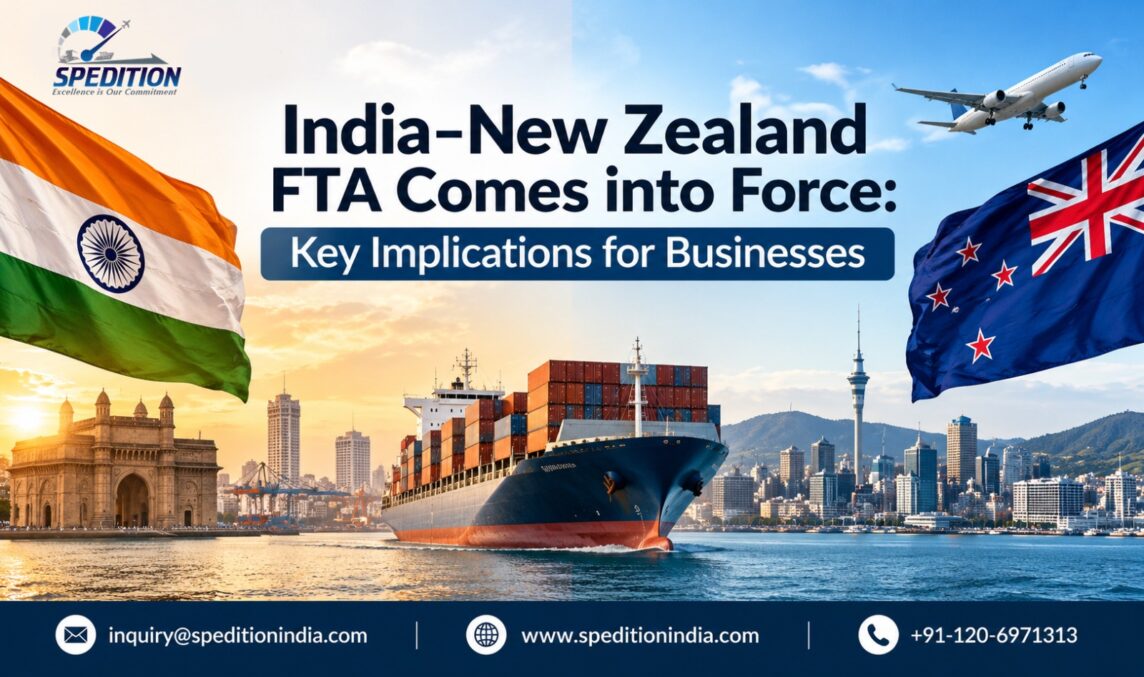
India–New Zealand FTA: A New Chapter for Trade & Logistics

India–New Zealand FTA: A New Chapter for Trade & Logistics


Trade agreements do more than reduce tariffs—they strengthen supply chains, create new market opportunities, and reshape global trade. The recent developments between India and New Zealand are a clear example.

The India–New Zealand Free Trade Agreement (FTA), signed in April 2026, marked a major milestone in bilateral trade. Building on this momentum, both nations have now elevated their relationship to a Strategic Partnership and launched a 2030 Roadmap, shifting the focus from an agreement on paper to long-term economic collaboration.

The FTA That Opened New Doors

The FTA introduced several landmark provisions, including:

  • 100% duty-free access for Indian exports to New Zealand.
  • A USD 20 billion investment commitment from New Zealand.
  • 5,000 temporary employment visas annually for skilled Indian professionals.
  • Greater market access and stronger trade, services, and investment cooperation.

These measures are expected to boost bilateral trade and make Indian exports more competitive.

A Broader Strategic Partnership

Prime Minister Narendra Modi’s recent visit to New Zealand further strengthened bilateral ties with the launch of a Strategic Partnership and a 2030 Roadmap focused on:

  • Trade and investment
  • Resilient supply chains
  • Maritime and Indo-Pacific cooperation
  • Technology, innovation, education, and clean energy

The FTA laid the foundation, this partnership builds on it with a long-term vision for sustainable economic growth.

What It Means for Businesses

Industries such as pharmaceuticals, engineering goods, textiles, food products, gems & jewellery, and auto components are expected to benefit from improved market access and stronger trade ties.

Businesses can look forward to:

  • Increased export competitiveness
  • Diversified supply chains
  • New investment and partnership opportunities
  • Greater confidence to expand into the New Zealand market

Why Logistics Will Matter More Than Ever

Growing trade volumes will increase the demand for reliable logistics, customs expertise, and efficient freight solutions. Businesses that plan ahead with the right logistics partner will be better positioned to capitalize on new opportunities while ensuring smooth cross-border cargo movement.

Turning Opportunity into Growth

The India–New Zealand partnership represents more than a trade agreement—it reflects a shared vision for stronger economic cooperation and future-ready supply chains.

As trade between the two nations grows, efficient logistics will remain the backbone of seamless global commerce.

At Spedition India, we help businesses navigate international trade with reliable freight forwarding, customs expertise, and end-to-end logistics solutions.

📧 inquiry@speditionindia.com 🌐 www.speditionindia.com 📞 +91-120-6971313
0 0 Continue Reading →

Beyond Steel: India’s Container Revolution

India’s ambitions to become a global manufacturing and export hub have taken another significant step forward. After years of relying heavily on imported shipping containers, the country is now making its mark in container manufacturing—a move that could strengthen supply chains, improve equipment availability, and support the future of India’s EXIM sector.

While shipping containers may appear to be simple steel boxes, they are one of the most critical components of global trade. Every shipment, whether by sea, rail, or road, depends on their availability. Without them, cargo movement slows, costs increase, and supply chains face disruptions.

Learning from the Pandemic

For decades, China has dominated global container manufacturing, supplying the majority of the world’s shipping containers. During the COVID-19 pandemic, container shortages exposed the risks of relying heavily on a single source. Exporters worldwide struggled to secure containers, freight rates reached record highs, and shipments were delayed across industries.

The crisis highlighted why container availability matters:

  • Shipment delays due to equipment shortages.
  • Higher freight costs as demand exceeded supply.
  • Disruptions in export schedules, impacting businesses across industries.
  • Greater dependence on overseas manufacturers for a critical logistics asset.

For India, it was a costly lesson, one that reinforced the importance of building a more resilient and self-reliant logistics ecosystem.

What This Means for India’s Trade

India’s growing focus on domestic container manufacturing could create several long-term advantages for businesses involved in global trade, including:

  • Better container availability during peak export seasons.
  • Reduced dependence on imported containers.
  • Stronger supply chain resilience during global disruptions.
  • Greater support for India’s expanding manufacturing and export sector.
  • Improved efficiency across the logistics ecosystem.

Combined with investments in ports, multimodal connectivity, and logistics infrastructure, domestic container manufacturing has the potential to become another important pillar of India’s trade growth.

Looking Ahead

Building a globally competitive container manufacturing industry will take time, investment, and collaboration. However, the direction is clear. As India continues strengthening its logistics infrastructure, initiatives like these will help create a supply chain that is more resilient, reliable, and future-ready.

Conclusion

India’s container manufacturing journey is about much more than producing steel boxes. It’s about strengthening the backbone of international trade, reducing supply chain vulnerabilities, and creating new opportunities for businesses engaged in global commerce.

At Spedition India, we continue to help businesses navigate an evolving trade landscape with reliable freight forwarding and end-to-end logistics solutions that keep global trade moving.

📩 inquiry@speditionindia.com 🌐 www.speditionindia.com 📞 +91-120-6971313
0 0 Continue Reading →

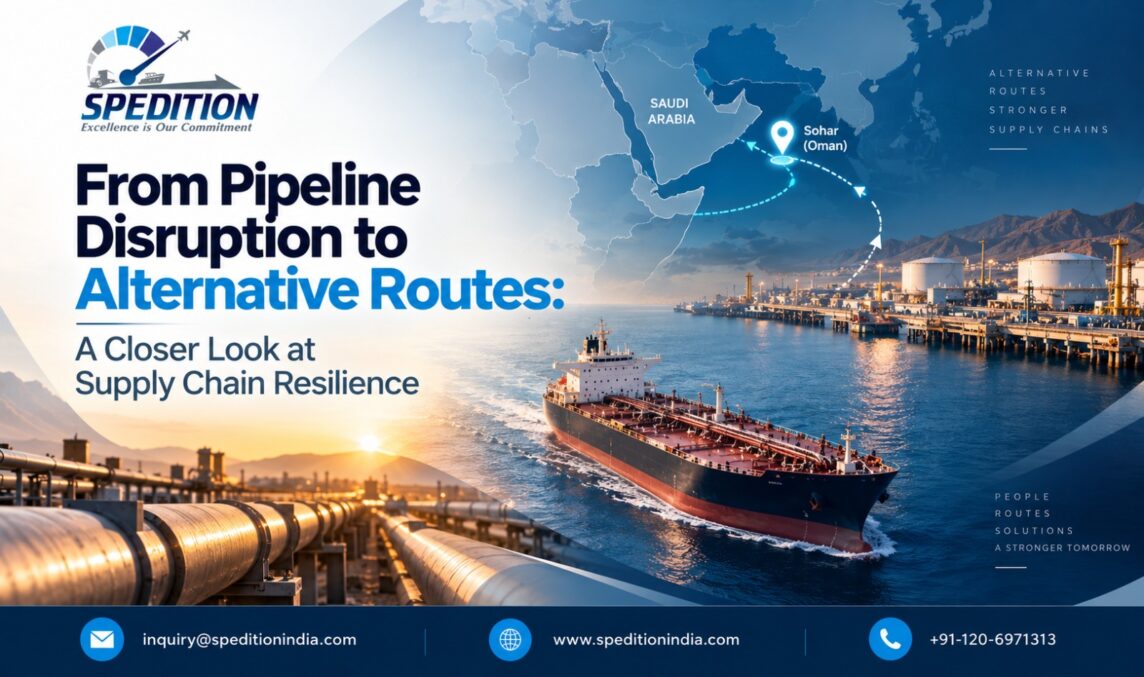
Strengthening India’s Pharma Supply Chain

Maersk’s dedicated reefer rail service connecting Hyderabad to Mumbai represents a significant advancement in India’s pharmaceutical logistics infrastructure.

With pharma exports depending heavily on temperature-controlled transportation, this initiative can help create a more dependable and efficient cargo movement network between one of India’s largest manufacturing hubs and its key export gateway.

𝗞𝗲𝘆 𝗜𝗺𝗽𝗮𝗰𝘁 𝗼𝗻 𝗙𝗿𝗲𝗶𝗴𝗵𝘁 𝗙𝗼𝗿𝘄𝗮𝗿𝗱𝗶𝗻𝗴 & 𝗟𝗼𝗴𝗶𝘀𝘁𝗶𝗰𝘀:

• Greater reliability for temperature-sensitive cargo movement • Improved transit planning with more predictable transportation schedules • Stronger multimodal connectivity between inland manufacturing and port operations • Enhanced cold chain capabilities for pharmaceutical exports • Increased operational efficiency across supply chain processes • Support towards more sustainable logistics movement through rail transportation

𝗪𝗵𝘆 𝗜𝘁 𝗠𝗮𝘁𝘁𝗲𝗿𝘀

As India continues to strengthen its position in global pharmaceutical exports, investments in integrated and specialised logistics solutions will become increasingly important.

Developments like these not only improve cargo movement but also enable freight forwarders to deliver more resilient, efficient, and value-driven supply chain solutions to exporters worldwide.


📩 inquiry@speditionindia.com

🌐 www.speditionindia.com

📞 +91-120-6971313
0 0 Continue Reading →

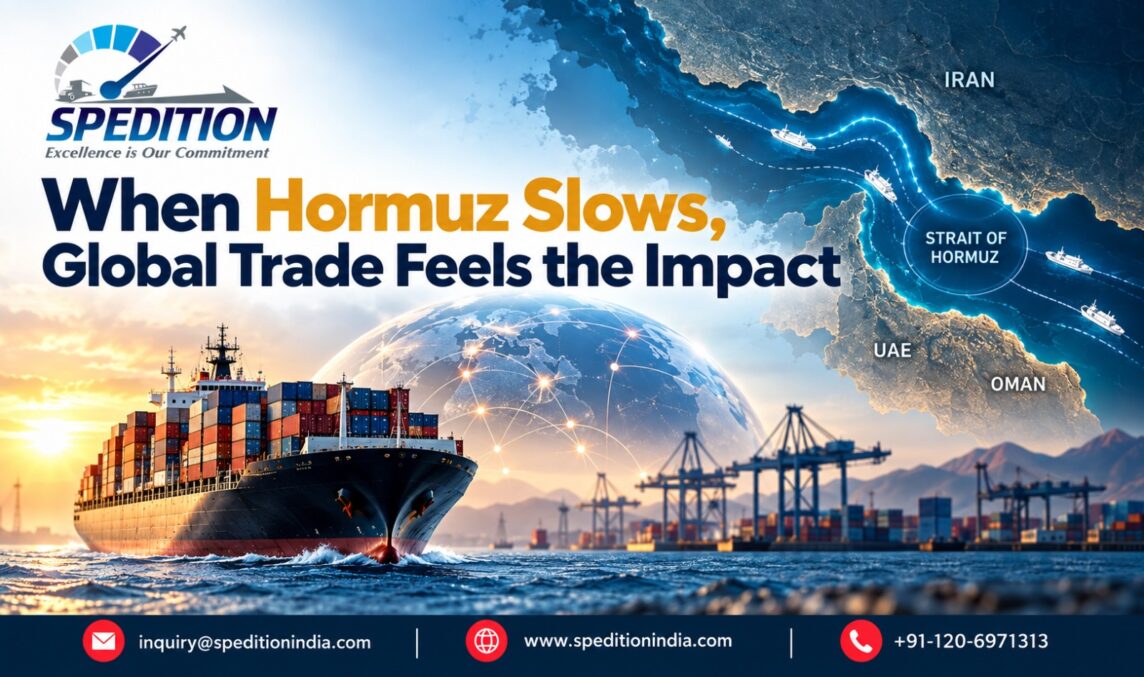
Mother Of All Deals: India – EU Free Trade Agreement

The proposed India–European Union Free Trade Agreement, expected to wrap up by the end of 2026 is shaping up to be one of the most significant trade deals we’ve seen in years. And the reasons go well beyond the usual diplomatic handshakes.

As companies worldwide rethink their sourcing strategies and look to build more resilient international partnerships, this agreement could open up a genuinely smoother, more efficient trade corridor between India and Europe.

For India, this isn’t just about moving more goods across borders. It’s a recognition of the country’s evolving role as a serious player in global manufacturing, exports, and end-to-end logistics.

What This Could Mean in Practice

  • Easier cargo flow between Indian and European markets, with fewer friction points
  • New export avenues for Indian manufacturers across multiple sectors
  • Growing demand for air freight, ocean shipping, and multimodal transport solutions
  • Stronger infrastructure needs – warehousing, distribution networks, customs support
  • Better market access for industries like pharmaceuticals, textiles, engineering, and manufacturing
  • More flexibility for companies looking to diversify their supply chains globally
  • Tighter connections between production centres and international trade hubs

The Bigger Picture

Global trade is shifting fast, and agreements at this scale don’t come along often. They have the potential to reshape entire supply chain ecosystems.

For freight forwarders and logistics providers, this could translate into:

  • stronger trade lanes
  • higher cargo volumes
  • rising demand for end-to-end logistics solutions that actually deliver.

As India continues to carve out its place in international trade, partnerships like this one are likely to create real opportunities for businesses, exporters, and supply chain operators around the world.


📩 inquiry@speditionindia.com

🌐www.speditionindia.com

📞 +91-120-6971313
0 0 Continue Reading →

Automobile Exports from India: Freight Challenges

Automobile & Auto Parts Exports from India: Freight Challenges Every Exporter Must Understand


India’s automobile sector is expanding aggressively across the USA, Africa, Europe, and the Middle East. As global demand rises, so do freight complexities.

For exporters, moving vehicles and auto components internationally isn’t just about production, it’s about navigating capacity constraints, compliance, cost volatility, and infrastructure realities.

Let’s break down the real freight challenges shaping automobile exports from India and what exporters can do about them.

1️⃣ Container Shortages & Freight Rate Volatility

Global disruptions, Red Sea rerouting, and peak season demand have kept freight markets unstable. Container availability remains unpredictable, and ocean freight rates are still significantly higher than pre-pandemic averages.

Common challenges:

  • Difficulty securing containers during peak seasons
  • Sudden freight rate spikes
  • Port congestion leading to vessel rollovers
  • Extended transit times on Europe/US routes

What exporters can do:

  • Book shipments well in advance
  • Lock in long-term freight contracts where possible
  • Diversify modes (sea, air, multimodal)
  • Work with experienced partners in freight forwarding for auto industry

2️⃣ Customs Delays & Documentation Errors

One incorrect HS code or missing document can delay shipments for weeks. Automotive parts, especially technical components, require precise classification and valuation.

Frequent issues include:

  • Incorrect HS codes
  • Incomplete commercial invoices
  • Under-declaration of cargo value
  • Missing certificates of origin

For exporters shipping to the USA or Europe, compliance scrutiny is especially high.

Best practice: Treat documentation as strategic, not administrative. Accurate paperwork directly impacts transit time and cost.

Read our article on: Export Documentation Demystified

3️⃣ RoRo vs Container: Choosing the Right Mode

When exporting vehicles, choosing between RoRo shipping India and containerized shipping is critical.

RoRo Shipping

✔ Cost-effective for finished vehicles

✔ Faster loading/unloading

✖ Limited vessel schedules

✖ Port berthing delays possible

Container Shipping

✔ Flexible scheduling

✔ Suitable for auto parts and mixed cargo

✔ Better cargo protection

✖ Higher costs during peak demand

Transit times to Europe and the USA have increased due to route diversions. Many exporters now combine methods strategically.

4️⃣ Packaging & Damage Prevention

Auto components are high-value and damage-sensitive.

Exporters must:

  • Cushion sharp edges and metal surfaces
  • Use sturdy wooden or metal crates
  • Label heavy cargo properly
  • Secure fluid-containing components

Poor packaging doesn’t just cause damage, it delays customs inspections and increases insurance claims.

5️⃣ Port Congestion & Infrastructure Bottlenecks

While India’s major ports like Nhava Sheva, Mundra, and Chennai have upgraded facilities, congestion, weather disruptions, and inland trucking delays still impact schedules.

Challenges include:

  • Truck turnaround delays
  • Vessel waiting times
  • Inland container depot congestion
  • Rail connectivity limitations

Exporters must build buffer time into schedules and consider alternate routing strategies.

6️⃣ The Growing Importance of Strategic Freight Partners

Automotive exports require more than booking cargo space.

An experienced logistics partner helps with:

  • Capacity planning
  • Route optimization
  • Rate negotiations
  • Customs compliance
  • Real-time shipment visibility
  • Multimodal coordination

For auto exporters, the difference between a shipment arriving in 28 days vs 40 days often lies in logistics planning — not production speed.

Key Takeaways for Auto Exporters

If you’re involved in auto parts logistics in India, focus on:

✔ Early booking and seasonal planning

✔ Documentation accuracy

✔ Mode optimization (RoRo vs container)

✔ Protective export packaging

✔ Buffer time for port delays

✔ Partnering with experienced freight forwarders

By following these steps and leaning on logistics specialists, Indian auto exporters can greatly reduce freight headaches.

Using a strategic combination of planning, flexible routing, and expert partners will help ensure that cars and parts reach global buyers smoothly, on time and on budget.

0 1 Continue Reading →

February 13, 2026

Export Documentation Demystified: From Invoice to Bill of Lading

Introduction to Export Documentation

The export process creates exciting opportunities for businesses to enter new markets while serving customers across the world. People need to understand that documentation requirements create a complex system which they must navigate. Your shipment will remain at customs because of one missing detail or one incorrect document.

The export documentation system requires comprehensive understanding which serves as a fundamental requirement for export activities.

Why Export Documentation Matters

Export documents are the backbone of international trade. They ensure:

  • Smooth customs clearance
  • Legal compliance
  • Accurate payment
  • Proof of ownership and shipment

Think of export documents as the language global trade speaks. If you speak it fluently, business flows. If not, delays and losses follow.

Common Challenges Faced by Exporters

Most exporters struggle with:

  • Too many documents
  • Changing regulations
  • Country-specific requirements
  • Errors in invoices or shipping papers

But the good news? Once you understand the purpose of each document, everything starts to make sense.

Understanding the Export Process

Before diving into individual documents, let’s zoom out.

Step-by-Step Overview of an Export Shipment

  1. Order confirmation
  2. Goods manufacturing and packing
  3. Documentation preparation
  4. Customs clearance
  5. Shipment dispatch
  6. Delivery to the importer

Where Documentation Fits into the Process

Documentation isn’t one step—it runs through the entire export cycle. From pricing the product to delivering it overseas, documents guide every move.

Commercial Invoice – The Foundation Document

If export documentation were a building, the commercial invoice would be the foundation.

What Is a Commercial Invoice

The exporter uses the commercial invoice document as a legal instrument to deliver goods from their company to the importer. The document functions as a description of the sold merchandise while creating a foundation for customs valuation purposes.

Key Elements of a Commercial Invoice

  • Exporter & importer details
  • Invoice number and date
  • Description of goods
  • HS code
  • Quantity and unit price
  • Total value
  • Incoterms
  • Country of origin

Common Mistakes to Avoid

  • Incorrect HS codes
  • Mismatch with packing list
  • Wrong currency
  • Incomplete buyer details

A small mistake here can snowball into major customs issues.

Packing List – More Than Just a Checklist

While the invoice talks money, the packing list talks logistics.

Purpose of a Packing List

The packing list contains complete details about the packaging methods used for the goods. The document serves as a resource for customs officials and freight forwarders and warehouse teams.

Difference Between Invoice and Packing List

Commercial Invoice Packing List
Focuses on value Focuses on packaging
Used for customs valuation Used for cargo handling
Shows price Shows weight & dimensions


Certificate of Origin

Ever wondered how countries know where your goods come from? Enter the Certificate of Origin.

What Is a Certificate of Origin?

It certifies the country where the goods were manufactured.

Why It Is Required

  • Determines applicable customs duty
  • Helps claim preferential tariff benefits
  • Required by importing country authorities

Preferential vs Non-Preferential CO

  • Preferential CO: Used under trade agreements
  • Non-Preferential CO: General origin declaration

Shipping Bill / Export Declaration

This is where customs officially gets involved.

Role of Customs in Export Documentation

Customs uses the shipping bill to:

  • Verify export details
  • Assess duties (if any)
  • Record export data

Filing the Shipping Bill

Filed electronically in most countries, it includes:

  • Exporter details
  • Invoice value
  • HS code
  • Port of loading

Bill of Lading – The Most Critical Document

If export documents had a superstar, this would be it.

What Is a Bill of Lading

A Bill of Lading (B/L) is issued by the carrier and acts as:

  1. Proof of shipment
  2. Receipt of goods
  3. Document of title

Functions of a Bill of Lading

It allows the importer to claim goods and proves ownership during transit.

Types of Bill of Lading

  • Clean B/L
  • Claused B/L
  • Straight B/L
  • Order B/L

Each type serves a specific commercial purpose.

Air Waybill vs Bill of Lading

Key Differences Explained

Air Waybill Bill of Lading
Used in air freight Used in sea freight
Non-negotiable Can be negotiable
Faster transit Suitable for bulk cargo

Insurance Certificate

International trade is risky. Insurance is your safety net.

Why Export Insurance Matters

It protects against:

  • Damage
  • Theft
  • Loss during transit

What the Insurance Certificate Includes

  • Policy number
  • Coverage amount
  • Risks covered
  • Shipment details

Letter of Credit and Supporting Documents

Understanding LC in Exports

A Letter of Credit (LC) ensures the exporter gets paid—provided documents are compliant.

Document Compliance Under LC

Banks are strict. Even a spelling mistake can delay payment. Precision is everything.

Other Important Export Documents

Inspection Certificate

Confirms goods meet required standards.

Export License

Mandatory for restricted goods.

Fumigation Certificate

Required for wooden packaging materials.

Digitalization of Export Documentation

Paperless Trade and E-Documents

Export documentation is going digital—and fast.

Benefits of Digital Export Documentation

  • Faster processing
  • Fewer errors
  • Better tracking
  • Cost savings

Common Export Documentation Errors

How Errors Impact Shipments

  • Customs delays
  • Penalties
  • Payment issues
  • Loss of buyer trust

Tips to Avoid Costly Mistakes

  • Double-check data
  • Keep documents consistent
  • Stay updated on regulations

Best Practices for Managing Export Documents

Creating a Documentation Checklist

A checklist ensures nothing slips through the cracks.

Working with Freight Forwarders

Experienced logistics partners simplify documentation and reduce risk.

Conclusion

The complex appearance of export documentation actually remains understandable for all users. Your shipment control system requires you to understand every document starting from the commercial invoice and ending with the bill of lading. Your export documentation functions as your permanent export path. The process becomes simpler to handle as you follow the documentation path which leads to successful global trade operations.

FAQs

  1. What is the most important export document?
    The commercial invoice and bill of lading are considered the most critical.
  2. Can incorrect documentation delay shipments?
    Yes, even minor errors can cause major customs delays.
  3. Is a packing list mandatory for exports?
    While not always legally mandatory, it is practically essential.
  4. What is the difference between B/L and Air Waybill?
    A B/L is negotiable and used in sea freight, while an AWB is non-negotiable and used in air freight.
  5. How can exporters reduce documentation errors?
    By using digital tools, checklists, and experienced freight forwarders.
0 0 Continue Reading →

Logistics in Free Trade Zones: Benefits & Regulatory Tips – The Spedition India Perspective

Logistics in Free Trade Zones: Benefits & Regulatory Tips – The Spedition India Perspective

Introduction to Free Trade Zones (FTZs)

Logistics in today’s competitive global market has evolved beyond its original purpose of moving products between two locations. The new logistics system requires businesses to deliver their products to customers while meeting legal requirements and maintaining operational flexibility and financial efficiency. Free Trade Zones (FTZs) provide Indian businesses with a significant advantage for their international expansion needs because these zones deliver multiple benefits when combined with Spedition India as their logistics partner.

What Are Free Trade Zones?

Free Trade Zones function as designated areas which permit the storage and processing and assembly and re-export of imported goods without requiring the immediate payment of customs duties or taxes. From a logistics perspective, FTZs serve as essential hubs which enhance the efficiency of global trade operations.

Why FTZs Matter for Indian Businesses

With India emerging as a global manufacturing and export powerhouse, FTZs help businesses stay competitive. The system decreases trade obstacles while it enhances delivery speed and enables smooth international transit through its partnership with Spedition India, which operates as a reliable logistics provider.

Role of Logistics in Free Trade Zones

Why Expert Logistics Makes the Difference

FTZ benefits don’t unlock themselves. Without proper logistics planning, compliance management, and operational control, businesses can miss out on savings or face regulatory trouble.

How Spedition India Supports FTZ Operations

Spedition India provides extensive knowledge about international freight forwarding services together with customs coordination and warehousing and multimodal logistics operations. The FTZ-focused solutions ensure goods move efficiently while staying fully compliant with Indian and international regulations.

Types of Free Trade Zones Relevant to India

Special Economic Zones (SEZs) in India

India’s Special Economic Zones create export growth through their provision of tax benefits and their implementation of easier customs processes and their delivery of top-notch infrastructure. Spedition India provides complete logistics services to assist its customers who work in Special Economic Zones.

Export Processing Zones (EPZs)

EPZs dedicate their operations to manufacturing activities that support export markets. The combination of Spedition India handling raw material shipments and finished product deliveries enables businesses to achieve better operational efficiency.

Free Ports and Bonded Warehousing

Bonded warehouses allow goods to be stored without immediate duty payment. Spedition India helps businesses leverage bonded facilities to improve cash flow and inventory control.

Key Benefits of Free trade zones Logistics for Businesses

Duty and Tax Advantages

One of the biggest advantages of Free Trade Zones logistics is duty deferral. Businesses only pay customs duties when goods enter the domestic market. For re-exports, duties may be eliminated altogether.

Faster Customs Clearance with the Right Partner

Spedition India uses its customs expertise to deliver faster shipment clearances while decreasing paperwork requirements and shortening all waiting periods.

Improved Cash Flow and Cost Efficiency

The practice of delaying duty payments together with effective inventory management enables companies to maintain working capital which serves as a vital benefit during competitive market conditions.

Supply Chain Flexibility and Scalability

The free trade zone system enables companies to make instant operational changes which they require to meet shifting market needs. The system allows products to undergo repackaging and relabeling and redirection without incurring extra customs fees.

How Spedition India Enhances Free Trade Zones Supply Chains

Reduced Transit and Lead Times

Strategic routing, multimodal transport, and proximity to ports help Spedition India reduce transit times significantly.

Inventory Optimization and Visibility

With real-time tracking and efficient warehouse management, clients gain complete visibility over their Free Trade Zones inventory.

Value-Added Logistics Services

Spedition India offers services like kitting, labelling, consolidation, and quality checks within FTZs—adding value without increasing duty costs.

Industries Served by Spedition India through FTZ Logistics

Manufacturing and Industrial Goods

Manufacturers benefit from duty-free import of components and smooth export of finished products.

Automotive and Engineering Cargo

High-value parts and machinery require precise handling—something Spedition India specializes in.

Pharmaceuticals and Healthcare

With strict compliance requirements, pharma companies rely on Spedition India for secure and compliant FTZ logistics.

E-commerce and Retail Trade

E-commerce brands use FTZs to handle their cross-border operations and returns processing and inventory storage.

Regulatory Framework for FTZ Logistics in India

Indian Customs and FTZ Compliance

FTZs operate under strict customs supervision. While benefits are attractive, compliance is mandatory.

Documentation and Reporting Requirements

Accurate Bills of Entry, shipping bills, and inventory records are critical to avoid penalties.

Common Compliance Risks

Misclassification, incorrect valuation, and poor documentation can lead to delays or fines.

Regulatory Best Practices Followed by Spedition India

Accurate Record-Keeping

Spedition India requires its staff to document all operational activities for verification purposes.

Compliance-Driven Logistics Planning

The team assesses regulations during all delivery processes which begin with route planning and conclude with final delivery.

Technology-Enabled Transparency

The digital tools enable clients to maintain ongoing readiness for audits throughout the entire process.

Technology in Modern FTZ Logistics

Warehouse & Transport Management Systems

Advanced systems streamline operations and reduce manual errors.

Digital Customs Coordination

Electronic documentation speeds up approvals and reduces compliance risks.

Real-Time Tracking and Analytics

Clients benefit from data-driven insights for smarter decision-making.

Challenges in FTZ Logistics and How Spedition India Manages Them

Regulatory Changes

Spedition India stays updated with policy changes to keep clients compliant.

Operational and Security Risks

Security protocols with high strength protect valuable cargo shipments.

Infrastructure Constraints

Strategic planning helps to solve the problems which arise from regional infrastructure limitations.

Strategic Tips to Maximize Free Trade Zones Benefits

Choosing the Right FTZ Location

Spedition India helps clients select FTZs close to ports and markets.

Partnering with an Experienced Logistics Provider

Expertise reduces risks and maximizes savings.

Regular Compliance Audits

Proactive audits prevent costly disruptions.

FTZ Logistics Opportunities in Emerging Markets

India’s Growing Role in Global Trade

With government-backed initiatives, India is becoming a preferred trade hub.

Government Incentives and Trade Policies

FTZ-friendly policies encourage foreign and domestic investment.

Future of Free Trade Zone Logistics

Sustainable and Green Logistics

Spedition India has established its connection to environmentally friendly methods through its choice of cleaner transportation systems.

Smart FTZs and Digital Supply Chains

The development of Free Trade Zone logistics operations is being driven by automation technologies and data analytics capabilities.

Conclusion

Free Trade Zones offer immense potential but their success depends on the establishment of proper logistics systems. Spedition India helps businesses achieve their full potential in FTZ logistics operations through its compliance-driven methods and technology solutions. Spedition India provides businesses with dependable support for their international trade operations through its ability to deliver cost-effective solutions and support worldwide business expansion.

FAQs

  1. How does Spedition India support FTZ logistics?
    Spedition India provides end-to-end logistics, customs coordination, warehousing, and compliance support.
  2. Are FTZs beneficial for Indian exporters?
    Yes, FTZs reduce costs, improve speed, and enhance global competitiveness.
  3. Can Spedition India handle bonded warehousing?
    Yes, Spedition India offers bonded and FTZ warehousing solutions.
  4. What industries benefit most from FTZ logistics?
    Manufacturing, automotive, pharma, and e-commerce benefit significantly.
  5. Is FTZ logistics suitable for long-term supply chain planning?
    Absolutely. FTZs provide flexibility, scalability, and regulatory advantages.


0 0 Continue Reading →

How Small Manufacturers Can Compete with Big Brands Using Smart Logistics

How Small Manufacturers Can Compete with Big Brands Using Smart Logistics

Introduction – When Size Is Not the Only Advantage

In today’s competitive manufacturing landscape, small manufacturers often feel overshadowed by big brands. Large companies have massive production capacities, nationwide warehouses, and deep pockets. But here’s the truth—success no longer depends on size alone but smart logistics. It depends on how smartly you move your goods.

Big Brands vs Small Manufacturers

The scale is the reason for the dominance of big brands, but small manufacturers are endowed with an equally powerful attribute—flexibility. This flexibility, combined with the right logistics partner like Spedition India, Results in a strong competitive advantage.

Why Logistics Is the Real Game Changer

Logistics has transformed from merely being a transportation concern to being a whole package of speed, visibility, cost management, and customer satisfaction. By the use of intelligent logistics, even small manufacturers will be able to run neck to neck with the major players in the industry.

The Role of Smart Logistics in Modern Manufacturing

What Smart Logistics Means Today

Smart logistics refers to an area that applies the ideal amalgamation of technology, data, and strategic elements to guarantee that goods move smoothly through the supply chain.

Traditional Logistics vs Smart Logistics

Traditional logistics reacts to problems. Smart logistics anticipates them. With Spedition India’s technology-driven approach, manufacturers gain control instead of chaos.

Why Logistics Determines Market Success

Late deliveries, high costs, or damaged goods can cost customers. Smart logistics ensures reliability—something modern buyers value deeply.

Challenges Faced by Small Manufacturers in India

Rising Freight and Fuel Costs

The advent of unplanned transportation could be severely detrimental to margins. Without shared delivery and freight scheduling, costs would soar to unmanageable levels.

Limited Warehousing Infrastructure

The expenses of operating warehouses together with inefficient storage operations handling hinder business activities.

Poor Supply Chain Visibility

Not knowing where shipments are leads to missed deadlines and unhappy customers.

How Big Brands Dominate Through Logistics

Scale and Cost Advantages

Big brands ship in bulk and negotiate better rates.

Integrated Logistics Networks

Their network systems create strong connections between ports and highways and urban areas.

Technology-Driven Operations

The company uses automation together with analytics to maintain its competitive advantage.

How Spedition India Levels the Playing Field

Customized Logistics Solutions

Spedition India understands that no two manufacturers are the same. Solutions are tailored to specific business needs.

Multi-Modal Transportation Expertise

By combining road, rail, sea, and air freight, Spedition India ensures cost-effective and reliable movement of goods.

End-to-End Supply Chain Management

From pickup to final delivery, Spedition India manages the entire logistics lifecycle.

Turning Agility into a Competitive Advantage

Faster Response to Market Demand

Small manufacturers can adapt quickly—and Spedition India ensures smart logistics keeps pace.

Flexible Logistics Planning with Spedition India

Seasonal demand spikes? New markets? Spedition adjusts logistics plans without disruption.

Personalized Fulfilment Strategies

Unlike big brands, small manufacturers can offer personalized delivery experiences—supported by Spedition’s flexible logistics.

Technology-Driven Logistics by Spedition India

Real-Time Tracking and Visibility

The manufacturers receive absolute revelation regarding their transportations.

Data-Driven Decision Making

Statistical analysis aids in anticipating demand, organizing inventory properly, and minimizing risks.

Automation and Digital Documentation

Faster processing, fewer errors, and smoother operations.

Smart Inventory Management with Spedition India

Just-in-Time Inventory Solutions

Reduce storage costs while ensuring timely availability of goods.

Demand Forecasting and Stock Optimization

Spedition India helps align inventory with real market demand.

Reducing Inventory Holding Costs

Less idle stock means better cash flow.

Cost-Efficient Transportation Solutions

Domestic and International Freight Services

Spedition India provides seamless logistics services for Indian domestic delivery and worldwide market distribution.

Multi-Modal Logistics for Cost Optimization

The correct transportation method used at the correct moment helps the business maintain its expenses.

Route Planning and Last-Mile Efficiency

The system uses efficient routes to deliver packages faster while maintaining dependable service.

Outsourcing Logistics – A Strategic Move

3PL and 4PL Solutions by Spedition India

Manufacturers can outsource complexity while maintaining control.

Benefits of Logistics Outsourcing for Manufacturers

Lower costs, expert handling, and scalability.

Focus on Core Manufacturing While Spedition Manages Logistics

Manufacturers focus on production—Spedition handles movement.

Smart Warehousing Solutions

Scalable Warehousing Options

Pay only for what you use.

Shared and On-Demand Storage

Ideal for growing and seasonal businesses.

Regional Warehousing for Faster Deliveries

Closer warehouses mean happier customers.

Enhancing Customer Experience through Logistics

Faster and Reliable Deliveries

Consistency builds trust.

Real-Time Shipment Updates

Customers stay informed at every step.

Seamless Reverse Logistics

Efficient returns strengthen brand credibility.

Sustainable Logistics as a Brand Advantage

Eco-Friendly Transportation Practices

Spedition India supports greener logistics solutions.

Optimized Routes to Reduce Emissions

Lower fuel consumption benefits both business and environment.

Supporting Green Manufacturing Goals

Sustainability adds long-term brand value.

Financial Benefits of Smart Logistics

Reduced Operational Costs

Optimized logistics operations bring about better financial outcomes because they eliminate unexpected events.

Predictable Logistics Expenses

Better planning equals better budgeting.

Improved Cash Flow and Working Capital

Faster deliveries lead to faster payments. The process results in money entering the business more quickly according to delivery time.

Real-World Scenarios – Small Manufacturers Growing with Spedition India

Scaling from Local to National Markets

Strategic warehousing and freight planning enable expansion.

Export Growth Through Smart Freight Planning

Spedition India simplifies global logistics for small manufacturers.

Building a Future-Ready Supply Chain with Spedition India

Logistics Planning for Business Expansion

Design supply chains that grow with demand.

Strategic Partnerships for Long-Term Growth

Spedition India acts as a logistics partner, not just a service provider.

Continuous Optimization and Innovation

Logistics evolves—and Spedition evolves with it.

Common Logistics Mistakes Small Manufacturers Should Avoid

Choosing Cost Over Reliability

Cheap logistics often leads to expensive problems.

Ignoring Supply Chain Data

Data-driven logistics wins every time.

Delaying Logistics Investments

Early planning saves long-term costs.

Conclusion – Spedition India as a Growth Partner

Small manufacturers now have the ability to compete against large brands. The smart logistics solutions of Spedition India enable manufacturers to achieve cost savings while their delivery speed improves and their business operations become more efficient and their customers experience greater satisfaction. Spedition India operates as a growth partner in markets where logistics serve as the main factor for business success.

FAQs

1. How does Spedition India help small manufacturers compete with big brands?

By offering radically tailored, technology-centred, and cost-effective logistic outcomes.

2. Is Spedition India suitable for small-scale manufacturers?
Yes, Spedition India provides scalable logistics tailored to business size and growth stage.

3. Does Spedition India offer multi-modal logistics?
Yes, road, rail, sea, and air freight solutions are available.

4. Can Spedition India support export logistics?
Absolutely. Spedition India offers international freight and export logistics support.

5. Why is smart logistics essential for modern manufacturing operations?

The system provides four benefits which include cost reduction efficiency improvement customer satisfaction enhancement and support for business growth through scalable solutions.

0 0 Continue Reading →

Unveiling the Dynamics: Supply Chain Management in India

Unveiling the Dynamics: Supply Chain Management in India

Introduction

Getting goods and services to flow freely across myriad industries in India constitutes a complex supply chain management network. This logistical journey is carried forward, with each step finely tuned for maximum efficiency and customer satisfaction-from the lively markets of Mumbai to the full of life ports of Chennai. Freight forwarders act as the unacknowledged conductors, masterminding this logistical symphony, as they wrestle with obstacles such as regulatory complexity and infrastructure bottlenecks.

The blog is to discover the captivating world of supply chain management in India, and it uncovers the invisible powers that make it possible, and at the same time, it provides an analysis of how innovation and technology are changing this essential industry.

Evolution of Supply Chains in India

The development of supply chains in India has moved from traditional systems into modernization and global integration. Indian supply chains were initially fragmented, relying heavily on man work with little technology in it. Globalization and technological advancement have all enhanced the transformation of supply chains in India. With modern supply chain management, efficiency, visibility, and agility have been imparted in different sectors and industries, which have created opportunities for the emergence of top 10 logistics companies in India.

Key Components of Supply Chain Management

The main elements of efficient supply chain management in India are purchasing, production, transportation, warehousing, and selling. The combination of these activities guarantees that there is no interruption in the movement of goods from their raw material stage to the final consumers.Procurement refers to the correct sourcing of materials in terms of price and quality; manufacturing means producing goods in the best possible manner; logistics involve the coordination of transportation and warehousing activities; distribution means acting upon getting goods to the customer’s doorstep on time; while retailing is concerned with merchandising the sold product to drive maximum sales.

These interconnected processes contribute to the success of Spedition India, one of the top 50 logistics companies in India and others striving for excellence in the field.

Challenges Faced in Indian Supply Chains

Despite progress, several challenges hinder seamless operations in Indian supply chains:

  • Infrastructure Constraints: Inadequate transportation networks and storage facilities impact logistics management.
  • Regulatory Barriers: These cause delays and compliance issues in operations.
  • Technology Adoption: Workforce resistance to using tools like automation and data analytics.

Such challenges are felt across key hubs like Pune, Kochi, Coimbatore, and Gurgaon, impacting the operations of even the best logistics companies in India.

Initiatives and Innovations

Several initiatives aim to overcome these challenges:

  • Government Efforts: Infrastructure upgrades and streamlined trade procedures.
  • Technological Advancements: Autonomous vehicles and AI-driven tools revolutionize operations.
  • Private Sector Innovations: Emphasis on collaboration and technology-driven solutions.

These advancements are evident in logistics companies in Pune, logistics companies in Mumbai, and beyond, showcasing how innovation is reshaping the industry.

Impact of Globalization

Globalization has changed the dynamics of foreign trade and promoted international cooperation, which has had a substantial impact on Indian supply chains. The international marketplaces foster growth for businesses beyond their respective nations nowadays. Cross-border trade has witnessed an increase with the introduction of e-commerce platforms, thus making fast and accurate supply chain solutions of utmost importance to manage international shipments.

For example, companies operating as a logistics company in Kochi or a logistics company in Gurgaon are increasingly adopting global strategies to enhance competitiveness.

Sustainability and Green Supply Chains

Sustainability is the primary consideration for almost all companies, including Spedition India, one of India’s top 50 logistics companies. This mounting environmental sentiment is coercing businesses to implement sustainable supply chain processes. Compressing carbon emissions will enhance the corporate image, helping the company to attract environmentally conscious customers.

Digital Transformation in Supply Chains

In supply chain management, the digital revolution is paving the way for inventive advancement. IoT devices enable real-time tracking and monitoring, thus enhancing supply chain visibility. Big data analytics transforms the decision-making process by giving decision-makers useful insights out of vast amounts of data. Also, block chain applications improve security and transparency in transactions between stakeholders to enhance efficiency and build trust in the supply chain.

Future Trends and Projections

The future prospects of technology and robotics are likely to transform supply-chain industry by rapid and precise operations through realization of automation and robotics. The deploying of Artificial Intelligence will be the game changer in supply chain management by advanced features which will lead to better control and forecasting of inventory. This will involve the application of predictive analytics which makes it easy for certain firms to foresee interruptions even before they happen and thus to implement timely measures aimed at boosting operational resilience.

Role of Startups and SMEs

With flexible methods catered to specific markets, startups, and SMEs are essential to bringing about disruption and innovation in the supply chain landscape. Flexibility and creativity allow smaller players to carve unique industry ecosystem positions. The ability to quickly adapt to changing market requirements makes these smaller players strong contenders for redefining traditional logistics paradigms in innovative ways that challenge established practices.

Additionally, creativity is a trait that is deeply rooted in the nature of startups and SMEs; therefore, they promote the development of new ideas. These enterprises, less constrained by tradition, are willing to take risks companies are at the forefront of challenging the existing state of logistics with disruptive innovations such as drone deliveries for last-mile logistics, AI predictive analytics, and Blockchain technology for secure and transparent with new ideas and ways of doing things that are not standard. The time and small-sized transactions.

Education and Skill Development

Education and skill development training programs are the main factors that contribute to the academic curriculums’ improvement for future supply chain professionals. To help them cope with the difficulties of supply chain management easier, students are provided with real-world case studies, industry relevant certifications, and practical experience. In the contemporary business world characterized by rapid changes, the ability to keep up with the latest trends and technologies is a prerequisite for success in such jobs as freight forwarders and logistics managers.

Supply Chain Resilience and Risk Management

 Supply chain resilience and risk management have grown into top priorities following worldwide disruptions, such as the recent pandemic. Increasingly in India, top logistics companies are paying attention to pandemic preparedness by implementing acceptable contingency planning to cover vulnerabilities in their supply chains. Agents can then mitigate risks effectively and maintain critical supplies’ continuity through agility, flexibility, and redundancy in core operations. With this proactive approach, the businesses can adjust fast to unexpected challenges and keep working through the crisis.

Collaborative Supply Chain Networks

In today’s global economy, collaborative supply chain networks have completely changed the way firms’ function. Through supplier collaboration and inter-organizational cooperation, businesses can improve efficiency, optimize workflow, and ultimately provide customers with more value.

 Freight forwarders play a key role in this interconnected web of logistics, ensuring that goods move seamlessly from suppliers to end-users. The diverse stakeholders in the supply chain ecosystem have a symbiotic relationship that fosters innovation and sustainable growth in addition to increasing responsibility and transparency.

Regulatory Frameworks and Compliance

Active engagement of businesses with regulatory frameworks and compliance standards in all necessary ways is the only way to not only satisfy legal obligations but also to consider the ethical issues that come with supply chain activities. In the first place, absolute compliance with legal norms acts as a shield against risks and losses to reputation, besides giving the company trustworthiness and thus ensuring its survival in the long run. In the present time, it is difficult to imagine business practices without being necessarily ethical, as the environment and society are no longer external factors that can be neglected. Organizations that fuse such principles into their supply chain management will be able to demonstrate that they are able to operate ethically while being in synchronization with changing regulations.

Cultural and Ethical Dimensions

At Spedition India, we always put the cultural and ethical factors first in our supply chain management and logistics operations. Celebrating diversity and inclusion is not just a goal but rather a basic part of our philosophy. A diverse workforce is a source of innovation, broadens our vision by bringing in different perspectives, and thus enhances our ability to cater to the customers’ needs. Our entire supply chain is underpinned by the highest standards of integrity and responsibility as a result of our commitment to ethical sourcing practices. When we engage with suppliers that are like-minded, we establish a network that is not only based on trust and sustainability but that also has a positive impact on our business and the communities we are part of.

Metrics and Performance Measurement

In measuring our performance, we rely on various performance indicators and key performance indicators (KPIs) applicable to logistics and supply chain management. The KPIs assist us in analyzing and optimizing aspects of our operations from managing inventories to transportation efficiencies. We strive for perfection and newness, finally corroborating against industry-level data and benchmarks. By being the frontiers in performance measurement, we ensure that quality service attitudes are instilled in clients, with considerations for cost efficiency and sustainability. Success in the logistics business, according to Spedition India, hinges on the value-adding principle of providing reliability and integrity throughout the process.

Conclusion

To sum up, all the three trends of globalization, technological progress and a shift towards sustainability are contributing quite a lot to the Indian supply chain management area. Innovations and initiatives, even though the hurdles of infrastructure limitations and regulatory barriers still exist, are still paving the way for a more efficient and stronger supply chain ecosystem. The scenario of supply chain management is quickly changing bringing in methods and practices which are compliant with the need of a vibrant global economy, ranging from the rise of cooperative networks and digital transformation to the demand for ethical sourcing.

At Spedition India, we’re dedicated to handling these challenges with dexterity, vision, and a commitment to quality. We continue to set the standard for value-added solutions delivery that promote efficiency, dependability, and integrity throughout the supply chain by embracing global competitiveness and strategic positioning.

Let’s set out on this transformative adventure together, where every obstacle is met with opportunity and each accomplishment is honored as evidence of our group’s resiliency and resolve.

0 0 Continue Reading →
devnergy