Skip to Content

Blog Archives

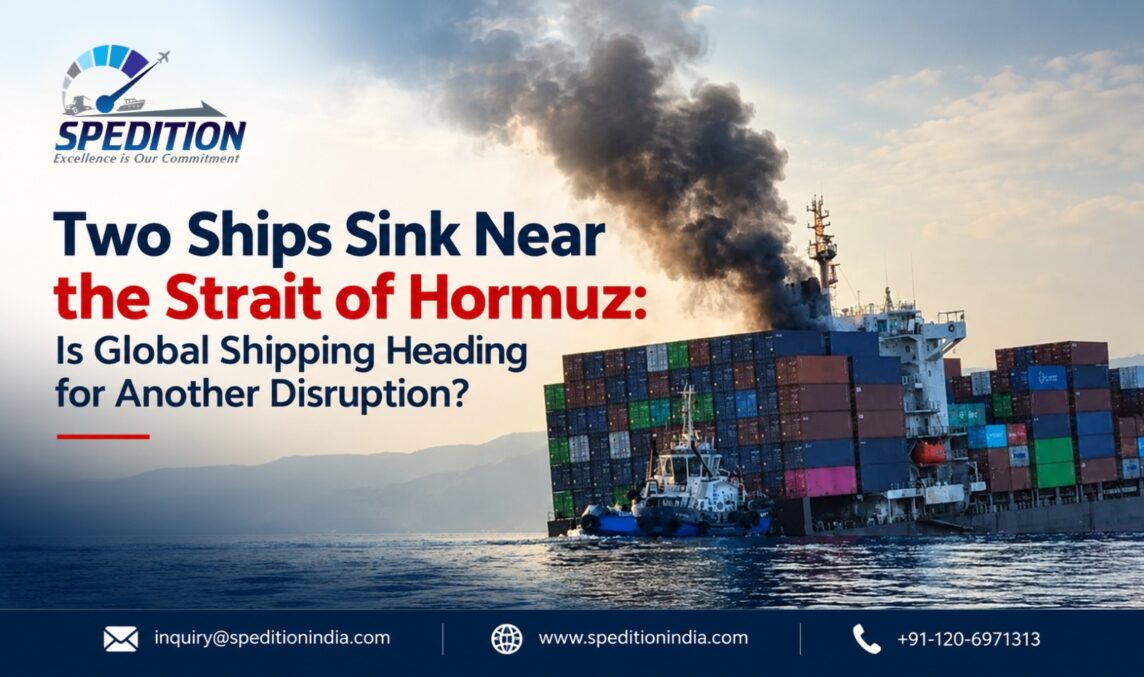
Two Ships Sink Near the Strait of Hormuz: Is Global Shipping Heading for Another Disruption?

Two Ships Sink Near the Strait of Hormuz: Is Global Shipping Heading for Another Disruption?

When commercial vessels come under attack near one of the world’s most critical shipping routes, the impact goes far beyond the ships themselves. It raises concerns about cargo safety, shipping costs and the reliability of global supply chains.

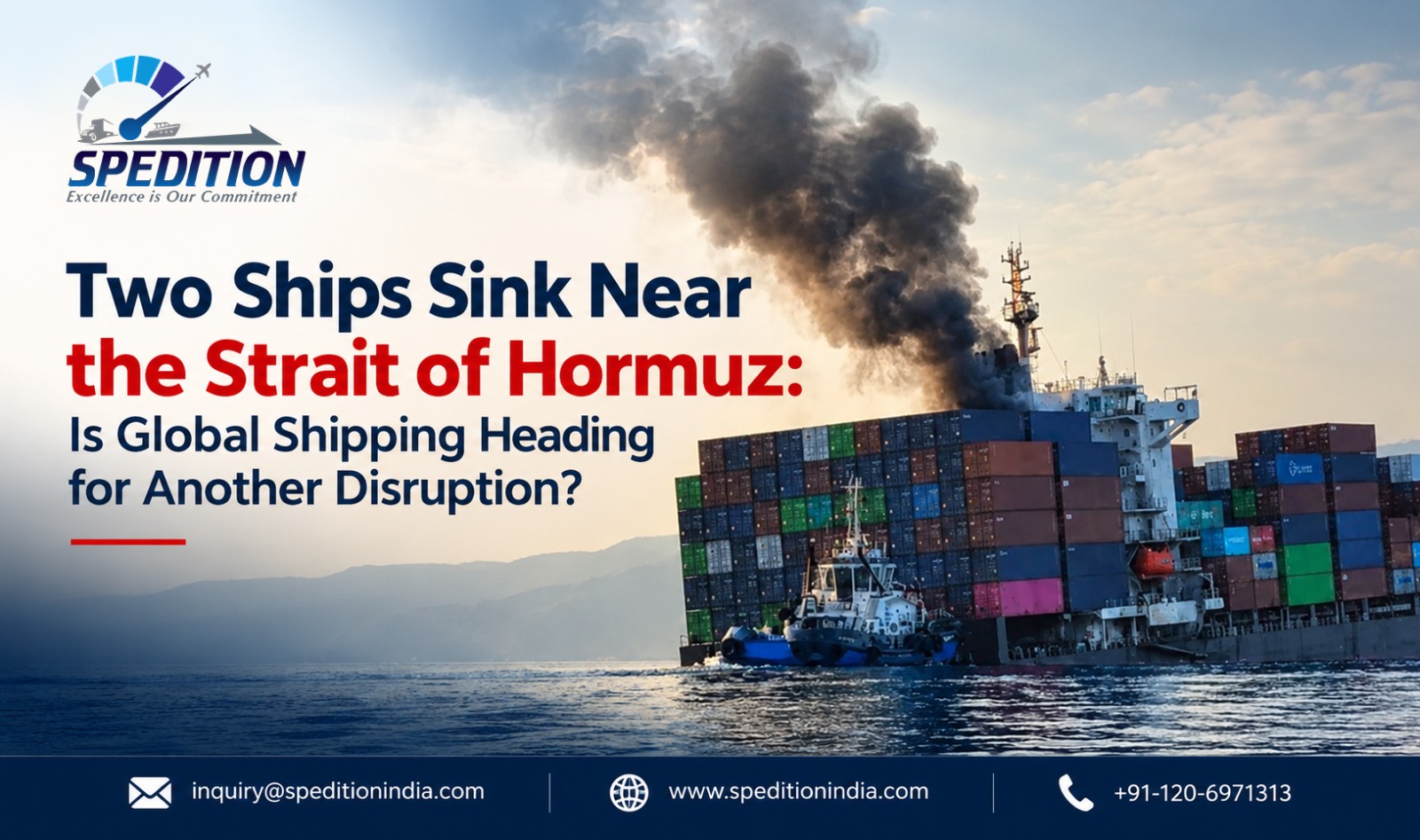
The recent sinking of two vessels near the Strait of Hormuz has brought maritime security back into focus. With the region playing a crucial role in international energy transportation and trade, developments here can have wider implications for businesses that depend on predictable shipping schedules.

The bigger concern is not just what happened at sea, but how continued uncertainty could affect the movement of goods worldwide.

Why the Strait of Hormuz Matters to Global Trade

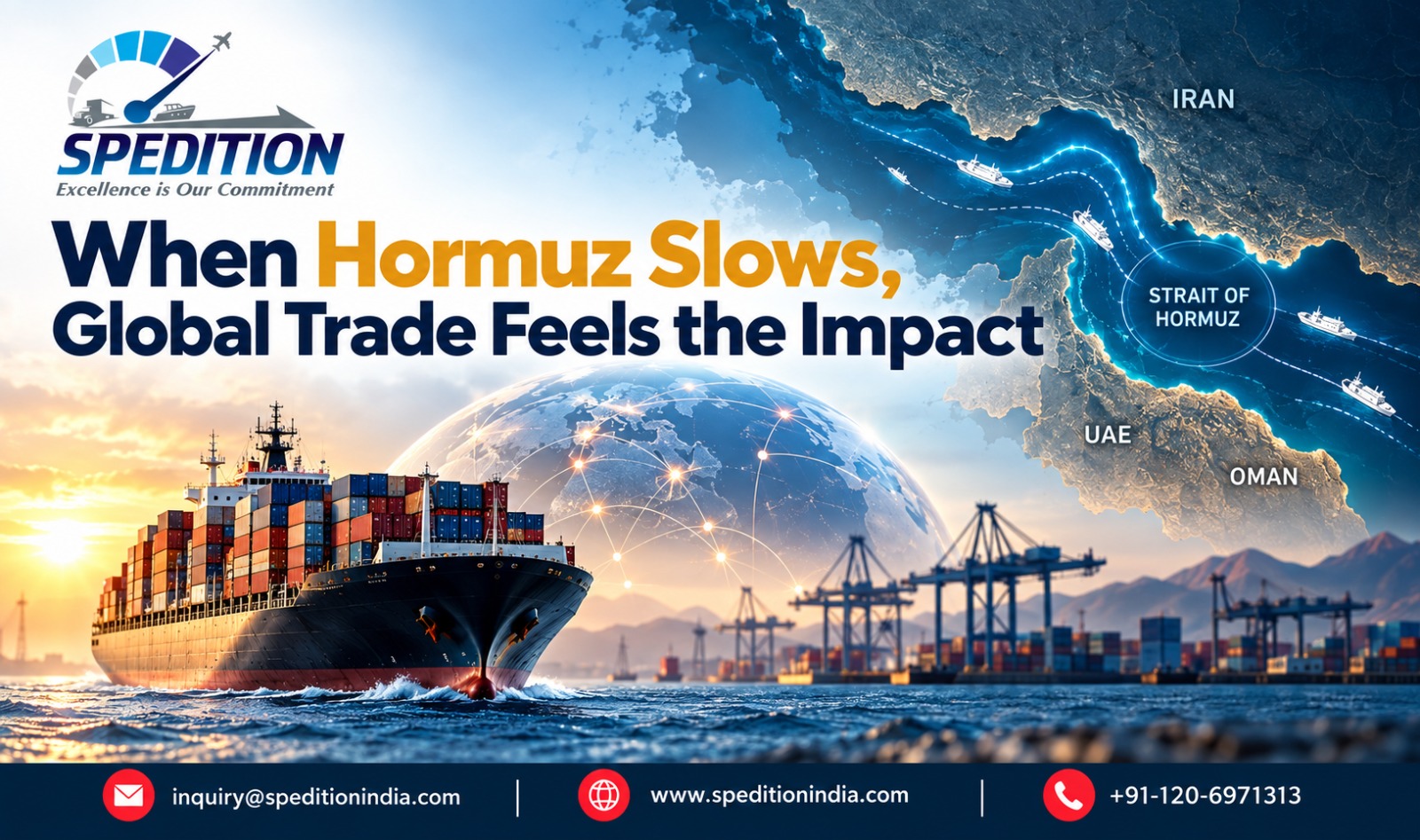
The Strait of Hormuz connects the Persian Gulf with the Gulf of Oman and the wider Arabian Sea. Its strategic location makes it a vital passage for global energy shipments and an important part of the wider maritime trade network.

When security risks rise in such a critical corridor, shipping operators may need to reassess vessel movements, routing decisions and safety measures. Even without a complete shutdown, uncertainty can affect schedules, operating costs and business planning.

How Shipping Disruptions Affect Businesses

For international trade, a disruption at sea rarely stays at sea. Delays and operational changes can affect multiple stages of the supply chain, from cargo movement and port schedules to inventory planning and final delivery.

Businesses may face:

  • Longer transit times as shipping operations adjust to changing security conditions.
  • Higher freight and insurance costs as operating risks are reassessed.
  • Uncertain delivery schedules that affect production, inventory and customer commitments.
  • Additional planning pressure for importers and exporters managing time-sensitive cargo.

The extent of the impact will depend on how the situation develops, the routes involved and the operational decisions taken by shipping lines.

What Businesses Should Watch

In an uncertain shipping environment, timely information becomes just as important as transportation itself. Importers and exporters should stay in close contact with their freight forwarders, monitor verified maritime advisories and review shipment schedules for possible changes.

Assessing alternative routes, planning inventory requirements and preparing for potential cost variations can also help businesses respond more effectively if disruptions continue.

The objective is not to predict every development, but to make informed decisions before uncertainty turns into a larger operational challenge.

The Bigger Picture

The incidents near the Strait of Hormuz are a reminder of how closely maritime security and global trade are connected. A disruption along one strategic route can influence freight costs, delivery timelines and supply chain decisions across multiple markets.

In today’s interconnected trade environment, reliable logistics requires more than moving cargo from one point to another. It calls for awareness, coordination and the ability to adapt when conditions change.

At Spedition, we believe that staying informed and planning ahead are essential to navigating an evolving global logistics landscape.

📩 inquiry@speditionindia.com 🌐 www.speditionindia.com ☎️ +91-120-6971313
0 0 Continue Reading →

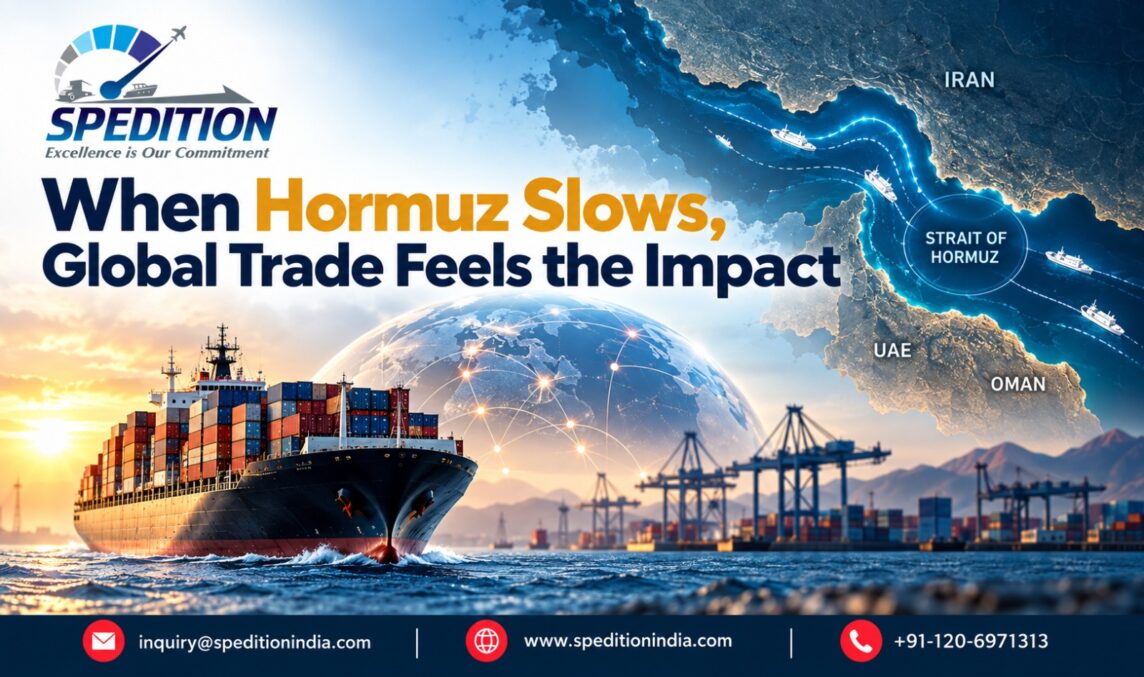
When Hormuz Slows, Global Trade Feels the Impact

When Hormuz Slows, Global Trade Feels the Impact

The Strait of Hormuz has long been one of the most important gateways for global energy and maritime trade. Today, its significance is being highlighted by an unprecedented slowdown in vessel movement.

On September 10, just 7 vessels transited the Strait of Hormuz, compared with a recent 10-day average of 15. Before the current conflict, the waterway typically handled around 125 large commercial vessels a day.

For global logistics, the numbers point to more than a regional shipping disruption. They signal growing uncertainty around energy flows, freight planning, vessel availability and supply-chain reliability.

Why the Strait of Hormuz Matters

The Strait is only around 21 nautical miles wide at its narrowest point, with designated shipping channels for vessels moving in and out. Yet its importance to global trade is far greater than its physical size.

According to the International Energy Agency (IEA), an average of around 20 million barrels of oil per day moved through the Strait in 2025 — equivalent to approximately 25% of global seaborne oil trade.

And the dependence is heavily concentrated in Asia. Around 80% of the oil moving through Hormuz is destined for Asian markets, with China and India among the largest destinations.

This makes disruption in the Strait particularly relevant for Asian importers, manufacturers and logistics networks.

The Scale of the Disruption

Recent vessel-tracking data gives a clear indication of how sharply traffic has changed.

7 vessels crossed the Strait on September 10, against a 10-day average of 15 and a pre-conflict norm of around 125 large commercial vessels per day.

The impact is also visible in energy flows.

EIA data shows that total oil flows through the Strait fell from 21.6 million barrels per day in Q4 2025 to 4.9 million barrels per day in Q2 2026. That represents a reduction of roughly 77%.

21.6M → 4.9M barrels per day

Oil flows through the Strait of Hormuz, Q4 2025 to Q2 2026

For businesses, this scale of change can translate into greater volatility in fuel prices, vessel movements, freight planning and transportation costs.

The LNG Risk Is Particularly Relevant for Asia

Hormuz is not only an oil route.

The IEA estimates that more than 112 billion cubic metres of LNG transited the Strait in 2025, representing almost 20% of global LNG trade. Nearly 90% of LNG volumes exported through the Strait were destined for Asian markets.

India’s exposure is significant. Along with Bangladesh and Pakistan, India imported almost two-thirds of its total LNG supplies through the Strait in 2025, according to the IEA.

That makes the disruption relevant not just to energy companies, but to industries where energy availability and pricing influence production and operating costs.

What Falling Vessel Traffic Means for Shipping

When vessels cannot rely on a major maritime corridor, the consequences extend across the wider shipping network.

Carriers and cargo owners may need to reassess:

  • Vessel schedules and routing
  • Transit-time commitments
  • Freight and insurance costs
  • Fuel requirements
  • Port and transshipment options
  • Inventory and delivery planning

And alternative routes are not necessarily cost-neutral.

UNCTAD has highlighted how previous geopolitical disruptions forced vessels onto longer routes, increasing sailing distances, fuel consumption, operating costs and pressure on available shipping capacity. Its 2025 Review of Maritime Transport notes that rerouting contributed to a 5.9% increase in global ton-miles in 2024, almost three times the growth in actual trade volume.

The lesson is important: when a major shipping route changes, the impact does not stop at the route itself. It travels through the wider logistics network.

The Ripple Effect on Freight Forwarding

For freight forwarders, this environment makes route planning more strategic.

A shipment that was previously straightforward may now require closer evaluation of alternative ports, connecting services, transit times and overall landed costs.

It also makes communication more important. Importers and exporters need greater visibility into changing schedules and enough flexibility to adjust when market conditions shift.

The objective is not simply to find the shortest route. It is to find the most reliable and commercially viable route under the circumstances.

Supply Chains Need More Flexibility

The disruption around Hormuz also reinforces a broader lesson for international trade: resilience cannot depend on a single route.

Businesses can strengthen their logistics planning by:

  • Evaluating alternative ports and shipping corridors
  • Building realistic buffers into delivery schedules
  • Monitoring freight, fuel and capacity movements
  • Reviewing multimodal transportation options
  • Maintaining close coordination with logistics partners
  • Planning contingencies for high-risk trade lanes

This becomes particularly important for businesses whose supply chains stretch across multiple countries and depend on predictable maritime connections.

What Lies Ahead for Global Shipping

The immediate situation around Hormuz remains fluid, but the broader implications for global logistics are already becoming clearer.

The IEA notes that while some oil can be redirected through alternative pipeline routes, available bypass capacity is estimated at only 3.5–5.5 million barrels per day — significantly below normal volumes moving through the Strait.

That limited flexibility means prolonged disruption could continue putting pressure on energy markets and, indirectly, on transportation and logistics costs.

For businesses, the priority is therefore shifting from simply optimising cost to balancing cost, reliability, risk and resilience.

Supporting Smarter Global Logistics

At Spedition India, we understand that effective international logistics requires more than simply choosing a shipping route.

From sea freight and air freight to customised logistics solutions, we help businesses evaluate routes, transit times, costs and operational risks to keep their supply chains moving in an evolving global trade environment.

Looking for the right route for your next shipment?

Connect with Spedition India to explore a logistics solution built around your cargo, destination and timeline.

📩 inquiry@speditionindia.com 🌐 www.speditionindia.com 📞 +91-120-697131

0 0 Continue Reading →

AI Reshaping Air Cargo: Semiconductors & the Future of Air Freight

AI Reshaping Air Cargo: Semiconductors & the Future of Air Freight


For years, cross-border e-commerce powered the growth of the global air cargo industry. Fast fashion, consumer electronics, and small parcels dominated cargo aircraft traffic, driven by demand for faster deliveries.

Today, that trend is changing.

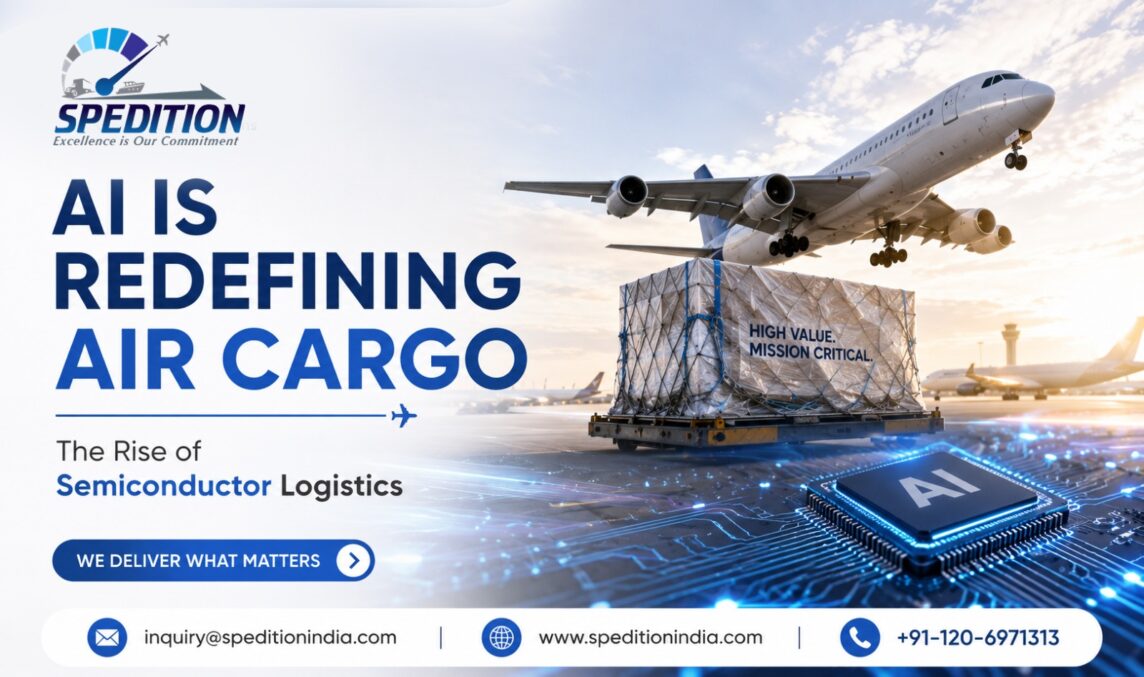
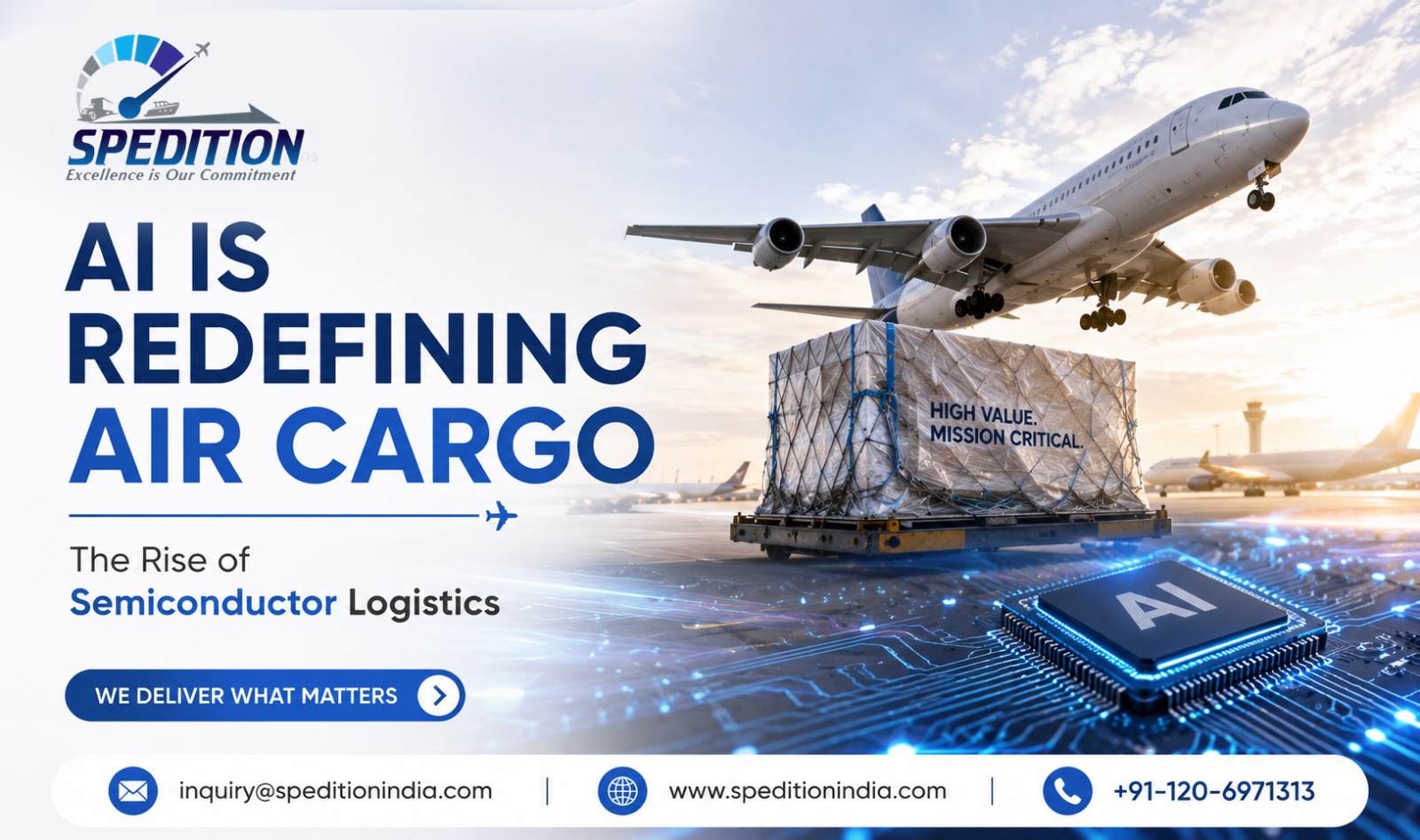
The rapid expansion of Artificial Intelligence (AI) infrastructure is creating a new wave of high-value air freight. Advanced semiconductors, AI processors, servers, and data centre equipment are becoming the industry’s fastest-growing cargo segment, gradually replacing e-commerce as the primary driver of air freight demand.

What’s Driving This Shift?

The global race to build AI capabilities has triggered unprecedented investments in data centres and semiconductor manufacturing. These components are:

  • High in value
  • Time-sensitive
  • Fragile and precision-engineered
  • Required on strict project timelines

Unlike consumer goods, delays in transporting AI hardware can postpone entire data centre deployments, making air freight the preferred mode of transportation despite its higher cost.

From E-commerce to AI Cargo

While AI-related cargo is rising rapidly, cross-border e-commerce shipments have slowed due to tighter import regulations in major markets such as the United States and the European Union. This has encouraged airlines to redesign their cargo networks around semiconductor manufacturing hubs instead of traditional e-commerce routes.

Major carriers across Asia are already adapting by:

  • Expanding freighter services between semiconductor hubs
  • Increasing capacity on trans-Pacific routes
  • Investing in specialised handling for sensitive electronic equipment
  • Strengthening connections between manufacturing and technology clusters

Asia’s Growing Importance

Countries across Asia are becoming central to the AI supply chain.

  • Taiwan remains the global leader in advanced chip manufacturing.
  • South Korea is driving production of high-bandwidth memory and AI processors.
  • Japan exports critical semiconductor manufacturing equipment.
  • Vietnam, Malaysia, Thailand, and Singapore are emerging as key assembly and manufacturing locations for AI servers destined for global markets.

This regional shift is creating new air cargo corridors and increasing demand for specialised logistics solutions.

What This Means for Logistics

The cargo profile is changing.

Instead of moving large volumes of low-value parcels, logistics providers are increasingly handling smaller shipments with significantly higher value and stricter transportation requirements.

This means greater focus on:

  • Secure cargo handling
  • Faster transit times
  • Temperature and shock-sensitive transportation
  • Real-time shipment visibility
  • Reliable international air freight networks

As AI investments continue worldwide, demand for specialised air cargo services is expected to remain strong throughout the coming years.

The Spedition Perspective

The future of air freight is no longer defined solely by speed, it’s increasingly driven by precision, reliability, and the ability to move mission-critical technology across global supply chains.

As industries evolve and AI transforms manufacturing and infrastructure, logistics providers must stay agile, connected, and prepared to support the next generation of global trade.

At Spedition, we continue to monitor these industry shifts closely, helping businesses navigate changing supply chains with dependable international logistics solutions tailored to today’s dynamic trade environment.

📩 inquiry@speditionindia.com 🌐 www.speditionindia.com 📞 +91-120-6971313

0 0 Continue Reading →
devnergy