Skip to Content

Blog Archives

From India to Global Markets: Navigating the Logistics of the Festive Export Rush

From India to Global Markets: Navigating the Logistics of the Festive Export Rush


Indiaโ€™s festive season is creating a fresh wave of demand in international markets.

Textile exporters are reporting a 30โ€“40% increase in US orders for Christmas and New Year, while food exporters are seeing around a 20% rise in ready-to-eat food orders to Europe ahead of Diwali. Demand is also active across the GCC, particularly in Kuwait, Oman and Bahrain.

For exporters, the opportunity is clear. But so is the challenge:

More orders mean more pressure on the supply chain.

๐Ÿ“ˆ Where the Demand Is Coming From

The festive export opportunity is spreading across multiple categories:

  • Textiles & apparel โ€” stronger Christmas and New Year orders from the US
  • Ready-to-eat foods โ€” growing demand in European markets
  • Traditional Indian foods โ€” sweets, savouries, spices, pickles and dry fruits
  • Rice and processed foods โ€” continued buying interest across the GCC
  • Handicrafts โ€” exports grew 29% in August
  • Carpets โ€” exports increased 5% in August
  • Textiles & apparel โ€” exports rose 6.39% in August

India’s processed-food export segment is also expanding, with ready-to-eat and cooked food exports reaching $2.4 billion in FY26, up from $2.1 billion the previous year.

๐ŸŒ The GCC: A Key Market for India’s Festive Foods

The festive demand isn’t limited to Western markets.

The GCC continues to be an important destination for Indian food exporters, with active procurement reported across:

  • ๐Ÿ‡ฐ๐Ÿ‡ผ Kuwait
  • ๐Ÿ‡ด๐Ÿ‡ฒ Oman
  • ๐Ÿ‡ง๐Ÿ‡ญ Bahrain

Products range from traditional sweets and savouries to:

Rice | Spices | Ghee | Pickles | Dry Fruits | Paneer | Beverages | Canned Foods

For exporters, this represents an opportunity to take India’s festive consumption beyond domestic markets and into a wider global customer base.

๐Ÿšข But Can Logistics Keep Pace?

This is where the festive export story becomes a logistics story.

Strong demand is already being accompanied by several operational challenges:

Higher Freight Costs

Increased demand can put upward pressure on freight, affecting margins for price-sensitive exporters.

Container Availability

Container shortages can make securing equipment during peak periods more difficult.

Customs & Import Compliance

Food shipments may face inspections, food-safety requirements and destination-specific documentation.

Time-Sensitive Cargo

For food products, delays aren’t simply inconvenientโ€”they can affect shelf life and delivery commitments.

Uncertain Trade Conditions

Changing tariffs and import regulations can influence the economics of individual export markets.

โฑ๏ธ The Real Challenge: Getting the Timing Right

Festive exports operate against a fixed deadline.

Christmas, New Year and Diwali don’t move because a shipment is delayed.

That makes timing a critical part of export logistics.

A well-planned festive shipment should consider:

  • Early capacity booking
  • Container availability
  • Port congestion
  • Transit-time buffers
  • Customs documentation
  • Destination-country requirements
  • Cargo-specific handling
  • Alternative routing options

The objective isn’t simply to move cargo.

It’s to get the right cargo to the right market at the right time.

๐Ÿ”„ Turning Export Demand Into Deliveries

For exporters, the festive season presents a simple equation:

More Orders + Limited Capacity = Greater Need for Planning

A few proactive steps can make a difference:

1. Plan capacity early Peak-season demand can tighten vessel and container availability.

2. Prepare documentation in advance Avoid preventable delays at origin or destination.

3. Match the mode to the cargo Time-sensitive or high-value shipments may require a different logistics approach than standard cargo.

4. Keep alternative routes open When capacity or schedules change, having another option can protect delivery timelines.

5. Monitor the shipment end-to-end Visibility helps businesses respond before a small delay becomes a missed delivery.

๐Ÿ‡ฎ๐Ÿ‡ณ The Bigger Opportunity for Indian Exporters

India’s festive export momentum reflects something bigger than seasonal demand.

Global buyers are increasingly sourcing a wider range of Indian productsโ€”from textiles and handicrafts to traditional and convenience foods.

The opportunity, therefore, isn’t only about securing international orders.

It is about building the logistics capability to fulfil them reliably.

Because in global trade, winning the order is only half the journey.

The other half is getting it there.

The Logistics Advantage

As festive demand accelerates, exporters need logistics strategies that can balance:

Cost | Capacity | Compliance | Transit Time | Reliability

At Spedition, we understand that every international shipment comes with its own requirements.

From freight planning and route selection to shipment coordination, the right logistics approach can help businesses navigate peak-season pressure while keeping cargo moving efficiently.

Because when global demand rises, your supply chain should be ready to move with it.

๐Ÿ“ฉ inquiry@speditionindia.com ๐ŸŒ www.speditionindia.com ๐Ÿ“ž +91-120-697131

0 0 Continue Reading →

From Pipeline Disruption to Alternative Routes: A Closer Look at Supply Chain Resilience

From Pipeline Disruption to Alternative Routes: A Closer Look at Supply Chain Resilience


A disruption to one major oil pipeline is highlighting a much bigger reality of global trade:

When a critical route is affected, supply chains have to adapt quickly.

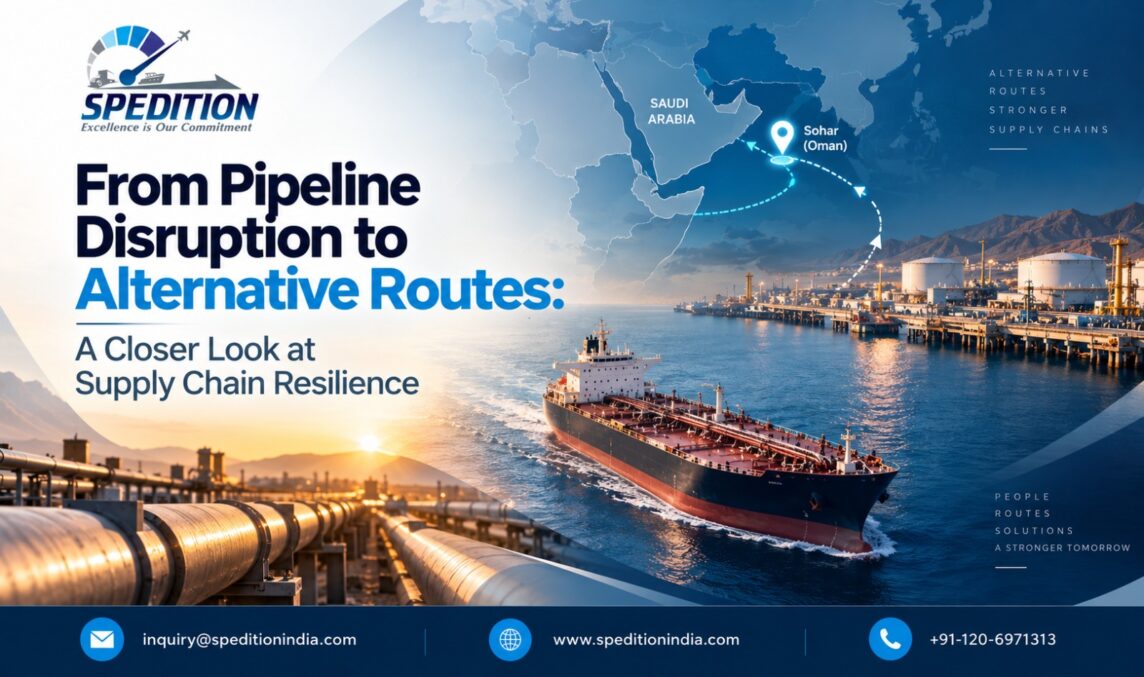
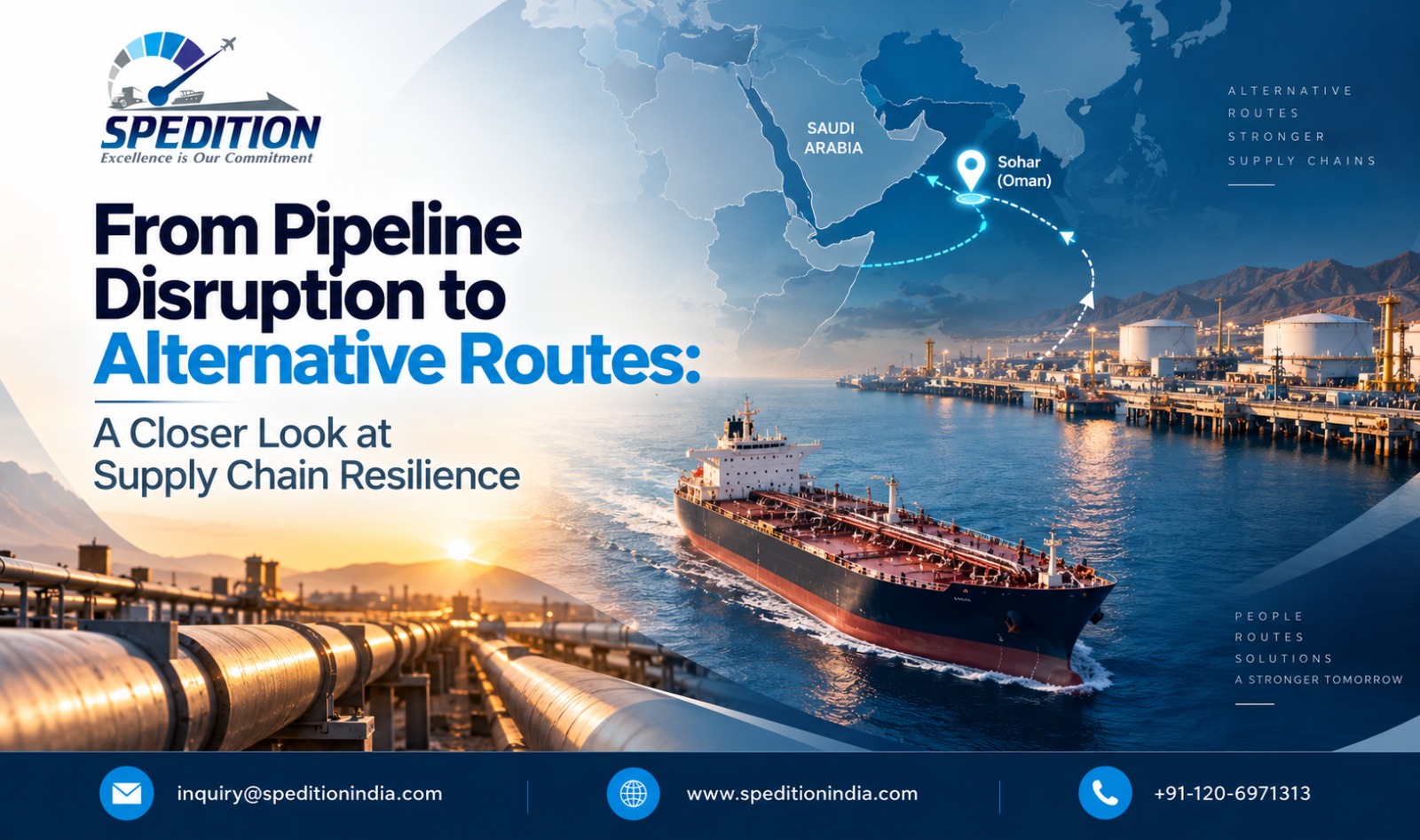
Saudi Arabia is exploring alternative ways to move crude after attacks disrupted its East-West pipeline and affected operations at Yanbu. One option involves routing additional crude through Omanโ€™s Sohar port, including ship-to-ship transfers.

Oil prices eased as alternative supply options helped reduce immediate concerns about a prolonged shortage.

But for logistics, the bigger question is:

What happens when the usual route is no longer available?

What Changes When a Route Is Disrupted?

Changing a logistics route can trigger several knock-on effects:

  • ๐Ÿšข Different ports: Cargo may need to move through alternative gateways.
  • ๐Ÿ”„ Additional handling: Ship-to-ship transfers or transshipment may become necessary.
  • โฑ๏ธ Transit uncertainty: Alternative routes can affect delivery schedules.
  • ๐Ÿ’ฐ Higher costs: Freight, insurance, fuel and handling costs can increase.
  • ๐Ÿ“ฆ Capacity pressure: New routes may not have immediate capacity for additional cargo.
  • ๐Ÿ“‹ More coordination: Documentation, customs and operational planning can become more complex.

So while the cargo may still be available, getting that cargo to its destination can become considerably more challenging.

Why This Matters Beyond Oil

The same supply-chain dynamics apply across industries.

A disruption to a:

  • Port
  • Pipeline
  • Canal
  • Shipping corridor
  • Rail connection
  • Road network

can quickly affect:

Routing โ†’ Transit Time โ†’ Freight Cost โ†’ Inventory โ†’ Customer Delivery

That is why businesses increasingly need to think beyond a single preferred route.

The question is not only:

โ€œWhat is the fastest route?โ€

It is also:

โ€œWhat is our next-best route if conditions change?โ€

๐Ÿ‡ฎ๐Ÿ‡ณ What Does It Mean for India?

India’s dependence on imported crude makes developments in Middle Eastern energy logistics particularly relevant.

With Saudi crude supplies facing disruption, Indian refiners are looking for replacement supplies. However, alternative barrels can involve higher procurement and freight costs.

For Indian businesses, the situation highlights three important considerations:

  • Supply availability โ€” Can the required cargo still be sourced?
  • Route availability โ€” Can it reach India reliably?
  • Landed cost โ€” What will the complete cost be after freight, insurance and handling?

Cargo availability โ‰  Logistics availability

A product can be available in the market while its transportation becomes more expensive, slower or less predictable.

How Can Businesses Build Resilience?

A resilient supply chain doesn’t depend on one solution.

1. Diversify Routes

Keep alternative ports, carriers and trade lanes identified in advance.

2. Maintain Visibility

Track:

  • Vessel movements
  • Port conditions
  • Route restrictions
  • Freight-rate changes
  • Geopolitical developments

3. Plan Capacity Early

When a major route is disrupted, alternative capacity can disappear quickly.

Early planning can help businesses avoid:

  • Last-minute bookings
  • Higher spot rates
  • Cargo rollovers
  • Unplanned storage

4. Look Beyond the Freight Rate

The cheapest freight option isn’t always the cheapest logistics solution.

Businesses should consider the total landed cost, including:

  • Freight
  • Fuel
  • Insurance
  • Port handling
  • Storage
  • Transshipment
  • Potential delay costs

5. Build Faster Decision-Making

During disruption, speed matters.

Having pre-evaluated alternatives allows logistics teams to respond rather than start planning from scratch.

The Bigger Logistics Lesson

Saudi Arabia’s response demonstrates an important principle of modern supply chains:

Resilience isn’t about avoiding disruption. It’s about being prepared to move differently when disruption happens.

Alternative routes may involve additional costs and complexity, but they can provide businesses with something equally valuable:

Continuity.

For global trade, flexibility is becoming just as important as efficiency.

At Spedition, we believe every shipment needs more than a route, it needs a plan that can adapt.

As trade lanes, freight markets and global conditions continue to evolve, the ability to identify and execute alternatives can make a meaningful difference.

Because when one route changes, the supply chain should already have another way forward.

๐Ÿ“ฉ inquiry@speditionindia.com ๐ŸŒ www.speditionindia.com ๐Ÿ“ž +91-120-697131

0 0 Continue Reading →
devnergy