Skip to Content

Blog Archives

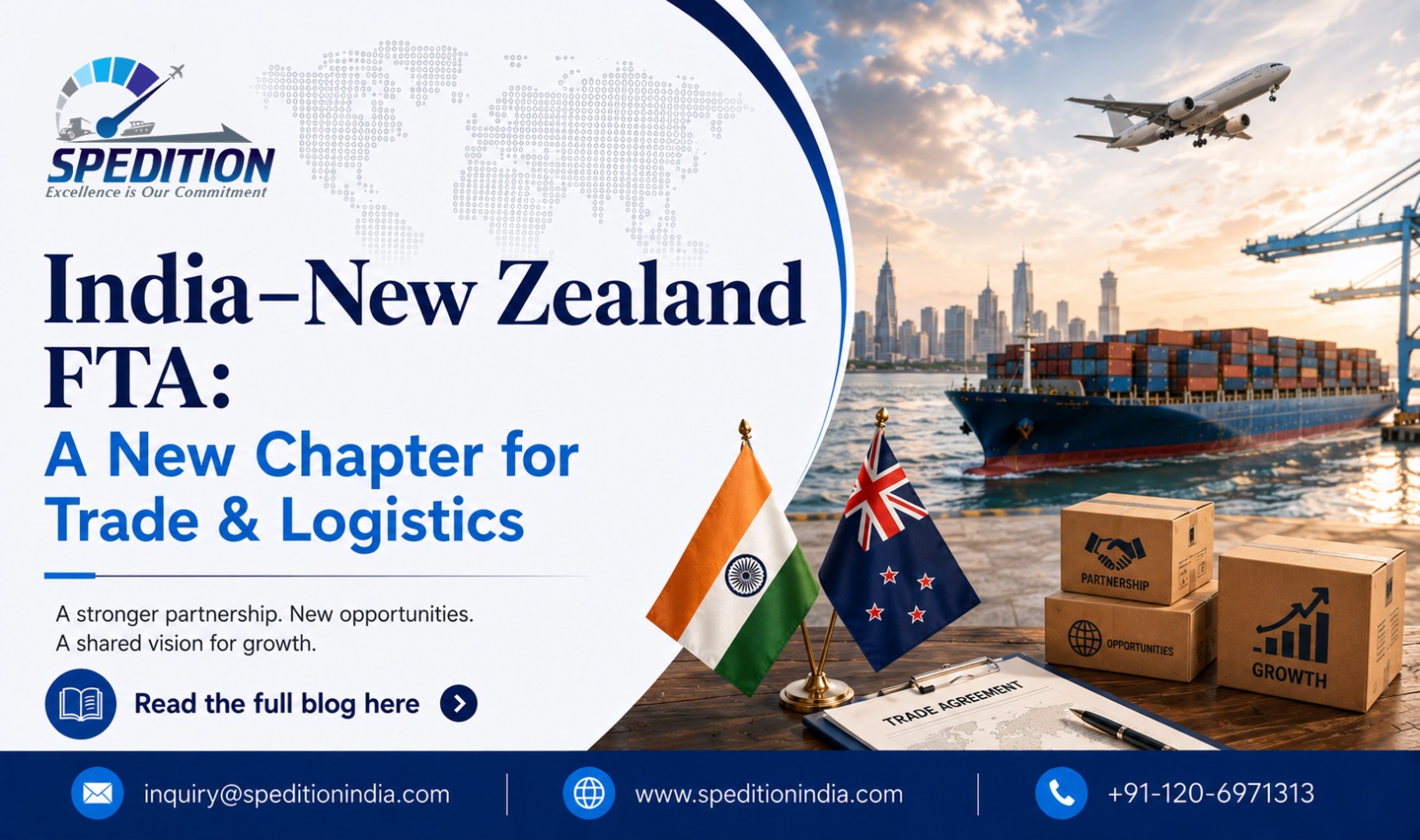
India–New Zealand FTA: A New Chapter for Trade & Logistics

India–New Zealand FTA: A New Chapter for Trade & Logistics


Trade agreements do more than reduce tariffs—they strengthen supply chains, create new market opportunities, and reshape global trade. The recent developments between India and New Zealand are a clear example.

The India–New Zealand Free Trade Agreement (FTA), signed in April 2026, marked a major milestone in bilateral trade. Building on this momentum, both nations have now elevated their relationship to a Strategic Partnership and launched a 2030 Roadmap, shifting the focus from an agreement on paper to long-term economic collaboration.

The FTA That Opened New Doors

The FTA introduced several landmark provisions, including:

  • 100% duty-free access for Indian exports to New Zealand.
  • A USD 20 billion investment commitment from New Zealand.
  • 5,000 temporary employment visas annually for skilled Indian professionals.
  • Greater market access and stronger trade, services, and investment cooperation.

These measures are expected to boost bilateral trade and make Indian exports more competitive.

A Broader Strategic Partnership

Prime Minister Narendra Modi’s recent visit to New Zealand further strengthened bilateral ties with the launch of a Strategic Partnership and a 2030 Roadmap focused on:

  • Trade and investment
  • Resilient supply chains
  • Maritime and Indo-Pacific cooperation
  • Technology, innovation, education, and clean energy

The FTA laid the foundation, this partnership builds on it with a long-term vision for sustainable economic growth.

What It Means for Businesses

Industries such as pharmaceuticals, engineering goods, textiles, food products, gems & jewellery, and auto components are expected to benefit from improved market access and stronger trade ties.

Businesses can look forward to:

  • Increased export competitiveness
  • Diversified supply chains
  • New investment and partnership opportunities
  • Greater confidence to expand into the New Zealand market

Why Logistics Will Matter More Than Ever

Growing trade volumes will increase the demand for reliable logistics, customs expertise, and efficient freight solutions. Businesses that plan ahead with the right logistics partner will be better positioned to capitalize on new opportunities while ensuring smooth cross-border cargo movement.

Turning Opportunity into Growth

The India–New Zealand partnership represents more than a trade agreement—it reflects a shared vision for stronger economic cooperation and future-ready supply chains.

As trade between the two nations grows, efficient logistics will remain the backbone of seamless global commerce.

At Spedition India, we help businesses navigate international trade with reliable freight forwarding, customs expertise, and end-to-end logistics solutions.

📧 inquiry@speditionindia.com 🌐 www.speditionindia.com 📞 +91-120-6971313
0 0 Continue Reading →

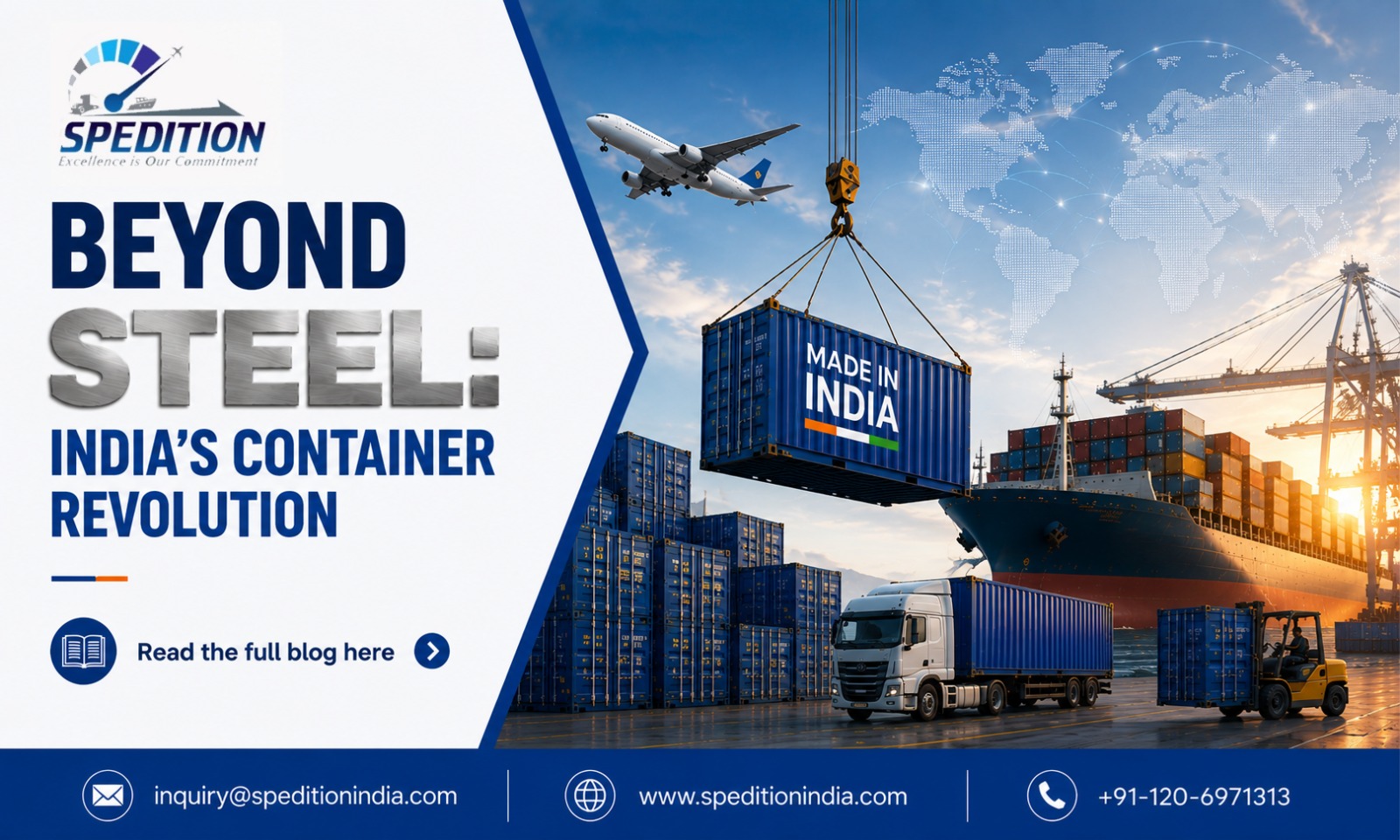
Beyond Steel: India’s Container Revolution

India’s ambitions to become a global manufacturing and export hub have taken another significant step forward. After years of relying heavily on imported shipping containers, the country is now making its mark in container manufacturing—a move that could strengthen supply chains, improve equipment availability, and support the future of India’s EXIM sector.

While shipping containers may appear to be simple steel boxes, they are one of the most critical components of global trade. Every shipment, whether by sea, rail, or road, depends on their availability. Without them, cargo movement slows, costs increase, and supply chains face disruptions.

Learning from the Pandemic

For decades, China has dominated global container manufacturing, supplying the majority of the world’s shipping containers. During the COVID-19 pandemic, container shortages exposed the risks of relying heavily on a single source. Exporters worldwide struggled to secure containers, freight rates reached record highs, and shipments were delayed across industries.

The crisis highlighted why container availability matters:

  • Shipment delays due to equipment shortages.
  • Higher freight costs as demand exceeded supply.
  • Disruptions in export schedules, impacting businesses across industries.
  • Greater dependence on overseas manufacturers for a critical logistics asset.

For India, it was a costly lesson, one that reinforced the importance of building a more resilient and self-reliant logistics ecosystem.

What This Means for India’s Trade

India’s growing focus on domestic container manufacturing could create several long-term advantages for businesses involved in global trade, including:

  • Better container availability during peak export seasons.
  • Reduced dependence on imported containers.
  • Stronger supply chain resilience during global disruptions.
  • Greater support for India’s expanding manufacturing and export sector.
  • Improved efficiency across the logistics ecosystem.

Combined with investments in ports, multimodal connectivity, and logistics infrastructure, domestic container manufacturing has the potential to become another important pillar of India’s trade growth.

Looking Ahead

Building a globally competitive container manufacturing industry will take time, investment, and collaboration. However, the direction is clear. As India continues strengthening its logistics infrastructure, initiatives like these will help create a supply chain that is more resilient, reliable, and future-ready.

Conclusion

India’s container manufacturing journey is about much more than producing steel boxes. It’s about strengthening the backbone of international trade, reducing supply chain vulnerabilities, and creating new opportunities for businesses engaged in global commerce.

At Spedition India, we continue to help businesses navigate an evolving trade landscape with reliable freight forwarding and end-to-end logistics solutions that keep global trade moving.

📩 inquiry@speditionindia.com 🌐 www.speditionindia.com 📞 +91-120-6971313

0 0 Continue Reading →
devnergy