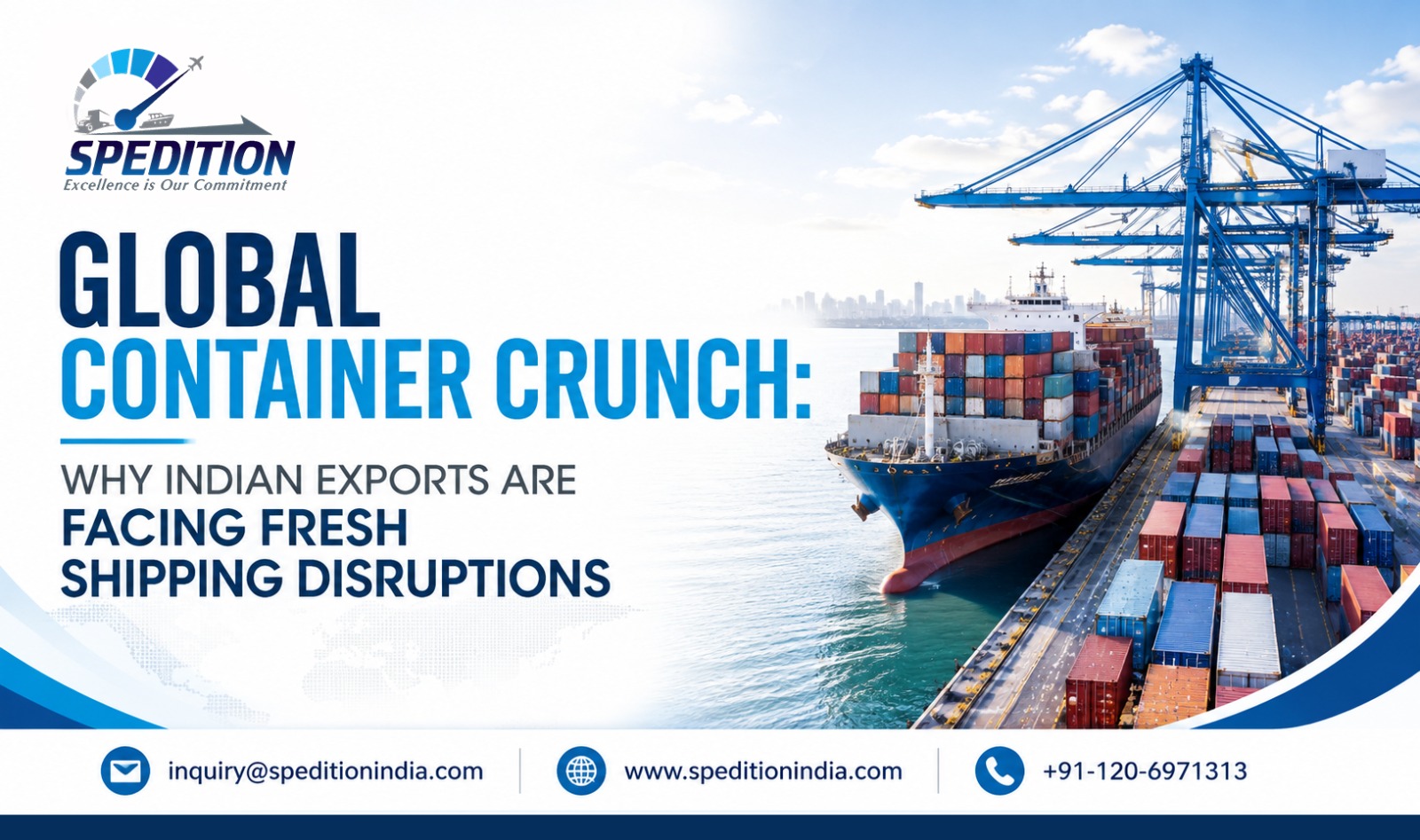
Global Container Crunch: Why Indian Exports Are Facing Fresh Shipping Disruptions
Global container shipping is once again facing mounting pressure, and Indian exporters are beginning to feel the impact.
Congestion at key transshipment hubs such as Singapore and Colombo, combined with vessel schedule disruptions and tighter container availability, is creating delays across international supply chains. For Indian exporters, the challenge is not limited to finding a container, it is increasingly about securing predictable transit times, vessel connections and freight costs.
What Is Driving the Current Container Crunch?
The current pressure on container shipping is the result of several factors coming together.
Strong cargo demand on major global trade routes is absorbing vessel and container capacity, while geopolitical disruptions are forcing shipping lines to adjust routes and schedules.
As vessels and equipment are repositioned across high-demand corridors, other trade lanes can experience tighter availability. This creates a knock-on effect across the wider container network.
For Indian exporters, the impact becomes particularly visible when cargo moves through international transshipment hubs before connecting to its final destination.
Singapore and Colombo: Critical Transshipment Hubs Under Pressure
Singapore and Colombo play an important role in connecting Indian cargo with global mainline shipping networks.
When these hubs experience congestion, containers may spend additional time waiting for berthing, transshipment or onward vessel connections. According to recent industry reporting, some cargo connections that would normally take a few days are taking significantly longer.
This creates a chain reaction:
Port congestion → missed connections → longer transit times → delayed deliveries → higher logistics costs
For exporters working with strict delivery commitments, even a few additional days can disrupt production schedules, inventory planning and customer commitments.
The Impact on Freight Rates
Container availability and vessel capacity are closely linked to freight pricing.
When capacity becomes tight, shipping lines can adjust rates based on demand, available equipment and route conditions. For exporters, this means freight quotations can become less predictable and may change within relatively short periods.
A lower ocean freight rate may also not necessarily mean a lower overall logistics cost if cargo faces prolonged delays at a transshipment hub.
Businesses therefore need to evaluate freight based on total logistics cost and reliability, rather than rate alone.
What Does This Mean for Indian Exporters?
The current situation highlights how dependent international trade is on a connected global shipping network.
A bottleneck thousands of kilometres away can directly affect an Indian exporter.
Some of the key challenges businesses may face include:
- Longer transit times and less predictable delivery schedules
- Limited container availability on certain routes
- Higher or fluctuating freight rates
- Missed vessel connections and cargo rollovers
- Increased inventory and working capital requirements
- Greater difficulty meeting customer delivery commitments
For time-sensitive cargo, these disruptions can have an even greater commercial impact.
How Can Exporters Prepare?
In a volatile shipping environment, effective logistics planning becomes more important than ever.
1. Book Cargo Earlier
Advance planning can improve the chances of securing suitable vessel space and equipment, particularly on high-demand routes.
2. Evaluate Alternative Routes
If a particular transshipment hub is experiencing congestion, alternative routing options may help reduce delays, depending on the destination, cargo type and available services.
3. Build Realistic Transit Buffers
Businesses should factor potential port and transshipment delays into their delivery commitments instead of relying solely on standard transit times.
4. Consider Multimodal Options
For urgent or high-value shipments, combining different modes of transport—or shifting selected cargo to air freight—can provide greater flexibility, although the higher cost needs to be evaluated carefully.
5. Work With a Logistics Partner
Having visibility into vessel schedules, port conditions, equipment availability and alternative routing options can help businesses respond faster when disruptions occur.
A Larger Lesson for India’s Supply Chain
The current container crunch also highlights the importance of strengthening India’s direct connectivity with global shipping networks.
As India continues investing in ports, transshipment infrastructure and multimodal logistics, stronger domestic maritime connectivity could help reduce some of the risks associated with dependence on overseas hubs.
However, global shipping will always remain interconnected. Disruptions at major ports, chokepoints or trade corridors can continue to affect Indian businesses.
The key is not simply to avoid disruption—it is to build supply chains that can adapt to it.
Keeping Your Cargo Moving in an Uncertain Market
Global shipping conditions can change quickly. For exporters, having the right logistics strategy can make the difference between a manageable delay and a major supply-chain disruption.
At Spedition India, we help businesses navigate changing global trade conditions with tailored air freight, sea freight and international logistics solutions designed around their cargo, timelines and destination requirements.
Planning your next international shipment?
Connect with Spedition India to explore the right route and logistics solution for your business.
📩 inquiry@speditionindia.com 🌐 www.speditionindia.com 📞 +91-120-6971313