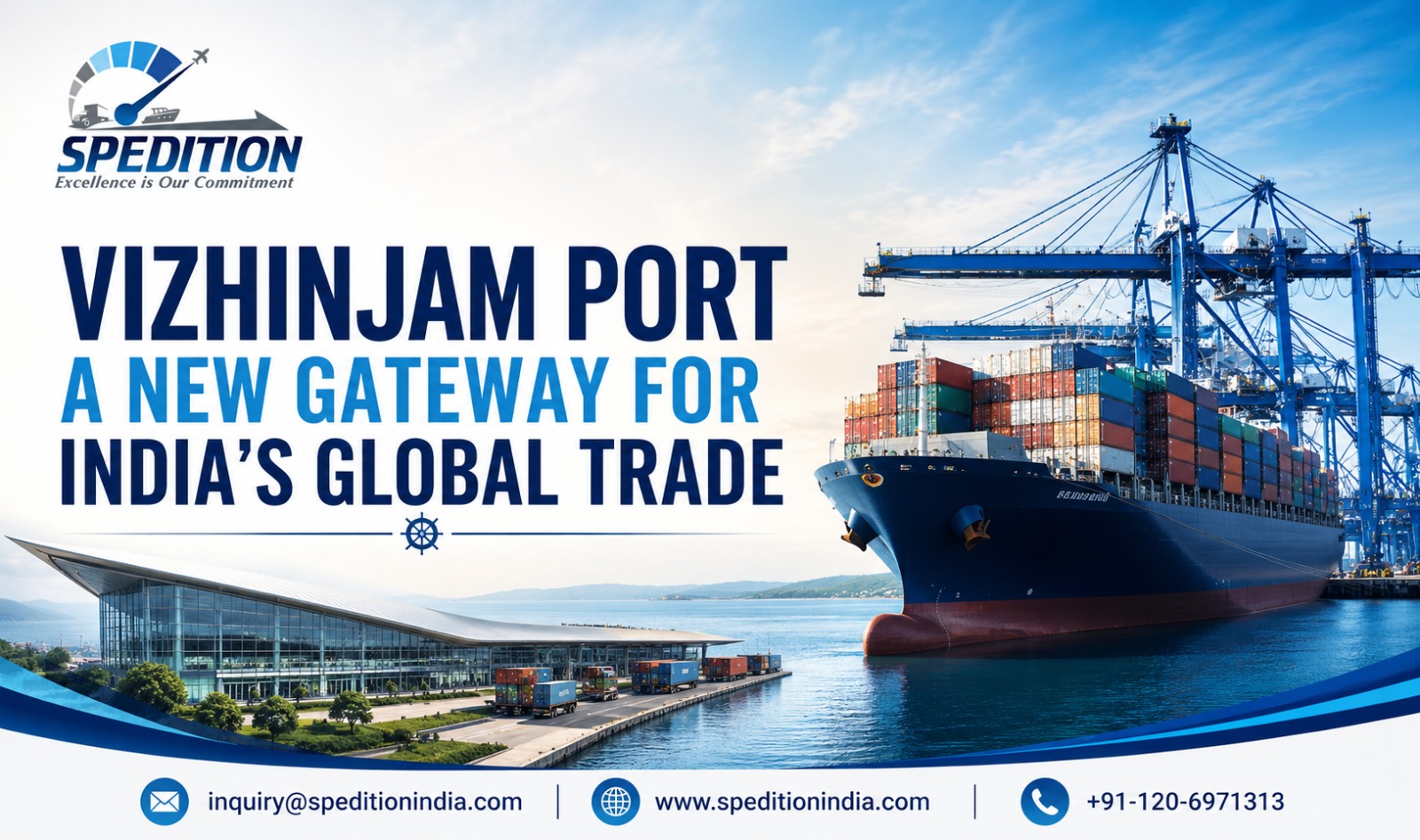
Vizhinjam Port Begins Full EXIM Operations: A New Gateway for India’s Global Trade
India’s maritime sector is entering a new chapter.
From 18 August 2026, the Vizhinjam International Seaport in Kerala will officially begin handling full Export-Import (EXIM) cargo operations, marking its transition from a transshipment hub to a fully operational international cargo gateway.
For exporters, importers, and logistics providers, this is more than just another port expansion, it’s a strategic development that could reshape cargo movement along India’s west coast.
What is changing?
Until now, Vizhinjam primarily handled ship-to-ship transshipment, where containers were transferred between international vessels.
With the launch of EXIM operations, the port will now directly handle:
- Export cargo from Indian businesses
- Import shipments arriving from global markets
- Customs-cleared international cargo
- End-to-end gateway logistics for domestic trade
This significantly expands the port’s role in India’s logistics ecosystem.
Why is Vizhinjam strategically important?
Vizhinjam is India’s first deep-water transshipment port, located just a few nautical miles from one of the world’s busiest east-west shipping lanes connecting Europe, the Middle East and Asia. Its natural deep draft allows it to accommodate some of the world’s largest container vessels with minimal dredging requirements.
This strategic location offers several advantages:
- Reduced deviation time for mainline vessels
- Faster vessel turnaround
- Improved connectivity with global shipping routes
- Greater potential to attract direct international services
What does this mean for Indian exporters?
The commencement of gateway EXIM services can create several long-term benefits:
Reduced dependence on foreign transshipment hubs
A significant share of India’s container cargo has traditionally been routed through ports such as Colombo before reaching global destinations. Expanding direct handling capacity within India can improve supply chain efficiency and strengthen national maritime capabilities.
Faster cargo movement
Direct export and import handling may reduce transit delays associated with multiple handling points, helping businesses improve shipment planning and delivery schedules.
Greater opportunities for southern India
Manufacturers and exporters across Kerala, Tamil Nadu and neighbouring regions may benefit from improved access to international shipping services through a closer gateway port.
A boost for India’s logistics ecosystem
The launch of EXIM operations aligns with India’s broader objective of strengthening port infrastructure, improving multimodal connectivity and enhancing global trade competitiveness.
As cargo volumes increase, the development is also expected to encourage:
- Logistics investments
- Warehousing expansion
- Supply chain infrastructure
- Employment and industrial growth in the region
The Bottom Line
Vizhinjam’s transition into a full-fledged international cargo gateway is more than an operational milestone, it represents India’s growing ambition to become a stronger player in global maritime trade.
For businesses engaged in international commerce, it is a development worth watching as it has the potential to improve connectivity, optimise supply chains and create new opportunities for export-led growth.
As India’s port infrastructure continues to strengthen, businesses that adapt early will be better positioned for growth. Partner with Spedition India to navigate global trade with confidence.
📩 inquiry@speditionindia.com 🌐 www.speditionindia.com 📞 +91-120-6971313