Skip to Content

Category Archives: Blogs

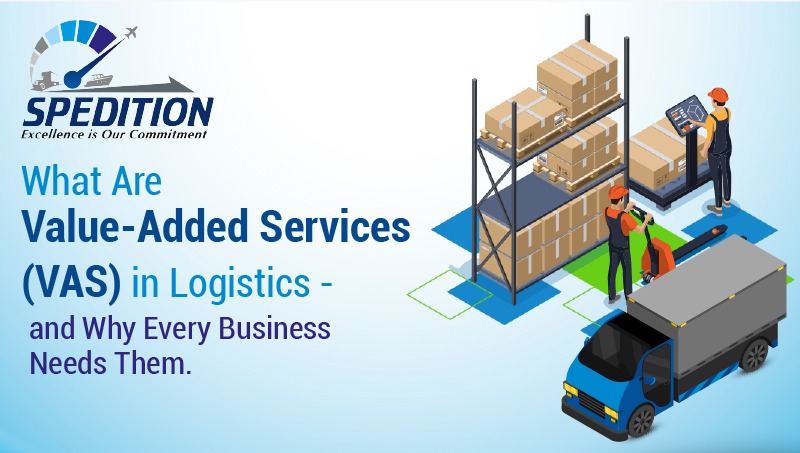
What Are Value-Added Services (VAS) in Logistics—and Why Every Business Needs Them

What Are Value-Added Services in Logistics—and Why Every Business Needs Them

Today’s logistics system is not merely concerned with trucks, warehouses, or delivery but has changed to the functioning of a supply chain in an intelligent and efficient manner. That’s why Value-Added Services in logistics have become essential.

VAS includes all the extra services performed before, during, and after distribution—services that enhance product quality, reduce operational effort, and increase customer satisfaction. And at Spedition India, these services are deeply integrated into our logistics ecosystem.

Let’s explore everything you need to know.

Introduction to Value-Added Services in Logistics

The Shift from Basic Logistics to Integrated Supply Chain Solutions

In the past, logistics was straightforward: the products were moved and received. Currently, companies want to have full control over their goods with tracking, customization, inspection, speed, and flexibility. The supply chain has undergone a transformation—and so must the logistics companies.

Rising Customer Expectations and Market Complexities

Due to same-day delivery and hassle-free returns becoming customers’ rights, seller’s need for intelligent systems for managing their fulfilment is increasing. VAS is a technology that assists brands in obtaining just that.

Understanding the Concept of Value-Added Services in logistics

Definition and Purpose of VAS

Value-Added Services refer to additional tasks performed beyond traditional logistics to enhance efficiency, add functionality, or improve customer experience.

Why VAS Is a Game-Changer

Companies use VAS to lighten the burden of their operations and to hire outside professionals to do the tedious work of handling returns, labelling, packaging, and assembling.

Enhancing Supply Chain Agility

VAS provides flexibility, speed, and accuracy—traits that are vital for today’s supply chains operating in constantly changing markets.

For agility insights, see Supply Chain Digital:
🔗 https://supplychaindigital.com/

Types of Value-Added Services in logistics (Offered by Spedition India)

Packaging & Repackaging

Packaging plays a major role in product safety and brand visibility.

  • Customized Packaging

Whether it’s festive packaging, brand-specific boxes, or promotional designs—Spedition India offers personalized solutions.

  • Damage-Prevention Packaging

High-quality cushioning, shrink-wrap, industrial-grade packing, and moisture-resistant materials ensure goods arrive safely.

  • Kitting & Assembly

We combine multiple products into ready-to-ship kits—ideal for promotional bundles, subscription boxes, or product combos.

Labelling & Barcoding

Correct labelling eliminates errors in inventory, storage, and shipping. It also provides transparency and tracking accuracy.

  • Quality Control & Product Inspection

Our team ensures goods meet quality standards before they leave the warehouse—reducing complaints, returns, and brand risk.

  • Reverse Logistics & Returns Management

A strong returns system can significantly improve customer satisfaction.
We manage pickup, inspection, sorting, refurbishing, recycling, and re-shipping.

Warehousing-Related VAS

  • Pick & Pack

Accurate picking ensures customers receive correct orders, while efficient packing reduces transit damage.

  • Cross-Docking

Products bypass long storage and move directly from inbound to outbound transport—ideal for fast-moving goods.

  • Inventory Management & Stock Audits

Real-time stock visibility helps avoid shortages and excess inventory, saving cost and space.

Transportation VAS

  • Express Shipping

When speed is critical, express delivery ensures goods reach their destination quickly.

  • Last-Mile Optimization

Spedition India uses route planning, tracking, and optimized delivery cycles to make last-mile delivery fast and efficient.

Why VAS Is Important for Modern Businesses

Higher Operational Efficiency

Businesses are able to lower their workload, further their reliance on in-house teams and cut down on time to perform repetitive tasks.

Better Customer Experience

Excellent deliveries, faultless orders, and premium packaging create a favourable impression that lasts for a longer period.

Scalability without Added Overhead

Instead of hiring more staff or building additional capacity, companies leverage Spedition India’s ready expertise.

Eliminating Bottlenecks

VAS guarantees no lag in manufacturing, pouring out, and dispatching while persistently operating at their best.

Key Benefits of Value-Added Services in Logistics

  1. Cost Savings

With optimized operations, reduced manpower needs, and bulk processing, costs drop significantly.

  1. Better Inventory Flow

Streamlined processes prevent stock-outs and overstock.

  1. Increased Accuracy

Whether it’s packaging, labelling, or picking, VAS minimizes errors.

  1. Lower Return Rates

Quality checks eliminate defective or incorrect product dispatch.

VAS in E-Commerce & Omni channel Supply Chains

Handling Bulk Orders during Peak Seasons

Festivals, sales, and promotional events create order spikes. VAS ensures seamless fulfilment even under pressure.

Hyper-Personalized Shipping

Gift messages, custom wrapping, and special bundles are easily managed.

Efficient Returns Management

Since returns influence customer trust, we make the process smooth, fast, and transparent.

Real-World Business Applications of VAS

Retail & Lifestyle

Includes tagging, size sorting, bundling, and seasonal packaging.

FMCG

Batch coding, expiry labelling, and secondary packaging.

Electronics

Testing, anti-static packaging, and safe transportation.

Industrial Supplies

Heavy packaging, palletisation, and labelling for bulk products.

What Makes Spedition India a Trusted Partner for VAS?

Advanced Technology & Automation

We use digital warehousing, RFID, barcode systems, and automated tools to increase accuracy.

Industry-Specific Expertise

We understand different sectors and tailor services accordingly.

Timely & Reliable Support

From storage to shipping, Spedition India ensures consistent, punctual, and error-free operations.

Future Trends of Value-Added Services in Logistics

AI-Driven Demand Forecasting

Predict customer needs and plan better.

Automation & Robotics

Faster picking, packing, and sorting.

Data-Driven Inventory Intelligence

Smarter decisions for warehousing and movement.

Conclusion

Value-Added Services in logistics, as a matter of fact, are not luxuries but must-have services, among companies who are willing to do their part in competition, get bigger and provide excellent customer service. Partnering with a logistics provider like Spedition India, who is an expert in the field, can change the way you operate, considering the rapid changes in consumer behaviour, product assortment, and delivery expectations.


We bring Ours VAS solutions that offer great efficiency, less work, cheaper costs, and perfect condition of the products to the customers every time.

FAQs

  1. What makes VAS important in logistics?
    VAS improves accuracy, efficiency, and customer satisfaction while reducing effort for businesses.
  2. Does Spedition India offer customized VAS?
    Yes, we tailor VAS according to your industry, product type, and operational needs.
  3. How does VAS reduce costs?
    Outsourcing tasks such as packing, kitting, and labelling cuts labour and operational expenses.
  4. Is VAS important for e-commerce brands?
    Absolutely—VAS supports personalized packaging, fast fulfilment, and returns management.
  5. Can I choose only specific VAS services?
    Yes, Spedition India offers flexible, scalable VAS options according to your requirements.
0 0 Continue Reading →

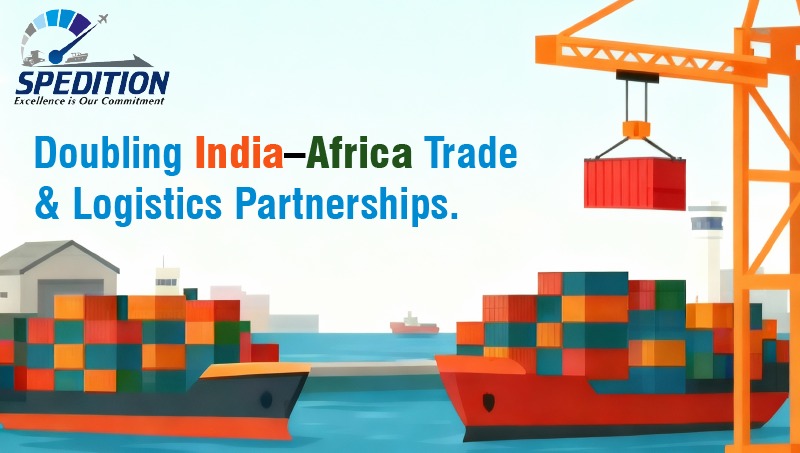
Doubling India–Africa Trade & Logistics Partnerships

Doubling India–Africa Trade & Logistics Partnerships

Strengthening Connections. Enabling Growth. Moving Industries Forward.

India-Africa trade relations are likely to be one of the most exciting collaborations of the decade. Policies and trade agreements are just a small part of the story of this bubbling partnership. Furthermore, the ports, air routes, and supply chains create a real growth scenario where trade development will be easy. Per the Confederation of Indian Industry (CII), there will be a twofold increase in trade between the two areas by the year 2030, and the foremost factor in this expansion will be logistics, thus making the growth sustainable.

For companies venturing into new markets, logistics is not only transferring goods. It means extension of reliability, tardiness, and trust. At SPEDITION INDIA, we consider every shipment as an obligation – a bond that links people, industries, and chances to the other side of the border.

India–Africa: A Corridor of Opportunity

India and Africa have long been natural trade partners. In recent years, this relationship has diversified — spanning sectors such as pharmaceuticals, renewable energy, machinery, and FMCG. Indian shipments are advancing Africa’s industrial advancement, and Africa’s abundant natural assets back India’s production and power needs.

This shared expansion has forged one of the globe’s most encouraging commerce routes. However, sustaining this pace requires robust, flexible, and reliable supply chain setups. That’s where Spedition India comes in — providing integrated logistics solutions that make trade between India and Africa seamless and efficient.

SPEDITION INDIA: Enabling India & Africa Trade Seamlessly

At Spedition India, logistics means more than transportation — it’s about building lasting connections. Every shipment we move represents a business milestone for our clients. Our India–Africa trade operations combine an extensive network of air and sea routes with local expertise to ensure cargo reaches its destination safely and on time.

The logistics services we offer have specializations in:

  • Air and Sea Freight at access points like ports and airports in India and Africa.
  • Movements and Project Cargo for heavy and specialized equipment.
  • Education and Humanitarian Cargo used for children and adults learning and development of initiatives.
  • Customs Clearance, Last-Mile Delivery, and Warehousing.
  • Multimodal Transport solutions that are time and cost efficient.

Infrastructure, Technology & Trust

While commerce relies on the physical framework, successful logistics flourishes through reliance. Spedition India functions via India’s foremost entry points — Nhava Sheva, Mundra, Chennai, and Delhi — linking these hubs to vital African trading zones across the East, West, and South.

Through cutting-edge shipment monitoring, electronic paperwork, and up-to-the-minute collaboration, Spedition India guarantees total clarity. However, our dependability is not solely built on technology; it’s our personnel who truly matter. Every team member recognizes that logistics involves more than simply transporting goods; it’s about delivering assurance.

Building the Future of India–Africa Trade

The India–Africa trade route is growing faster than ever, powered by investment, collaboration, and innovation. Spedition India continues to invest in stronger partnerships and smarter logistics systems that support this growth. Our approach blends human insight with technological precision — ensuring that every delivery builds trust and strengthens global connectivity.

As both regions expand their economic footprint, Spedition India remains committed to enabling this transformation — helping businesses reach new markets, reduce complexity, and achieve sustainable global growth.

Summary

There is no doubt that the India–Africa trade partnership is among the top trade stories of the modern era. This collaboration in trade is expected to be twice as much in 2030, and Spedition India is playing a key role in this development by providing first-rate logistics solutions. Our expertise in air, sea, and project cargo services ensures smooth, secure, and on-time delivery — empowering industries across continents.

Frequently Asked Questions (FAQ)

  1. Why is the India–Africa trade corridor growing so rapidly?

It’s due to mutual complementarity: India supplies expertise in technology and production, while Africa provides raw materials and developing consumer bases. This equilibrium forms a basis for long-term progress.

  1. How does Spedition India support India–Africa logistics?

Spedition India delivers comprehensive shipping services, spanning air freight, ocean transport, and combined methods. We manage border clearances, paperwork, and secure storage to streamline international transit.

  1. What kind of cargo does Spedition India specialize in?

We manage industrial equipment, project freight, machinery, engineering commodities, educational consignments, and humanitarian assistance with the greatest attention and adherence to regulations.

  1. Which African regions does Spedition India serve?

Spedition India operates across East Africa (Kenya, Tanzania), West Africa (Ghana, Nigeria), and Southern Africa (South Africa, Mozambique).

  1. How can businesses collaborate with Spedition India?

Visit Spedition India to connect with our team, request a quotation, or explore partnership opportunities tailored to your trade needs.

About SPEDITION INDIA

SPEDITION INDIA, an acclaimed logistics and freight forwarding company operating from India, is primarily engaged in Air, Sea, and Project Cargo solutions. With an extensive network covering Asia, the Middle East, and Africa, we facilitate trade and borderless movement of goods in a risk-free manner for various sectors.

Soaked in the ethos of dependency, honesty, and customer-centricity, Spedition India merges the world’s expert knowledge with the local understanding to make supply chains smarter. The company’s vision is crystal clear — to uplift industries, delivery after delivery.

0 0 Continue Reading →

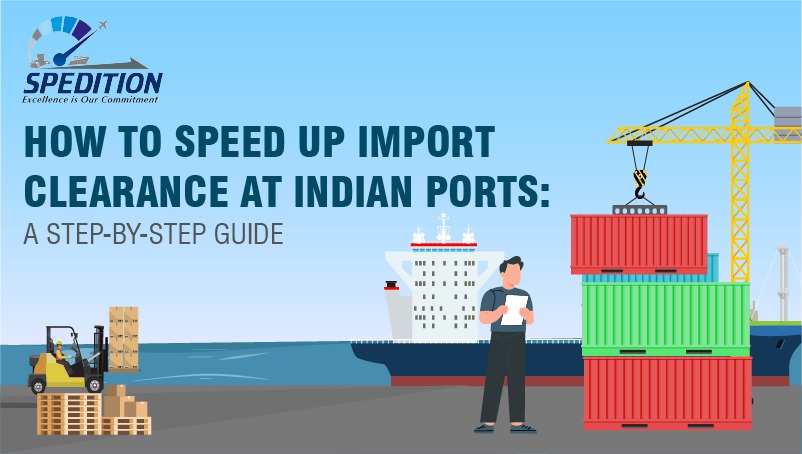
How to Speed Up Import Clearance at Indian Ports: A Step-by-Step Guide

How to Speed Up Import Clearance at Indian Ports: A Step-by-Step Guide

Introduction: Navigating India’s Port Clearance Maze

India’s increasing importance in international trade has resulted in a tremendous increase in the international transport and transit of imported goods through its major ports. The procedure of import clearance every shipment entering the country has to go through — a very important step that not only assures compliance with customs regulations but also safe entry of the goods into the domestic market.

On the contrary, the process is typical for the challenges including complicated paperwork, delays in customs verification, and congested port operations. These challenges not only delay the delivery but also add to the cost of doing business.

This blog is a step-by-step guide for importers to quicken their clearance process, avoid delays, and keep trade operations running smoothly. With Spedition India, one of the top logistics companies in India, this guide focuses on how strategic planning and expert logistics support can revolutionize the import experience — turning it into a faster, compliant, and efficient one.

Understanding the Import Clearance Process in India

Before you can speed up clearance, it’s important to understand how the import process works at Indian ports.

Key stages of import clearance include:

  1. Arrival of cargo at the port – Merchandise is offloaded and stored within a customs-controlled zone.
  2. Filing of Bill of Entry – The buyer or their designated representative submits this paperwork to commence border formalities.
  3. Customs assessment and duty payment – Officials check the paperwork and determine the required levies.
  4. Cargo examination and release – After levies are settled, the consignment is examined and cleared for final transport.

Key participants like shippers, cargo handlers, customs agents, and terminal operators hold vital functions within this process. Regrettably, slowdowns frequently arise from missing paperwork, incorrect statements, or poor alignment among these parties.

Effective administration of every step, aided by a knowledgeable supply chain collaborator such as Spedition India, can notably shorten the release duration.

Step 1: Prepare Accurate Documentation before Cargo Arrival

A prime method for expediting   involves having all required paperwork ready ahead of the shipment reaching the port.

Key documents include:

  • Commercial invoice and packing list
  • Bill of Lading or Airway Bill
  • Certificate of Origin
  • Importer Exporter Code (IEC)
  • Insurance certificate
  • Letter of credit or purchase order

Currently, numerous purchasers and supply chain operators utilize electronic filing platforms to submit and validate these documents early, minimizing manual mistakes and cutting down clearance duration by multiple days.

Step 2: File Bill of Entry Online via ICEGATE

The Indian Customs Electronic Gateway (ICEGATE) serves as a digitized portal streamlining customs document submission for both those bringing goods in and those sending them out.

Using ICEGATE for filing the Bill of Entry electronically before the arrival of the shipment allows customs to start their document verification quicker which in turn helps you to cut down on the total wait time.

Pro Tip: It is advisable to file your Bill of Entry at least one day in advance compared to the scheduled ship arrival. It is not only beneficial for the fast release process but also very effective in avoiding costly demurrage or detention charges that could result from delays.

Step 3: Choose the Right Customs Broker or CHA

Working with a licensed Customs House Agent (CHA) can make a world of difference. A CHA handles all interactions with customs on your behalf — from document submission and assessment follow-ups to final cargo release.

When choosing a CHA or logistics partner, look for:

  • Experience in significant Indian ports like Mumbai, Mundra, Chennai, or Kolkata
  • Certification of skill in handling international transport and customs law
  • Operations that are open and communication that is constant and in real-time

Spedition India, known for its excellent position among the best logistics companies in India, deals with customs brokerage and provides freight forwarding services that are both inexpensive and facilitate faster clearance with no delays at all.

Step 4: Stay Updated on Import Regulations and Tariffs

India’s regulations on imports and tariffs are changing continuously. The regular notifications from such authorities as the DGFT and CBIC can impact your timeline for clearance and your costs for duty.

Importers must:

  • Be informed about the official notifications so that they get the updates instantly.
  • Rely on the internet tariff calculators for the exact duty estimations.
  • Get the help of a shipping company that is always updated about the compliance trends.

Spedition India’s professionals make sure that your products meet the newest customs rules and regulations, and in this way, they help you to prevent penalties, random checks, and unexpected delays in getting your goods cleared.

Step 5: Optimize Container and Cargo Handling

Efficient cargo handling is essential to prevent operational bottlenecks.

Clear coordination between importers, shipping agents, and port operators ensures that unloading schedules are maintained and containers are released on time. Always verify container numbers, seals, and release documentation to prevent mix-ups or administrative delays.

The port handling solutions along with the inland transportation services of Spedition India assure that the cargo is transferred without hassle from the port to its ultimate place of destination, thus minimizing both storage costs and waiting time.

Step 6: Use Digital and Automated Solutions

The logistics digital transformation has been a catalyst for huge gains in both speed and transparency.

Among other things, paperless customs, EDI systems, and online payment of duties have cleared out the mistakes that are done manually and have made the clearance cycles shorter. Due to real-time shipment tracking and automated alerts, importers are kept informed throughout the process.

Spedition India has made the incorporation of advanced digital logistics technology into its processes part and parcel of its services, which makes its clearance services faster, more reliable, and data-driven. This is one of the reasons why it is classified as one of the best logistics companies in India for international transportation.

Step 7: Maintain Regular Coordination between Stakeholders

Effortless communication is the foundation of speedy clearance.

Disruptions usually take place when the different parties involved—importers, customs agents, shipping lines, and truckers—are not on the same page. Continuous communication, including the sharing of real-time shipment status and coordinating the payment of taxes, can eliminate delays.

The Spedition India team works tirelessly to make sure that there is always good communication between the parties involved, thus making it possible to see the whole process and to know who is responsible at each stage.

Common Mistakes That Delay Import Clearance

Even small errors can lead to major delays. Common issues include:

  • Incomplete or inaccurate documentation
  • Late payment of customs duties
  • Wrong classification of goods under HS codes
  • Partnering with unverified or inexperienced brokers
  • Failing to track shipment status or port notifications

Avoiding these pitfalls requires proactive management, attention to detail, and support from a reliable freight forwarding service provider like Spedition India.

How Spedition India Streamlines Import Clearance

At Spedition India, we understand that time and accuracy define success in logistics. As one of the top logistics companies in India, we specialize in delivering fast, transparent, and compliant import clearance solutions across major Indian ports.

Our specialized services include:

  • Customs Brokerage: Efficient document processing and duty management.
  • Freight Forwarding: Global connectivity through affordable freight forwarding services designed for both SMEs and large-scale importers.
  • Port Handling & Inland Transportation: Safe, timely, and organized movement of cargo from port to destination.
  • End-to-End Documentation: Accuracy, compliance, and seamless digital integration.

With Spedition India’s expertise in international transportation, businesses gain access to a trusted logistics partner that values speed, reliability, and customer satisfaction above all.

Conclusion: Efficient Clearance, Efficient Business

Efficient import clearance is a crucial factor to consider in global trade not only on time-saving aspect but also as a competitive advantage. The combination of proper papers, the latest compliance knowledge, digital systems, and reliable logistics backing will allow importers to have each delivery passed through quickly and smoothly.

Opting for Spedition India means that you are not only getting a service but also getting a logistics partner that will strongly support your business growth through economical freight forwarding, quick customs clearance, and overall international transportation assistance.

Come together with Spedition India right away to make your imports faster, more compliant, and totally trouble-free.

0 0 Continue Reading →

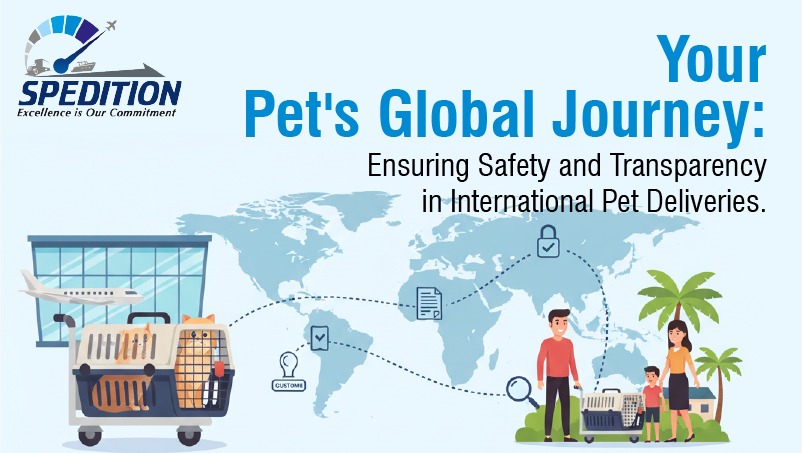
Your Pet’s Global Journey with Spedition India: Ensuring Safety and Transparency in International Pet Deliveries

Introduction

At Spedition India, we recognize that pets are valued family members who are more than just animals. Our pet relocation services are therefore made to provide the ideal balance of convenience, safety, and care. We are pleased to be your reliable international pet deliveries partner as the need for pet migration abroad keeps increasing.

Understanding Pet Logistics with Spedition India

What is international pet relocation?

International pet transport involves moving your pet safely across borders while complying with the destination country’s rules and regulations. Our specialized pet relocation services ensure all aspects—health, legal, and logistics—are managed seamlessly.

Why people move pets globally

Whether for work, family, or adventure, many pet parents are relocating worldwide and want their pets by their side. That’s where pet relocation international services by Spedition India come in.

Planning Your Pet’s Journey

Health checks and vaccinations

All international pet transport journeys begin with a visit to the vet. Spedition India helps arrange timely vaccinations and health clearances.

Micro chipping and ID

Micro chipping is crucial for safety and identification. Our pet relocation services include guiding you through proper registration and ID tagging.

Picking the right season for travel

We plan your travel around seasons to avoid harsh weather, ensuring a comfortable international pet transport experience.

Legal Requirements Made Easy

Documents and permits handled by Spedition India

Our pet relocation international experts take care of:

  • Health and vaccination records
  • Export/import permits
  • Microchip registration
  • Airline documentation

Country-specific quarantine guidance

Each country has different quarantine rules. We help you meet them all with confidence.

Help with pet passports and health certifications

Spedition simplifies the complicated—helping you secure all needed paperwork for smooth pet relocation services.

Why Choose Spedition India for Pet Relocation

Experience and care in handling live animals

Our team has vast experience in international pet deliveries, ensuring each move is handled with compassion and care.

Global network and real-time tracking

We connect you to a worldwide network of animal-friendly airlines and handlers—all coordinated under our premium pet relocation services.

Personalized service for your pet’s needs

Each pet is unique, and so is their journey. From crate size to diet and behaviour, we personalize every pet relocation international detail.


Safe Transport Options

Air freight solutions for pets

We work with trusted air carriers offering specialized international pet transport cabins, trained staff, and climate-controlled environments.

Land and multimodal transport

For short distances or connecting locations, we use safe and hygienic ground transport backed by expert pet handlers.

Cost vs comfort comparison

Spedition helps you balance travel time, safety, and cost with transparency—making our pet relocation services a smart choice.


Preparing the Travel Crate

IATA-compliant crates provided by Spedition

We offer top-quality crates as per IATA guidelines—essential for any international pet deliveries.

Tips for getting your pet comfortable

Our pet relocation services include pre-travel guidance to familiarize your pet with the crate, reducing anxiety.

What goes inside the crate

  • Absorbent mat
  • Pet-safe water feeder
  • Toy or soft cloth
  • Medical records and labels

Real-Time Transparency

Spedition’s tracking systems and updates

You can track your pet in real time using our logistics dashboard, making pet relocation international stress-free.

Live reporting and direct communication

We share updates at each checkpoint, so you’re always informed.

Dedicated pet relocation experts

You’ll have one dedicated contact managing your entire international pet transport process—start to finish.

Arrival at Destination

Spedition’s customs clearance support

Our agents simplify the customs process upon arrival, ensuring smooth entry for your pet.

Smooth handover process

We coordinate the safe transfer of your pet to you or your representative right at the destination.

Helping pets adapt post-arrival

Spedition India provides post-arrival care tips as part of our pet relocation services—because adjustment matters too.

Overcoming Common Challenges

Dealing with delays and diversions

Unexpected changes? We’ve got plans in place to keep your international pet transport smooth and safe.

Managing travel stress in pets

We share pre-travel tips, recommend calming aids, and ensure minimal disruptions during travel.

Handling lost or delayed documents

Our digital backup system prevents misplacements—another advantage of choosing Spedition India’s pet relocation international services.

Pricing Made Simple

What’s included in Spedition’s pet relocation package

  • All legal documentation
  • Veterinary assistance
  • Crate and cargo charges
  • Customs clearance
  • Tracking support

Custom quotes based on pet and destination

We don’t believe in one-size-fits-all. Your pet’s journey gets a tailored pricing structure.

Smart tips to reduce costs

  • Book early
  • Travel off-season
  • Consider consolidated international pet transport options

Pet Parent’s Peace of Mind

Emotional support and preparation

We know this journey is emotional. Our team provides constant support and communication to keep you at ease.

Stay informed and worry-free

With 24/7 updates, expert handlers, and personalized care, our pet relocation services offer full peace of mind.

Real Stories from Spedition Clients

Happy tails from across the globe

From Pugs to Parrots, our pet relocation international success stories span continents.

What pet parents say about our service

“Thanks to Spedition India, my Golden Retriever arrived safely in Australia. The updates and support made a big difference.” — Neha, Delhi

Looking Ahead

Innovation in pet relocation at Spedition

We are advancing with smarter tech—GPS tags, biometric tracking, and mobile apps—for next-level international pet transport.

Our commitment to your pet’s safety

Our mission remains unchanged: to offer safe, transparent, and loving pet relocation services every time.

Conclusion

With Spedition India, your pet’s international move becomes less about stress and more about safety and comfort. From the first call to the final paw print at the new home, our pet relocation services are crafted with care and built on trust. Choose Spedition India—because when your pet travels, they deserve nothing but the best in international pet transport.

FAQs

  1. How does Spedition ensure my pet’s safety during the journey?
    We provide IATA-approved crates, real-time monitoring, and professional handlers to ensure safe international pet transport.
  2. Can I track my pet in real time during international transport?
    Absolutely! Our pet relocation international team shares constant updates and offers a live tracking system.
  3. How long does the relocation process take?
    Depending on regulations, it may take 2–6 weeks to prepare and 1–3 days for the actual international pet transport.
  4. Are all breeds eligible for international relocation?
    Some breeds have restrictions. Our pet relocation services will confirm eligibility based on destination and airline policy.
  5. What documents will Spedition India handle for me?
    Everything—from pet passports, vet records, export/import permits, to airline clearance—is managed by our team.
0 0 Continue Reading →

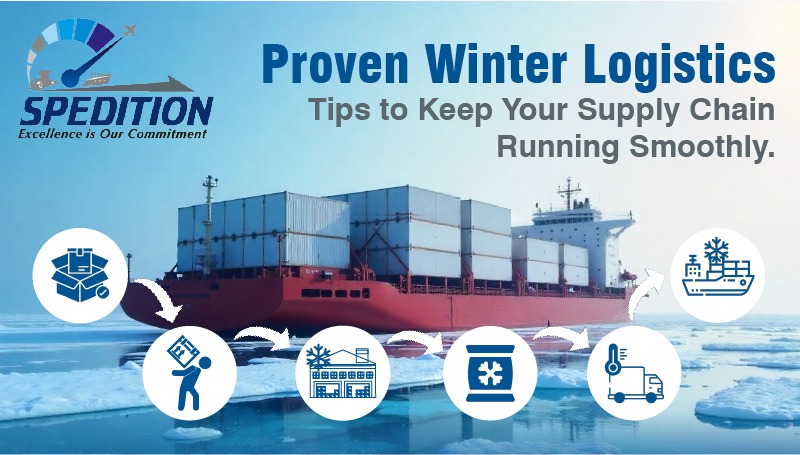
Proven Winter Logistics Tips to Keep Your Supply Chain Running Smoothly

Proven Winter Logistics Tips to Keep Your Supply Chain Running Smoothly

Introduction – When Cold Weather Tests Supply Chain Strength

Winter is pretty, but for logistics companies like Spedition India, it’s a season of obstacles. From icy roads to heavy snow and delayed deliveries, the cold months show how strong — or fragile — your supply chain can be. If you rely on fast deliveries and efficient operations to do business, winter logistics can make or break your brand.

This guide shares proven winter logistics tips and how spedition India helps you maintain operational efficiency, ensure safety, and keep your supply chain moving — even when the weather has other plans.

Understanding the Winter Logistics Challenge

Weather-Related Disruptions

Snowstorms, when they arrive, can close entire transport routes. Icy roads make driving hazardous, and thick fog impairs visibility for both air and road freight. These are the factors that will result in unsteady and uncertain holds which apply torque to the globalized supply chain. This is where Spedition India steps in and aids clients with timely delivery.

Transportation Bottlenecks and Delays

Winter brings chronic rail and port congestion. Ships can be held up because of frozen ports, and trucks face ice-choked highways. This slows the movement of goods and frequently results in inventory stockouts.

Increased Operational Costs 

More fuel, more heating, and more maintenance — winter operations are costly. Businesses spend extra on de-icing, tire replacements, and storage heating, impacting overall profit margins.

The Importance of Winter-Proofing Your Supply Chain

The best way to winter-proof your logistics isn’t merely by simply avoiding disruptions; it’s a matter of anticipating ways to stay ahead. A robust supply chain system reduces risk and customer dissatisfaction, while keeping business expenses in check even through the most extreme weather.

Fleet Maintenance – Keeping Vehicles Ready for the winter logistics 

Regular Inspections and Maintenance Checks

Cold weather affects fuel efficiency, tire pressure, and battery performance. Scheduling routine checks for tires, brakes, and heating systems keeps your vehicles winter-ready.

Essential Winter Logistics Equipment for Fleets

For each vehicle, provide snow chains, antifreeze and deicer in addition to a toolbox for emergencies. Its the small additions that make a big difference when your fleet encounters erratic winter roads.

Driver Safety and Training

Preparing Drivers for Harsh Conditions

Drivers are the engine that drives logistics. Teach them to drive in a defensive manner when there is snow or ice. Encourage the taking of rest stops, wearing of reflective clothing and checking the weather before each route.

Emergency Readiness and Communication Tools

Ensure every driver has access to real-time communication devices and GPS tracking. In case of breakdowns or road closures, dispatchers can quickly reroute or provide support.

Optimize Warehouse and Cold Storage Efficiency

Temperature and Humidity Control

Warehouse insulation in winter is extremely important. You know, if you use smart thermostats or temperature sensors or automated climate systems and don’t spoil your temperature-sensitive goods.

Worker Safety Inside Warehouses

Cool floors could also be slippery and dangerous. Offer anti-slip mats and proper lighting and heating areas where construction workers in the warehouse may slip or trip.

Using Technology for Real-Time Logistics Management

GPS Tracking and Predictive Analytics

Technology allows companies to predict and prevent problems before they occur. GPS systems and AI-based weather analytics help optimize routes and delivery schedules.

IoT Devices and Automation in Cold Chain Logistics

IoT-connected devices track the temperature and humidity of products while in transit, ensuring some level of cold chain requirements are achieved — particularly for medications and perishable food items.

Strengthening Communication and Collaboration

Supplier and Customer Coordination

In addition, strong relationships with both suppliers and customers enable greater coordination during a disruption. This allows all to prepare for potential delays by forecasting jointly.

Transparent Communication During Delays

But if delay is unavoidable, transparency is critical. First Alert: Notify your customers immediately and give updated delivery dates to continue to establish trust and reliability.

Building Supply Chain Resilience Before Winter Hits

Inventory Buffer and Backup Routes

Before winter arrives, stock up on essential goods and map out alternative routes for major delivery corridors. A small buffer can save your operations from long delays.

Strategic Partnerships with Reliable Carriers

Only work with logistics partners like Spedition India that have experience in winter logistics. Proficient carriers are best prepared to get through extreme weather without problems.

Sustainable Winter Logistics Practices in Winter

Cold weather often leads to higher fuel consumption, but sustainable logistics can change that. Use electric or hybrid fleets, optimize routes for minimal idling, and choose eco-friendly packaging materials. These practices save energy and reduce carbon emissions even in tough seasons.

Common Mistakes to Avoid in Winter Logistics

  • Ignoring early maintenance schedules.
  • Failing to plan for alternative delivery routes.
  • Poor communication with customers during delays.
  • Neglecting driver safety training.
  • Overlooking warehouse insulation and temperature control.

Avoiding these common pitfalls ensures smoother operations and fewer surprises during peak winter months.

Conclusion – Stay Prepared, Stay Reliable

Winter logistics can cut down your speed, but with the right logistics partner in way of logistics like Spedition India, one can use obstacles as an advantage. So when you put your money into fleet maintenance, driver safety and technology, you invest in keeping on-the-road time constant and customers happy.

Remember — a resilient supply chain isn’t built overnight, but with the right strategies, it can withstand any storm.

FAQs

  1. Why is winter logistics challenging for supply chains?
    Because of unpredictable weather, icy roads, and temperature-sensitive goods that require special handling. Hold hands with Spedition India and prepare to confront the challenges in a very relaxed manner.
  2. How can I keep my fleet running efficiently during winter?
    Regular maintenance, winter tires, antifreeze, and route optimization are key to preventing downtime.
  3. What role does technology play in winter logistics?
    Technology is used in tracking vehicles and predicting weather disruptions, monitoring product safety and even being aware of what a company is paying.
  4. How do companies maintain warehouse safety in winter?
    By insulating better, keeping humidity under control and with the right anti-slip flooring to avoid accidents.
  5. What’s the best way to communicate with clients during winter delays?
    Be transparent — real-time updates, updated schedules and proactive notifications build trust.

🔹 Ready to strengthen your winter logistics strategy?

Partner with Spedition India, your trusted logistics expert — ensuring smooth operations no matter how cold it gets.
📞 Contact us today and keep your supply chain moving seamlessly this winter!

0 0 Continue Reading →

Mastering Festive Season Logistics: Real-World Tips for Stress-Free Deliveries


Mastering Festive Season Logistics: Real-World Tips for Stress-Free Deliveries

As the festive reasons come on, so does the pressure in logistics. Orders spike overnight, warehouses start overflowing, and the promise of “guaranteed delivery” begins to feel like a nightmare.

Every year — during festival’s like Diwali, Christmas, or New Year — the story repeats itself. But here’s the truth: festive logistics doesn’t have to mean sleepless nights.

At Spedition India, we’ve seen that with the right planning, strong partnerships, and a pinch of tech, businesses can deliver on time, keep costs in check, and still make customers smile — even in the busiest season of the year.


🌟 Why Seasonal Shipping Deserves Extra Attention

Seasonal peaks aren’t just about more orders. They’re about less time, less space, and less margin for error. The rush is real — but preparation turns chaos into confidence.

Whether you’re shipping Gifts, electronics, apparel, decorative, fine art or food products — these festive logistics needs a professional team sport. It needs coordination between manufactures or suppliers, logistics handler, warehouses, and customers.

The better your plan, the smoother your deliveries.


📦 Step-by-Step: How to Master Festive Shipping

1️ Plan Early — and Plan Smart

Start preparing for order minimum 3 months before the festive season starts. Review last festival season’s sales, talk with suppliers & buyers. Estimate how much you stock will need to meet the customer’s demand.
Here’s a basic example:
If you are selling 700 units a week with a two week reorder cycle), then when you factor in the 15 percent inventory buffer, your reorder point is at 2415 units (2100 units plus the 315 unit inventory buffer).

That’s not excess production  — that’s smart forecasting.

2️ Keep Suppliers in the Loop

Your suppliers shouldn’t hear about the festive rush at the last minute.

  • Share forecasts 2–3 months in advance
  • Lock in production slots early
  • Keep backup options for raw materials

At Spedition India, we create supplier coordination calendars for our clients — so everyone stays on the same page through the season.

3️ Build a Flexible Transport Network

Relying on a single carrier during festive season is like putting all your gifts in one box — risky.

Have options ready:

  • Primary carrier for regular loads
  • Backup carrier for emergencies
  • Express mode (air/premium road) for last-minute orders

Our multi-modal network (road, air, rail, ocean) ensures clients get flexibility and cost efficiency — when they need it most.

4️ Prepare Your Warehouses and Teams

Festive logistics needs team power and efforts. For Best order management train your staff early — even a short 45minute session can prevent costly mistakes.

Tips:

  • Place fast-moving products near dispatch zones
  • Plan shift rotations to prevent burnout
  • Stock up on essentials — tapes, labels, packaging materials

A motivated warehouse team = happy customers.

5️ Packaging & Labelling — The Unsung Heroes

Your packaging is your first impression during delivery.

  • Use eco-friendly and sturdy materials
  • Test durability (the 1-meter drop test still works wonders)
  • Add smart barcodes or RFID tags for tracking
  • Print clear, smudge-free labels

A little extra care here saves time, money, and customer trust later.

6️ Use Technology That Actually Helps

Tech shouldn’t confuse — it should simplify.

  • Use AI-based tools for demand forecasting
  • Enable real-time tracking for customers
  • Optimize delivery routes automatically to save fuel and time

Even a simple tracking dashboard can build confidence and reduce customer calls.

7️ Communicate Like a Human (Not a Bot)

Automation is great — empathy is better.

Order Confirmation:
“Hey [Name], your order’s confirmed! You can expect delivery by [date]. We’ll keep you posted.”

Dispatch Update:
“Good news — your order’s on the way! Track it here: [link].”

Delay Message:
“We’re really sorry, [Name]. Weather delays are slowing deliveries, but yours is top priority. New ETA: [date].”

Honest, human communication always wins.

8️ Manage Returns Proactively

Returns are part of the game — handle them gracefully.

  • Offer prepaid return labels
  • Keep the return policy simple and visible
  • Restock quickly to maintain working capital

Reverse logistics isn’t an afterthought — it’s a chance to strengthen trust.

9️ Track What Really Matters

Keep your eye on these metrics:

  • On-time delivery rate → 95%+
  • Order accuracy → 99%+
  • Damage rate → Under 1%
  • Cost per order
  • Customer satisfaction

At Spedition India, our real-time dashboards give clients total visibility — so there are no surprises, only successful deliveries.

🔟 Keep It Green

Festive doesn’t mean wasteful.

  • Ship in bulk where possible
  • Use recyclable materials
  • Partner with carriers using cleaner fuels or EV fleets

Sustainability isn’t just a trend — it’s a long-term trust builder with India’s eco-conscious customers.


🎯 The 90/60/30/7 Festive Checklist

90 Days Out – Forecast demand, confirm suppliers, block carrier slots
60 Days Out – Finalize packaging, labels, staffing
30 Days Out – Test tracking, run mock orders
7 Days Out – Freeze non-critical changes, communicate final deadlines

Focus on planning & execution — and let the checklist do the heavy lifting.


🔍 Case Study: Delivering 100% On-Time During Diwali

Last Diwali, one of our clients partnered with Spedition India to revamp their festive operations.

We implemented predictive analytics, multi-carrier routing, and smart inventory mapping.

Result:
✅ 100% on-time deliveries
✅ 15% cost savings
✅ Record customer satisfaction

At Spedition planning meets precision & results follow.


🙋‍♀️ FAQs on Seasonal Shipping

Q1. When should festive shipping planning start?
At least 3–4 months before the peak. Early forecasting means better rates and guaranteed capacity.

Q2. What if delays happen?
Give advance notification, share updated tracking, and apologize sincerely. Transparency turns problems into trust.

Q3. How to control costs during the rush?
Book early, consolidate shipments, and review carrier performance weekly.

Q4. Common mistake businesses make?
Focusing only on dispatch — and ignoring communication and returns. Both matter just as much.


💡 Final Thoughts

Festive shipping doesn’t need to feel like a race under pressure. With the right mix of planning, team work and dependable partners, you can keep your deliveries on right on track and your customers delighted.

At Spedition India, we don’t just deliver shipments — we deliver trust. From planning to execution, every delivery carries your brand’s promise of trust, care & reliability.

This festive season, let’s make logistics as joyful ride.

0 0 Continue Reading →

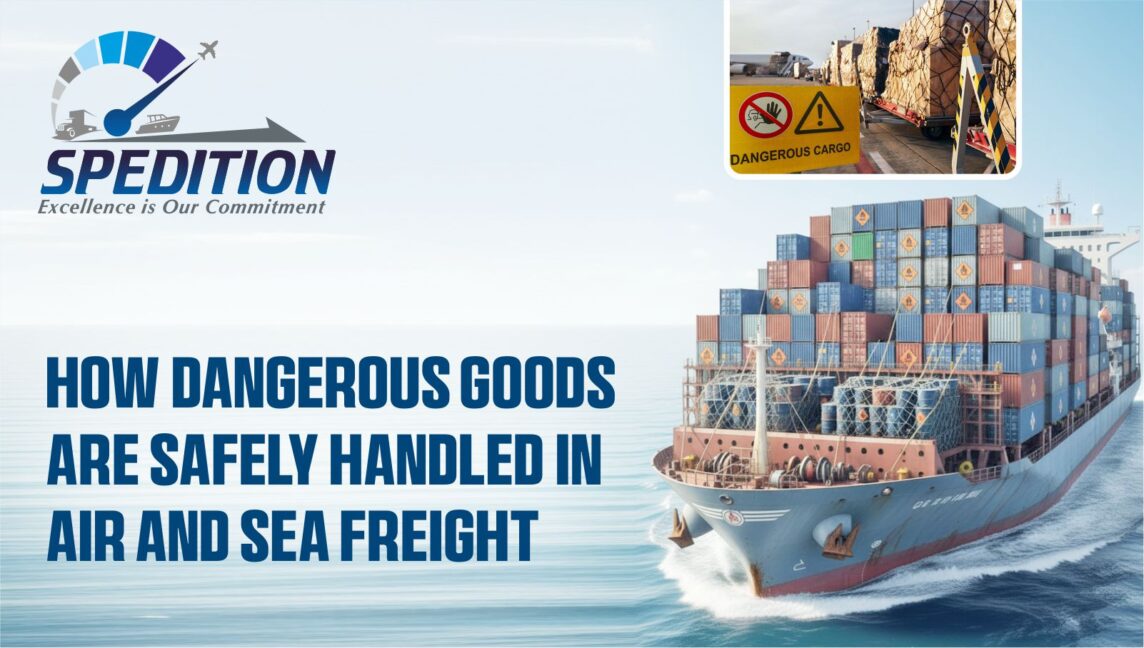
How Dangerous Goods Are Safely Handled in Air and Sea Freight

How Dangerous Goods Are Safely Handled in Air and Sea Freight

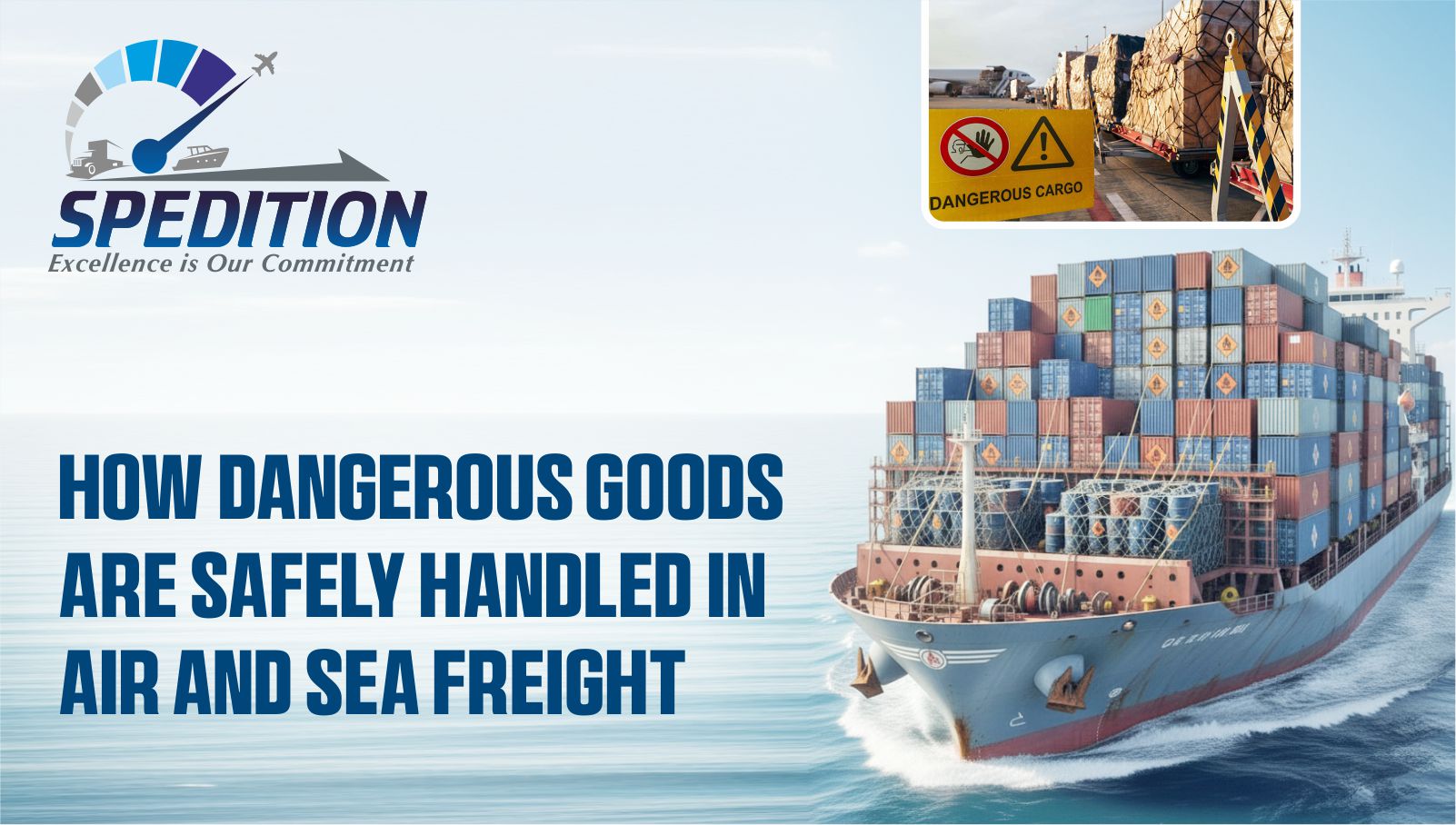
From everyday consumer items like perfumes and batteries to heavy-duty chemicals and gases, dangerous goods (DG) move across the globe every single day. They’re essential for industries, healthcare, energy, and modern lifestyles—but they also carry risks. A simple mistake in handling, packaging, or documentation could mean safety hazards, regulatory fines, or even major accidents.

That’s why transporting DG cargo is never business-as-usual. It demands knowledge, strict compliance with international standards, and the right logistics partner to ensure everything—from packaging to final delivery—is done correctly and safely.

While air freight is known for speed, it has stricter DG limits. Sea freight, on the other hand, is better suited for bulk shipments, but it requires careful planning and monitoring. In this blog, we’ll break down how DG cargo is safely managed across these two modes, explaining regulations, packaging, documentation, and the role of technology and expert logistics providers.

If your business often ships internationally, you may want to explore the specialized services of an experienced air freight company in India, which ensures full compliance for DG shipments.


Understanding Dangerous Goods

What Are Dangerous Goods?

Dangerous goods include substances or items that, when mishandled, can pose risks to people, property, or the environment. This doesn’t only mean industrial explosives—many common products fall into the category:

  • Lithium batteries in laptops and phones
  • Paints, perfumes, and aerosols
  • Disinfectants, pesticides, and cleaning chemicals
  • Flammable liquids like alcohol-based solutions

The first step for shippers is understanding how their products are classified.

DG Classification: Hazard Classes

Globally, dangerous goods are divided into nine hazard classes, covering everything from explosives (Class 1) to miscellaneous goods like lithium batteries (Class 9). Proper classification tells you more than just the danger—it outlines how the cargo must be packaged, marked, and transported safely.

Regulatory Frameworks

DG compliance isn’t optional. Two main international bodies regulate shipments:

  • For air freight, the IATA Dangerous Goods Regulations (IATA DGR) dictate handling rules that all airlines follow.
  • For sea freight, the IMO’s International Maritime Dangerous Goods (IMDG) Code sets global standards for shipping companies.

If you’re selecting a logistics partner, it’s important to verify credentials such as their affiliations and certifications, which prove their ability to manage DG shipments according to international law.


Packaging and Labeling Dangerous Goods

Packaging is the frontline defense against DG risks. A shipment that isn’t packed correctly can leak, combust, or cause contamination during transit.

Packaging for Air vs. Sea

  • Air freight packaging must be light, secure, and pressure-tested to withstand in-flight conditions.
  • Sea freight packaging needs to be durable, moisture-resistant, and able to endure long transits across rough seas.

Logistics teams commonly use UN-certified steel drums, fiberboard boxes, and heavy-duty plastic containers—often combined with cushions or liners for additional safety.

The Role of Labels and Marks

Each DG package must clearly show:

  • Hazard labels in color-coded diamonds
  • UN identification numbers
  • Handling marks like “This Way Up” or “Keep Dry”

For especially sensitive cargo—like infectious or biomedical substances—the triple packaging system is mandatory: an inner container, a sealed secondary casing, and a robust outer box.

Leading companies that specialize in aviation cargo handling services often have systems in place to double-check that packaging and labels meet international guidelines before shipments are even accepted.


Documentation and Compliance

Even perfectly packaged DG cargo won’t move without the correct paperwork. In fact, incomplete documentation is one of the biggest reasons DG shipments get delayed or rejected at checkpoints.

Essential Documents

  • Shipper’s Declaration for Dangerous Goods (SDDG): Required under IATA DGR for air shipments.
  • Safety Data Sheet (SDS): Explains risks and safe handling measures.
  • Commercial Invoice & Packing List: Standard trade documents but specifically tailored for DG descriptions.

Air Freight Compliance (IATA)

Airlines follow highly structured DG acceptance checks. Every shipment requires validated documentation and an inspection against packaging rules. Certain goods, like lithium batteries, face quantity restrictions.

Sea Freight Compliance (IMDG)

For sea shipments, crew members are trained under the IMDG Code. Manifests must detail each DG container, and stowage plans ensure proper segregation of incompatible cargo.

To avoid shipment holds or fines, businesses often rely on logistics partners who manage pre-clearance and verification of all documents. Working with providers that offer compliance solutions for dangerous goods can mean the difference between smooth shipping and costly setbacks.


Handling DG Cargo in Air Freight

Air freight is fast but leaves very little margin for error due to in-flight safety requirements. Here’s how DG cargo moves through the air logistics chain:

  1. Cargo Acceptance & Screening – Shippers provide documentation; airlines check packaging and labels.
  2. Segregation – Hazardous shipments are separated from incompatible materials.
  3. ULD Loading – Cargo is secured into Unit Load Devices, ensuring no leaks and even weight distribution.
  4. In-flight Handling – Pilots are informed of DG onboard; aircraft carry fire suppression systems and spill-response kits.
  5. Arrival & Unloading – Cargo is offloaded in designated DG handling areas at arrival airports.

Some cargo like lithium batteries or aerosols receive extra scrutiny due to their high in-flight risk of overheating or pressure build-up.

If your business moves DG frequently, it’s advisable to partner with an air freight specialist for dangerous goods who understands the limits and permits specific to air transport.


Handling DG Cargo in Sea Freight

Sea freight, by contrast, offers flexibility for larger or bulk dangerous goods shipments—but planning is just as critical.

DG Cargo Workflow at Sea

  • Container Selection: DG-certified containers inspected before loading.
  • Stowage Planning: Placement follows the IMDG Code, with incompatible substances separated.
  • Securing and Lashing: Containers are lashed tightly to withstand movement in rough seas.
  • Monitoring in Transit: Crews track temperature, humidity, and ventilation.
  • Port Arrival: DG containers are unloaded by trained handlers and checked against port customs rules.

Sea freight tends to be the more cost-effective option for industries moving large hazardous shipments. Many companies prefer it for chemicals, fuels, or bulk liquid cargo.

To see how professional associations guide safe practices, take a look at the memberships and industry bodies we’re associated with.


Technology and Safety Innovations

Technology has greatly improved the way DG shipments are monitored and managed today.

  • Real-time tracking systems allow transparency at every step.
  • IoT sensors alert teams to changes in temperature, humidity, or pressure inside containers.
  • Automated scanning helps detect undeclared DG cargo trying to bypass safety rules.
  • Digital compliance platforms reduce errors when preparing important DG declarations.

These innovations give shippers peace of mind that their shipments remain safe, compliant, and visible. For more insights into where the industry is heading, explore our logistics blogs and expert tips.


Challenges and Expert Solutions

Common Challenges Shippers Face

  • Misclassification of items
  • Incorrect or unclear labeling
  • Documentation delays
  • Different regulations depending on the country

Solutions That Work

  • Partnering with certified DG logistics experts
  • Providing regular staff training
  • Having contingency response plans for accidents or spills

An experienced provider anticipates problems before they happen, ensuring DG cargo reaches safely and on time.


Choosing the Right Logistics Partner

Transporting dangerous goods isn’t something businesses can afford to experiment with. It requires the right mix of certification, experience, and infrastructure.

When choosing a logistics partner, look for:

  • Trained staff certified in DG handling
  • Proven compliance with IATA and IMDG rules
  • A strong track record in managing DG shipments safely
  • Integrated services covering packaging, labeling, and documentation

For businesses looking to grow internationally, working with a trusted logistics company like Spedition India gives you confidence that every step, from cargo acceptance to delivery, will meet global safety standards.


Conclusion

Dangerous goods play a vital role in today’s global economy—but their transport comes with challenges that demand careful management. From classification and packaging to compliance with IATA and IMDG rules, every step matters for safety.

Air freight offers speed but tighter quantity limits. Sea freight caters to bulk cargo under detailed stowage regulations. Across both, technology and expert partners ensure compliance, reduce risks, and keep goods moving without interruptions.

If your business needs safe, compliant, and reliable DG logistics support, reach out to our team of specialists who can guide you through every stage of DG cargo handling.

0 0 Continue Reading →

Charter Air Freight: When Speed Matters More Than Cost

Charter Air Freight: When Speed Matters More Than Cost

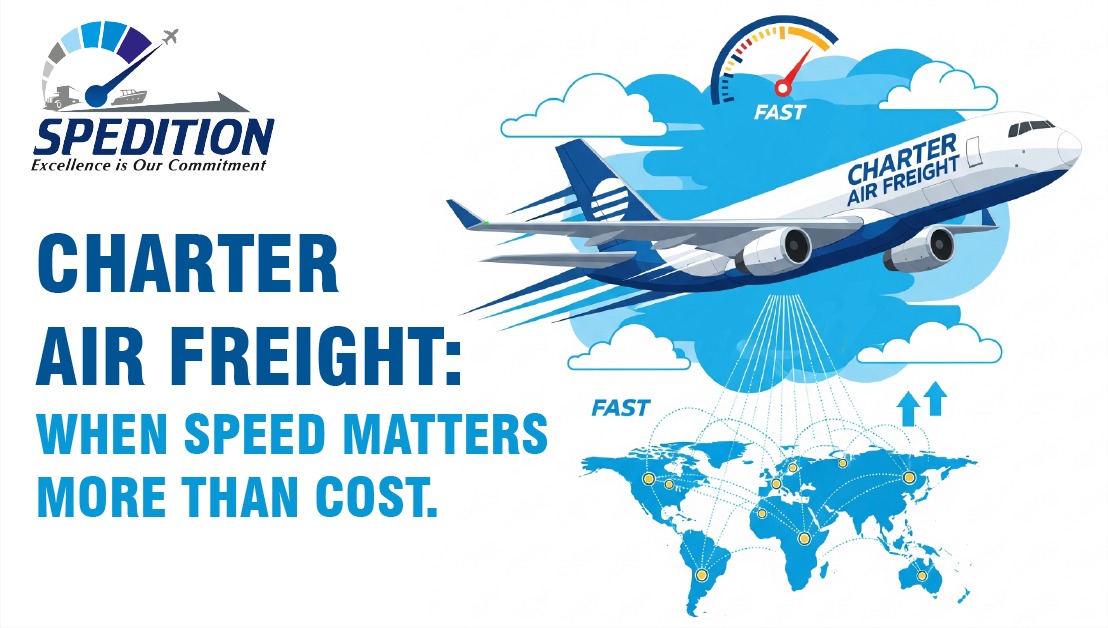
In today’s fast-paced, interconnected world, speed isn’t just a nice-to-have—it’s become the heartbeat of every successful supply chain. Imagine this: A hospital in New York realizes it urgently needs a shipment of critical vaccines from India. Or a global exhibitor preparing for a major trade show in Chicago finds their essential booth materials are still sitting miles away in transit. In moments like these, time is far more valuable than money. A delayed shipment can lead to lost contracts, halted production, or missed opportunities—and sometimes, even lives hang in the balance.

For companies caught in these high-stakes scenarios, traditional shipping options quickly prove inadequate. Regular air freight, while reliable for routine deliveries, often runs on the airline’s timetable—not yours. Capacity constraints, layovers, and unpredictable delays can clash badly with tight deadlines. That’s where charter air freight services come in. This tailored, on-demand solution transforms impossible timelines into on-time arrivals, giving businesses the ability to fly urgent shipments exactly when and where they’re needed.

When time is the most precious commodity, charter services let you skip the queues, fly direct, and take full control—for shipments that simply can’t wait.


Charter Air Freight Explained: Your Shipment’s Private Jet

If scheduled air freight is like catching a train—fixed times, packed carriages, and occasional delays—then charter air freight is your very own private taxi, explaining why so many turn to dedicated air cargo charters when deadlines can’t budge.

So, what exactly is charter air freight? It’s when an entire aircraft is reserved exclusively for your shipment or group of shipments. You decide the departure time, the route, and the aircraft type based on the needs of your cargo. This isn’t about squeezing into available space; it’s about having space designed around your shipment’s urgency.

Regular air freight works on an airline’s established schedule, sharing space with other cargo and often subject to last-minute changes. Meanwhile, charter cargo is tailor-made for your timeline. Whether it’s a small jet for urgent medical supplies or a large freighter for oversized equipment, the aircraft you book flies only for you—cutting out intermediate stops, layovers, and unnecessary handling.

Why Speed Outweighs Cost in Critical Situations

There are moments when every minute lost has a ripple effect of consequences, making “urgent” the only option. If you ask logistics managers in industries where delays can derail entire operations, many will tell you that sometimes speed matters far more than cost. Here are common scenarios where time-critical logistics solutions and charter air freight prove indispensable:

Pharmaceuticals & Healthcare—Saving Lives with Every Flight

Vaccines, life-saving medicines, and critical medical devices can’t wait days or weeks. When healthcare providers in the U.S. or Europe need timely shipments from India, charter air freight is the trusted lifeline. Scheduled flights might be fully booked or delayed, but a chartered plane ensures that lifesaving cargo arrives exactly on time—because for patients and hospitals, there are no alternatives to delay.

Exhibitions & Events—Making Deadlines, Making Impressions

The stakes are high when you’re showcasing innovations on the world stage. Imagine last-minute custom booth materials or prototypes delayed en route to a major international expo. One missed delivery could mean losing clients or business opportunities. Luckily, with charters, exhibitors can depend on reliable, last-minute air shipments that ensure the show goes on—on schedule and without compromise. (Discover more about our exhibition logistics expertise).

Automotive & Manufacturing—Keeping Production Lines Moving

Factories run like clocks, and even a single missing part can halt entire production lines with costly downtime. For automotive suppliers in India shipping to customers in the U.S., charter air freight offers a way to bridge unexpected supply chain gaps overnight—preventing expensive shutdowns and lost revenue.


How Spedition India Makes Urgent Deliveries Possible

At Spedition India, we specialize in urgent cargo shipping from India to the USA and worldwide. Our decades of experience and global network enable us to power time-critical logistics solutions that save businesses when it matters most.

Round-the-Clock Support

Our dedicated teams work 24/7, ready to respond instantly to urgent requests. Whether it’s a late-night call or early-morning emergency, Spedition India springs into action without delay.

Global Charter Access

Thanks to long-standing relationships with leading carriers and brokers, we can source the perfect aircraft—whether for sensitive pharmaceuticals requiring tightly controlled environments, hazardous DG cargo, or oversized project shipments. Learn more about our dangerous goods handling services.

Seamless End-to-End Handling

From local pickup to flight booking, customs clearance, and last-mile delivery, we coordinate every step, giving clients full confidence and transparency.


Final Thoughts: Spedition India, Your Trusted Partner When Time is Tight

When a shipment deadline cannot be missed, and speed is truly of the essence, charter air freight services are your best ally—turning urgent challenges into on-time successes.

With Spedition India, you don’t just get a freight forwarder—you gain a partner who understands what’s on the line and delivers with unwavering commitment and experience.

When speed defines success, Spedition India ensures your cargo is airborne without delay.

Ready to beat the clock? Contact us today for a tailor-made, time-critical logistics solution.

0 0 Continue Reading →

What Role Will Blockchain Play in Ocean Freight Management?

What Role Will Blockchain Play in Ocean Freight Management?

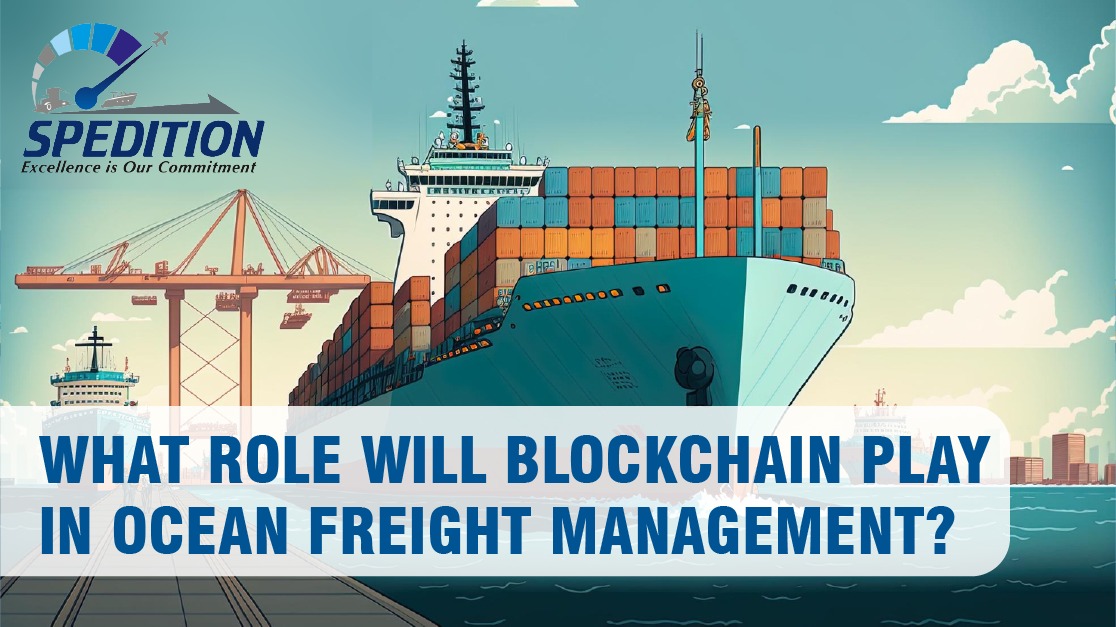
In today’s interconnected economy, ocean freight management sits at the heart of global trade. Container ships transport millions of tons of goods between continents every day, creating supply chains that power industries, retail, and commerce. Despite technological advances, the industry is still challenged by inefficiencies, fraud, and delayed documentation—issues that can cripple business operations, inflate costs, and compromise trust among logistics partners.

The solution? Blockchain—a technology that’s redefining secure shipping and supply chain transparency for the new age. By offering immutable, shared records, blockchain drastically reduces errors, accelerates documentation, and makes fraud nearly impossible. Forward-thinking logistics providers like Spedition India are already harnessing blockchain to drive efficiency, security, and reliability in ocean freight management.

Blockchain is not just a buzzword. It’s a real-world innovation with game-changing applications in freight innovation, and with Spedition India, it’s an accessible tool for businesses looking for a genuine edge in international shipping.

Understanding Blockchain Technology

To appreciate blockchain’s impact on ocean freight, it helps to understand how it works. Blockchain is a type of distributed ledger technology (DLT) where information is stored in linked “blocks” across a secure, decentralized network. Each participant in the network holds an identical copy of the ledger, and every transaction is recorded in a way that cannot be changed or deleted—creating an immutable record.

What makes blockchain special for logistics is its:

  • Transparency: All stakeholders get an instantly updated, tamper-proof view of documentation, cargo status, and handovers.
  • Security: Encrypted data makes unauthorized edits impossible. Transactions and documents are locked by consensus, preventing fraud.
  • Efficiency: Data moves seamlessly and securely across borders, eliminating bottlenecks.

For digital documentation in ocean freight, blockchain is a perfect fit. Instead of waiting days for paper documents to be stamped, shipped, and verified, logistics partners can instantly share bills of lading, insurance certificates, or customs records—with every update visible to the entire network.

Spedition India aligns with these technological best practices, using blockchain to secure records, automate compliance, and create trust in every shipment.

Key Challenges in Ocean Freight Management

Ocean freight isn’t just about moving boxes—it’s an intricate dance of coordination between shipping lines, ports, customs, inspectors, insurers, and buyers. Yet common pain points persist:

  • Lack of Real-Time Visibility
    Traditional tracking tools are limited, often leaving cargo location data out-of-date or siloed. Delays in visibility mean problems aren’t flagged in time, leading to missed deadlines, wasted resources, and lost business opportunities.
  • Delays in Manual Documentation
    Even as shipping becomes more automated, crucial records—like bills of lading, certificates of origin, customs clearance forms—are still often processed by hand. Physical paperwork can be lost, delayed, or misfiled, causing cargo to sit in ports while expenses mount.
  • Risk of Fraud, Theft, or Tampering
    Disconnected systems and paper-based records make it easier for bad actors to commit fraud, tamper with manifests, or steal goods without detection.
  • Impact on Global Supply Chains and Costs
    These inefficiencies ripple across supply chains, driving up costs, eroding trust, and complicating coordination.

Spedition India directly addresses these challenges: using blockchain, they provide real-time cargo visibility, digital record-keeping, and security protocols that set a new standard in the industry.

How Blockchain Solves These Challenges

  • Real-Time Tracking
    With blockchain, every shipment movement, container handover, and inspection is instantly recorded and accessible to all authorized users. IoT sensors can feed live data—location, temperature, humidity—right into the blockchain, so Spedition India’s clients know precisely where their cargo is, and what condition it’s in, at all times. This radical transparency eliminates uncertainty and empowers proactive risk management.
  • Digital Documentation
    Paperwork delays are a thing of the past. Blockchain enables digitized bills of lading, customs records, insurance documents, and more—securely shared among all parties. Verification and approvals happen in real time, slashing turnaround times and virtually eliminating lost or falsified records.

Spedition India leverages smart contracts and digital documentation to speed up clearance and keep cargo moving—reducing wait times and avoiding port congestion.

  • Transparency & Security
    Blockchain’s distributed ledger creates an immutable history for every transaction—from booking to final delivery. All stakeholders, including Spedition India, share a common source of truth that cannot be manipulated.
  • Smart Contracts
    Automated smart contracts on blockchain execute payments, trigger shipment releases, or validate insurance as soon as conditions are met.
  • Data Security
    Blockchain’s cryptography and consensus protocols make tampering, theft, and unauthorized access virtually impossible. Spedition India’s expertise ensures robust security for sensitive goods, confidential documents, and high-stakes international shipments.

Business Benefits of Blockchain in Ocean Freight

  • Cost Reduction

    Fewer intermediaries, automation of paperwork, and reduced administrative overhead dramatically cut logistics costs.

  • Efficiency
    Speed and accuracy improve across the board. Automated workflows mean faster deliveries and minimal operational disruption.
  • Trust and Accountability
    Immutable, transparent records mean every shipment can be traced, verified, and trusted.

Clients shipping with Spedition India benefit from secure, efficient, and visible cargo movement that reduces risk and builds business resilience. From manufacturers to retailers, all industries gain the assurance that their shipments are protected and transactions fully documented.

Integration with Other Technologies

  • IoT Integration
    Smart sensors monitor cargo conditions—temperature, pressure, shock—and stream data directly to the blockchain.
  • AI Analytics
    Artificial intelligence analyzes blockchain data for predictive insights: risk forecasting, route optimization, and automated resource allocation.

By combining blockchain, IoT, and AI, Spedition India delivers multi-model solutions where clients enjoy end-to-end supply chain transparency and operational intelligence.

Future of Blockchain in Ocean Freight

  • Automated Ports & End-to-End Transparency
    Blockchain will power digital port ecosystems with automated vessel berthing, cargo unloading, and customs clearance.
  • Integration with Global Trade Networks
    Interconnected blockchain platforms will allow exporters, importers, carriers, and regulators worldwide to collaborate, validate transactions, and optimize flows.
  • Spedition India’s Roadmap
    Spedition India invests in developing blockchain-enabled platforms that anticipate these trends.

Why Choose Spedition India

What sets Spedition India apart as a leader in blockchain-powered ocean freight management?

  • Experience in Global Freight
  • Compliance with international standards
  • Trusted Partnerships
  • Reliability backed by immutable records

Conclusion & Call-to-Action

The transformative power of blockchain in ocean freight management lies in its ability to solve time-worn challenges—bringing transparency, speed, and security to every shipment.

Spedition India is the partner that brings blockchain’s benefits into practical, everyday use—offering security, efficiency, and supply chain transparency with every bound container.

👉 Discover how blockchain can improve your ocean freight operations with Spedition India’s advanced logistics solutions.

0 0 Continue Reading →

How Aviation Cargo Security Protects Supply Chains from Risk

How Aviation Cargo Security Protects Supply Chains from Risk


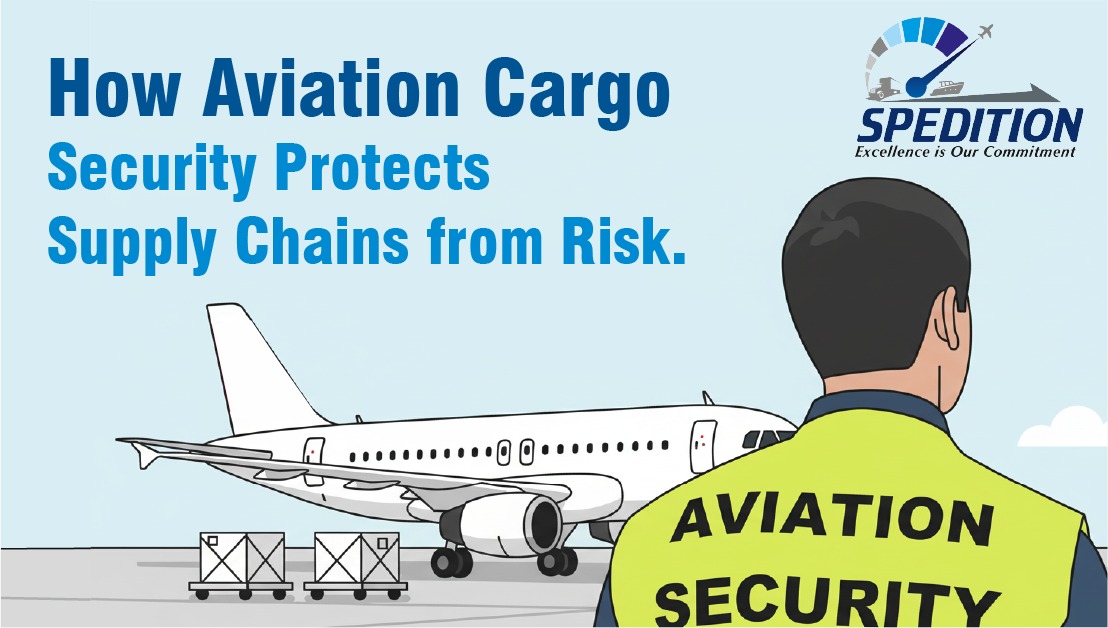
Global trade today moves faster than ever—businesses rely on international flights to deliver goods across continents in days, not weeks. But with speed comes vulnerability. Shipments worth millions of dollars travel daily through complex air routes, making them prime targets for theft, tampering, or non-compliance issues. Even the smallest disruption can cause big headaches: missed deadlines, unhappy customers, and financial losses.
That’s why aviation cargo security matters. It’s not just about guarding the goods; it’s about protecting business reputations, customer trust, and entire supply chains. Companies need logistics partners who go beyond moving cargo—they need partners who ensure every shipment arrives safe, intact, and on time.

This is exactly what Spedition India delivers. With decades of experience in secure air freight services, Spedition India has become a trusted name for businesses across industries. By combining international compliance, advanced technology, and a deep commitment to client success, Spedition India offers more than logistics—it offers peace of mind.

Understanding Aviation Cargo Security

So, what exactly is aviation cargo security? Simply put, it’s the set of measures and practices that keep shipments safe from risks like theft, tampering, or smuggling while ensuring compliance with global aviation rules.

Global organizations like the International Civil Aviation Organization (ICAO) and the International Air Transport Association (IATA) play a key role in setting these standards. They make sure air freight follows strict safety guidelines—from screening procedures to handling methods—so that goods remain secure throughout their journey.

But here’s the challenge: every airport, every country may have slightly different rules. For a business sending products worldwide, keeping up with all of these regulations is tough. That’s where Spedition India steps in. We streamline the process by aligning every step of shipment handling with ICAO and IATA standards.

Whether you’re shipping sensitive pharmaceuticals, high-value electronics, luxury goods, or industrial equipment, Spedition India ensures your cargo isn’t just delivered—it’s delivered securely and compliantly. Aviation cargo security isn’t an extra feature; it’s the foundation of supply chain protection, and we take it seriously so you don’t have to worry.

Key Risks in Air Cargo

Air freight is efficient and fast, but it also faces unique challenges. Some of the biggest risks include:

  • Theft, tampering, and smuggling: Expensive, in-demand goods like tech products, medicines, or luxury items attract attention from criminal networks. Without strong preventive measures, shipments may be targeted.

  • Regulatory compliance risks: Different countries have different cargo rules. A lack of compliance can cause delays, penalties, and sometimes even a halt to your international trade.

  • Cargo damage or delays: From turbulence to improper handling on the tarmac, air cargo can be vulnerable to delays or even product damage.

The good news? Spedition India has solutions at every step. Through cargo risk management strategies like tamper-proof packaging, real-time digital monitoring, and comprehensive customs compliance checks, we ensure risks stay minimal. Our team of trained professionals handles cargo with expert care, while our partnerships with global airports keep operations smooth.

So instead of worrying about stolen shipments, surprise inspections, or delays, our clients know one thing: their cargo is in safe hands with Spedition India.

How Aviation Cargo Security Protects Supply Chains

A secure shipment isn’t just about one delivery—it’s about ensuring the strength of your entire supply chain. Imagine handling international deliveries with zero hiccups, no compliance issues, and full real-time visibility. That’s the value of aviation cargo security.

Here’s how Spedition India protects your supply chain at every step:

  • Screening & Compliance – Every package passes through advanced screening systems, including X-rays and other checks designed to catch prohibited or suspicious items. This keeps shipments safe and ensures every delivery complies with ICAO and IATA rules—saving businesses from unexpected fines and costly delays.

  • Smart Packaging & Tamper-Proof Seals – We don’t just pack; we protect. Using advanced packing methods coupled with tamper-evident seals, Spedition India ensures your goods remain untouched until they reach their final destination. For industries like pharma, electronics, and luxury retail, this is especially critical.

  • Real-Time Tracking & Monitoring – Today, visibility equals trust. With Spedition India’s IoT-enabled tracking systems, clients get updates at every stage of the journey. A simple dashboard gives instant information on where shipments are, how they’re being handled, and whether they’ll arrive on time.

  • Trained Security Specialists – People remain the backbone of effective security. At Spedition India, our staff undergo specialized training on aviation safety, suspicious cargo detection, and high-value shipment handling. Their ability to spot issues early makes a major difference in preventing disruptions.

  • Global Airport Partnerships – Because aviation logistics crosses multiple international hubs, our strong partnerships with airports around the world ensure smoother transitions. This minimizes the risks that often occur during handovers and storage between flights.

This multi-layered approach doesn’t just protect cargo—it strengthens entire supply chains, giving businesses the confidence to expand globally without worrying about weak links. At the end of the day, Spedition India stands as a shield between businesses and aviation cargo risks.

Conclusion 

In today’s fast-paced world of global trade, aviation cargo security is not an optional extra—it’s a necessity for survival. Protecting shipments means protecting businesses, reputations, and the very supply chains that power international growth.

Spedition India combines experience, expertise, and innovation to deliver secure, compliant, and reliable aviation cargo solutions. Our clients trust us not only because we deliver cargo, but because we deliver confidence.

If your business is moving high-value, sensitive, or mission-critical shipments, don’t leave security to chance. Spedition India is the trusted partner for secure air freight services and long-term supply chain protection.

Protect your supply chain with Spedition India’s secure Aviation Cargo Services. Learn more at SpeditionIndia.com

FAQs

  1. What is aviation cargo security and why is it important?
    It’s the set of measures that keep air freight safe from theft, tampering, and compliance issues—ensuring smooth supply chain operations.
  2. How does Spedition India ensure compliance with international regulations?
    We follow ICAO and IATA guidelines, with rigorous screening, packaging, and monitoring at every stage.
  3. Can Spedition India handle sensitive or high-value shipments?
    Absolutely. From pharmaceuticals to luxury goods, we specialize in secure handling of sensitive cargo.
  4. What technology does Spedition India use for cargo monitoring?
    GPS tracking, IoT sensors, and digital dashboards give businesses end-to-end visibility.
  5. Why should businesses choose Spedition India over other providers?
    Because we combine decades of experience, strict compliance, global partnerships, and a proven record of protecting supply chains.
0 0 Continue Reading →
devnergy