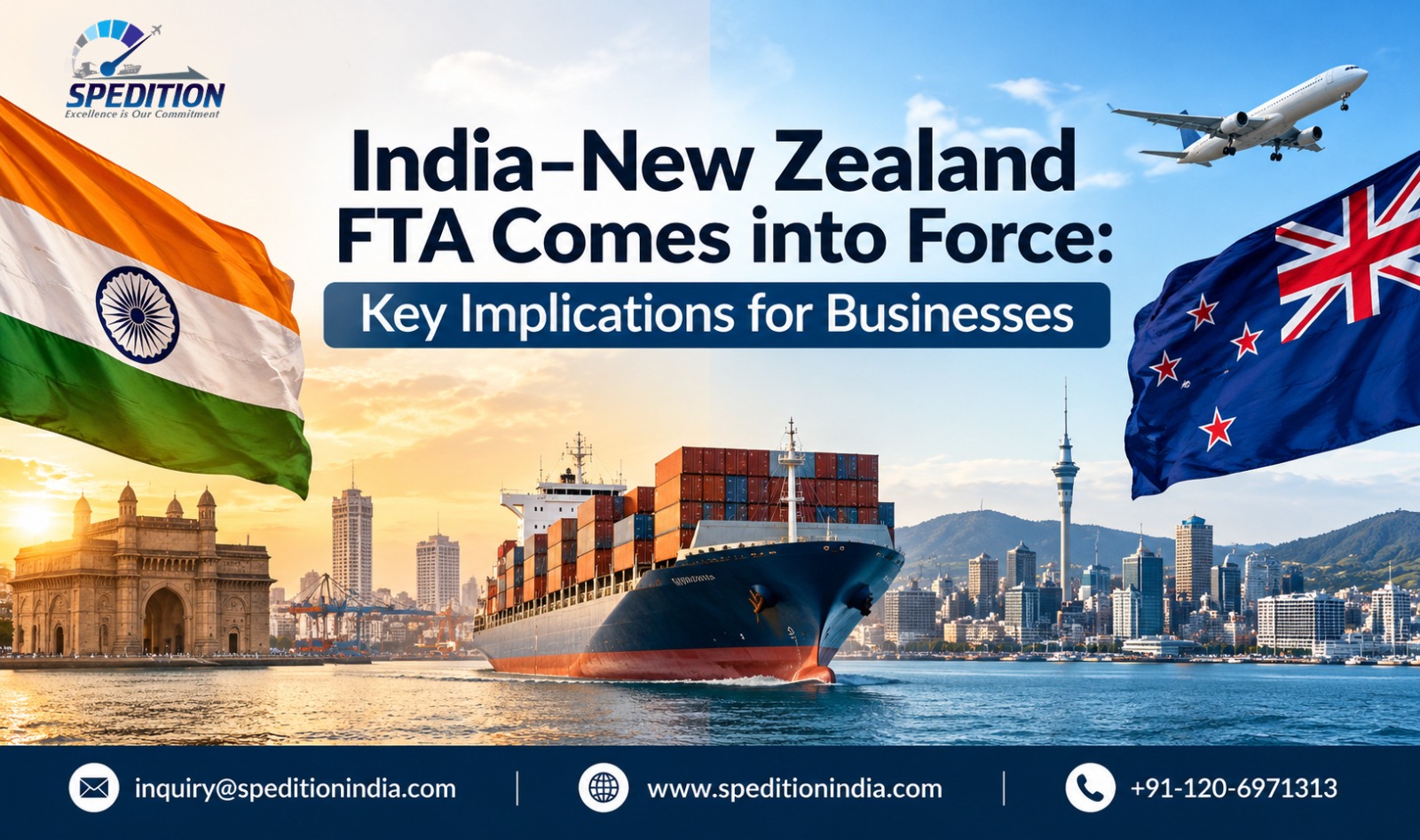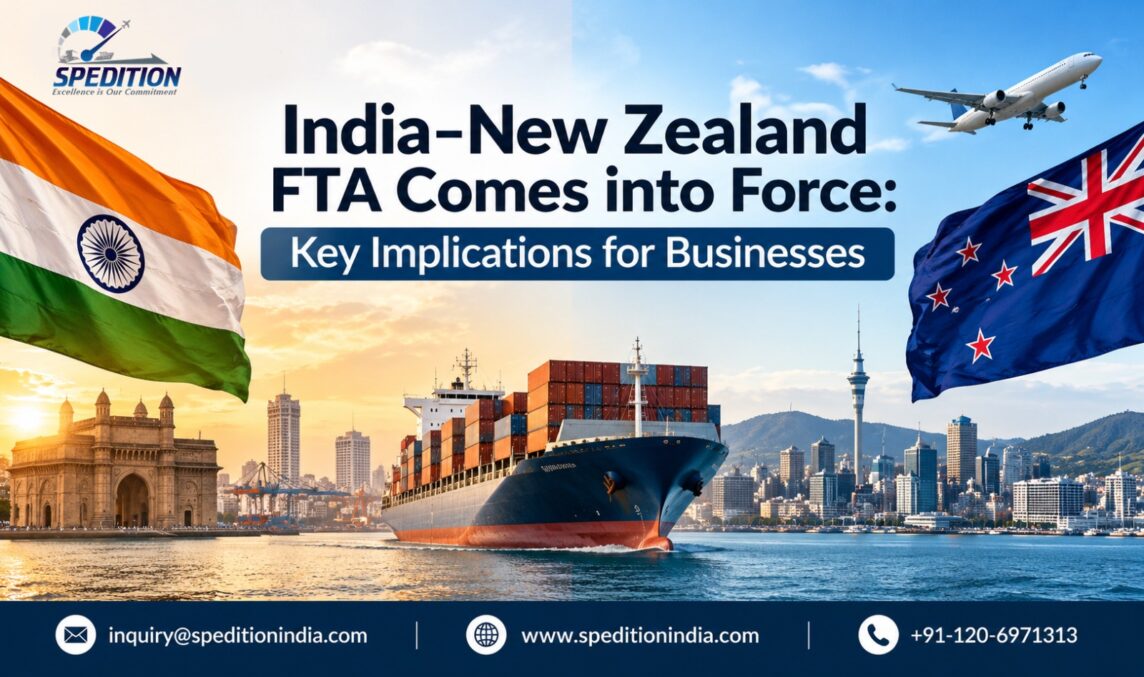
India–New Zealand FTA Comes into Force: Key Implications for Businesses
The India–New Zealand Free Trade Agreement (FTA), effective from 20 October 2026, opens new avenues for trade between the two countries. For businesses, it brings opportunities to expand market access, explore new sourcing partnerships and strengthen international supply chains.
As trade relations evolve, the focus extends beyond tariff benefits to the practical aspects of moving goods across borders. From freight planning and customs documentation to transportation and delivery coordination, efficient logistics will be essential to helping businesses make the most of these opportunities.
1. A New Chapter in India–New Zealand Trade
The implementation of the FTA marks an important step in strengthening economic ties between India and New Zealand. The agreement aims to make bilateral trade more accessible and competitive by reducing or eliminating customs duties on eligible goods.
A key highlight is that 100% of Indian export tariff lines receive duty-free access to the New Zealand market from day one. On the other side, New Zealand goods receive preferential access to India, with tariff reductions or elimination covering 95% of New Zealand’s current exports to India under the agreement. The benefits vary by product and implementation schedule. For businesses, this creates opportunities to reassess their international trade strategies, identify potential markets and build stronger commercial relationships.
2. What the FTA Means for Importers and Exporters
The agreement could influence how businesses approach pricing, sourcing and market expansion. Its practical impact will depend on the products involved and the applicable eligibility requirements.
Key opportunities for businesses include:
- Greater export competitiveness: Duty-free access to New Zealand can help eligible Indian products compete more effectively on price.
- Access to new markets: Exporters may find opportunities to connect with new buyers, distributors and business partners.
- More sourcing options: Indian importers can explore eligible New Zealand products under preferential tariff arrangements.
- Scope for business expansion: Manufacturers and trading companies can reassess their market strategies and explore new commercial relationships.
- Stronger trade connections: Improved market access may encourage businesses to develop longer-term partnerships across both countries.
Sectors highlighted for Indian export opportunities include textiles, leather, footwear, engineering goods and agricultural processing, alongside other eligible product categories.
However, reduced tariffs do not automatically guarantee lower overall shipping costs or unrestricted market access. Businesses must also account for freight charges, applicable taxes and levies, product regulations and customs requirements.
3. Why Logistics Matters in the New Trade Landscape
A trade agreement can create new opportunities, but businesses still need a reliable way to move their products from one market to another. The right logistics approach helps connect commercial decisions with the practical realities of international shipping.
For shipments between India and New Zealand, four areas deserve particular attention.
Sea Freight: Planning for Volume and Cost
Sea freight can be a practical choice for larger consignments and regular commercial shipments where transit time allows.
Businesses should consider:
- Container availability and cargo requirements.
- Sailing schedules and estimated transit times.
- Freight costs, port handling and destination charges.
- Shipment planning to align with production and inventory cycles.
Advance planning can help businesses manage transportation costs and coordinate deliveries more effectively.
Air Freight: When Timing Matters
For urgent shipments, samples and high-value goods, air freight may be appropriate when speed is a priority.
The choice between air and sea freight should consider the urgency of delivery, cargo dimensions, shipment value and total transportation cost. Selecting the right mode helps businesses balance speed with their operational budgets.
Customs Clearance: Getting the Documentation Right
Preferential tariffs are available only when the relevant conditions are met. Accurate documentation and an understanding of the agreement’s rules are therefore essential.
Businesses should pay particular attention to:
- Product classification: Verify the applicable Harmonized System (HS) code.
- Rules of origin: Confirm that the goods qualify under the agreement.
- Proof of origin: Arrange the required Certificate of Origin and supporting documents.
- Customs requirements: Check applicable declarations, duties, taxes and product-specific regulations.
These checks can help reduce avoidable delays and support a smoother clearance process. The FTA does not remove all border checks or other regulatory obligations.
Supply Chain Coordination: Connecting Every Stage
International shipping involves several interconnected activities. When these are planned in isolation, businesses may face missed schedules, documentation gaps or unexpected costs.
Effective coordination helps businesses manage:
- Freight bookings and transportation schedules.
- Documentation and customs-related requirements.
- Communication between suppliers, logistics partners and consignees.
- Shipment tracking and delivery planning.
A coordinated approach provides greater visibility across the shipping process and helps businesses respond to operational changes more effectively.
4. How Businesses Can Prepare to Benefit from the FTA
Companies looking to trade between India and New Zealand can take practical steps to assess the opportunities available to them.
A useful starting point is to focus on five priorities:
- Review product eligibility. Check the applicable tariff schedule and confirm whether the goods qualify for preferential treatment.
- Understand the rules of origin. Ensure that products meet the relevant requirements and that the necessary proof of origin is available.
- Calculate the total landed cost. Consider freight, insurance, customs duties, taxes, handling and other applicable charges before finalising pricing.
- Choose the right shipping method. Evaluate sea and air freight options according to shipment size, delivery deadlines and budget.
- Plan the supply chain in advance. Align shipment schedules, inventory needs and documentation with the requirements of the destination market.
Taking these steps can help businesses make informed decisions and avoid treating tariff reductions as the only factor in their international trade strategy.
5. Looking Ahead: Turning Trade Opportunities into Business Growth
The India–New Zealand FTA creates a stronger foundation for bilateral trade and offers businesses new reasons to explore international partnerships. Yet, the long-term value of the agreement will depend on how effectively companies translate improved market access into commercially viable trade.
Reliable transportation, careful documentation, regulatory compliance and well-planned supply chains will continue to play an important role in this process.
At Spedition, we understand that every shipment comes with its own requirements. Effective freight coordination and careful planning help businesses navigate the complexities of international cargo movement and keep their supply chains connected.
As trade between India and New Zealand develops, businesses that combine informed market decisions with efficient logistics planning will be better positioned to explore new opportunities and manage cross-border shipments with confidence.
Looking to move your cargo across international markets? Connect with Spedition to discuss your freight forwarding requirements.
📩 inquiry@speditionindia.com 🌐 www.speditionindia.com 📞 +91-120-6971313