Skip to Content

Blog Archives

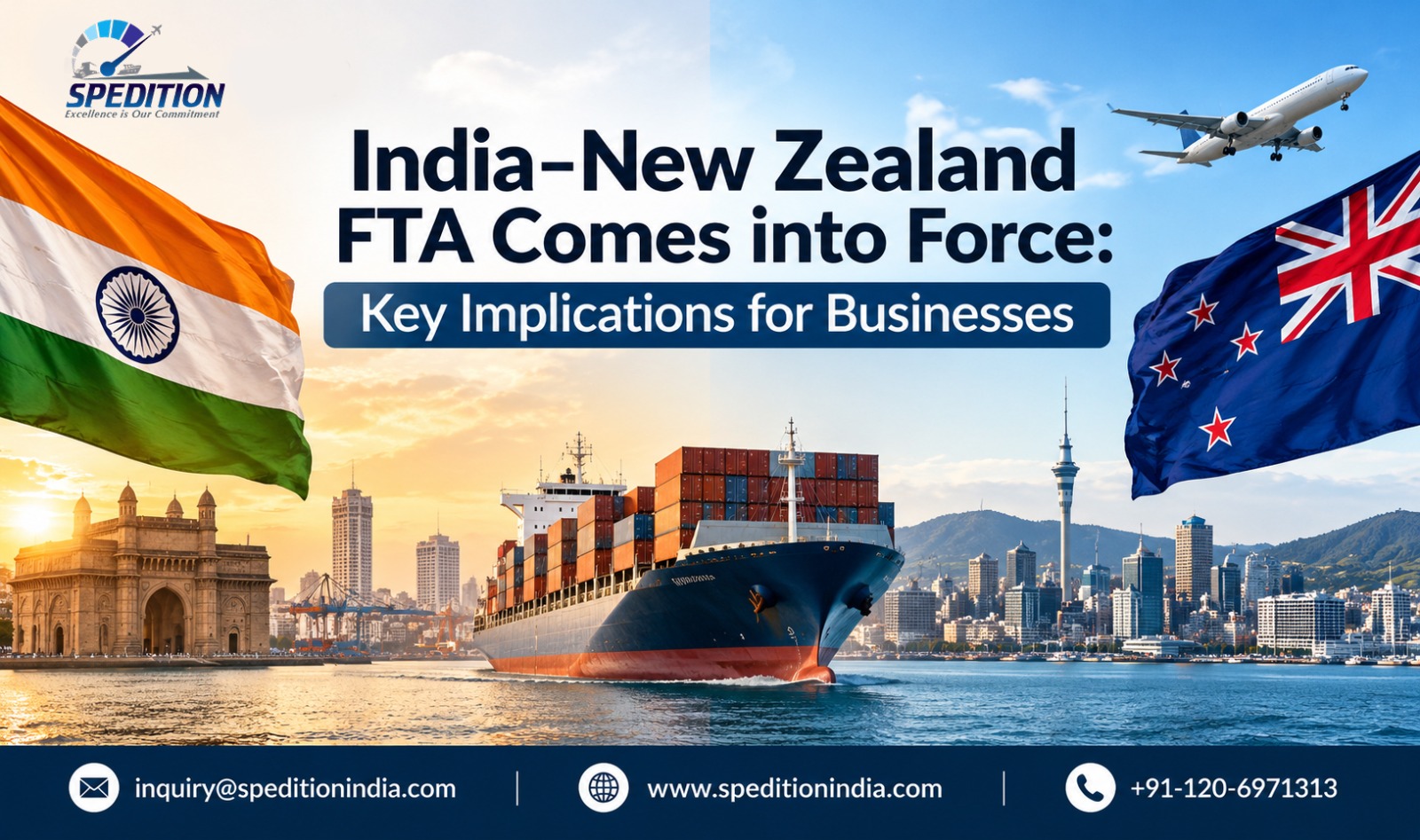
India–New Zealand FTA Comes into Force: Key Implications for Businesses

India–New Zealand FTA Comes into Force: Key Implications for Businesses


The India–New Zealand Free Trade Agreement (FTA), effective from 20 October 2026, opens new avenues for trade between the two countries. For businesses, it brings opportunities to expand market access, explore new sourcing partnerships and strengthen international supply chains.

As trade relations evolve, the focus extends beyond tariff benefits to the practical aspects of moving goods across borders. From freight planning and customs documentation to transportation and delivery coordination, efficient logistics will be essential to helping businesses make the most of these opportunities.

1. A New Chapter in India–New Zealand Trade

The implementation of the FTA marks an important step in strengthening economic ties between India and New Zealand. The agreement aims to make bilateral trade more accessible and competitive by reducing or eliminating customs duties on eligible goods.

A key highlight is that 100% of Indian export tariff lines receive duty-free access to the New Zealand market from day one. On the other side, New Zealand goods receive preferential access to India, with tariff reductions or elimination covering 95% of New Zealand’s current exports to India under the agreement. The benefits vary by product and implementation schedule. For businesses, this creates opportunities to reassess their international trade strategies, identify potential markets and build stronger commercial relationships.

2. What the FTA Means for Importers and Exporters

The agreement could influence how businesses approach pricing, sourcing and market expansion. Its practical impact will depend on the products involved and the applicable eligibility requirements.

Key opportunities for businesses include:

  • Greater export competitiveness: Duty-free access to New Zealand can help eligible Indian products compete more effectively on price.
  • Access to new markets: Exporters may find opportunities to connect with new buyers, distributors and business partners.
  • More sourcing options: Indian importers can explore eligible New Zealand products under preferential tariff arrangements.
  • Scope for business expansion: Manufacturers and trading companies can reassess their market strategies and explore new commercial relationships.
  • Stronger trade connections: Improved market access may encourage businesses to develop longer-term partnerships across both countries.

Sectors highlighted for Indian export opportunities include textiles, leather, footwear, engineering goods and agricultural processing, alongside other eligible product categories.

However, reduced tariffs do not automatically guarantee lower overall shipping costs or unrestricted market access. Businesses must also account for freight charges, applicable taxes and levies, product regulations and customs requirements.

3. Why Logistics Matters in the New Trade Landscape

A trade agreement can create new opportunities, but businesses still need a reliable way to move their products from one market to another. The right logistics approach helps connect commercial decisions with the practical realities of international shipping.

For shipments between India and New Zealand, four areas deserve particular attention.

Sea Freight: Planning for Volume and Cost

Sea freight can be a practical choice for larger consignments and regular commercial shipments where transit time allows.

Businesses should consider:

  • Container availability and cargo requirements.
  • Sailing schedules and estimated transit times.
  • Freight costs, port handling and destination charges.
  • Shipment planning to align with production and inventory cycles.

Advance planning can help businesses manage transportation costs and coordinate deliveries more effectively.

Air Freight: When Timing Matters

For urgent shipments, samples and high-value goods, air freight may be appropriate when speed is a priority.

The choice between air and sea freight should consider the urgency of delivery, cargo dimensions, shipment value and total transportation cost. Selecting the right mode helps businesses balance speed with their operational budgets.

Customs Clearance: Getting the Documentation Right

Preferential tariffs are available only when the relevant conditions are met. Accurate documentation and an understanding of the agreement’s rules are therefore essential.

Businesses should pay particular attention to:

  • Product classification: Verify the applicable Harmonized System (HS) code.
  • Rules of origin: Confirm that the goods qualify under the agreement.
  • Proof of origin: Arrange the required Certificate of Origin and supporting documents.
  • Customs requirements: Check applicable declarations, duties, taxes and product-specific regulations.

These checks can help reduce avoidable delays and support a smoother clearance process. The FTA does not remove all border checks or other regulatory obligations.

Supply Chain Coordination: Connecting Every Stage

International shipping involves several interconnected activities. When these are planned in isolation, businesses may face missed schedules, documentation gaps or unexpected costs.

Effective coordination helps businesses manage:

  • Freight bookings and transportation schedules.
  • Documentation and customs-related requirements.
  • Communication between suppliers, logistics partners and consignees.
  • Shipment tracking and delivery planning.

A coordinated approach provides greater visibility across the shipping process and helps businesses respond to operational changes more effectively.

4. How Businesses Can Prepare to Benefit from the FTA

Companies looking to trade between India and New Zealand can take practical steps to assess the opportunities available to them.

A useful starting point is to focus on five priorities:

  1. Review product eligibility. Check the applicable tariff schedule and confirm whether the goods qualify for preferential treatment.
  2. Understand the rules of origin. Ensure that products meet the relevant requirements and that the necessary proof of origin is available.
  3. Calculate the total landed cost. Consider freight, insurance, customs duties, taxes, handling and other applicable charges before finalising pricing.
  4. Choose the right shipping method. Evaluate sea and air freight options according to shipment size, delivery deadlines and budget.
  5. Plan the supply chain in advance. Align shipment schedules, inventory needs and documentation with the requirements of the destination market.

Taking these steps can help businesses make informed decisions and avoid treating tariff reductions as the only factor in their international trade strategy.

5. Looking Ahead: Turning Trade Opportunities into Business Growth

The India–New Zealand FTA creates a stronger foundation for bilateral trade and offers businesses new reasons to explore international partnerships. Yet, the long-term value of the agreement will depend on how effectively companies translate improved market access into commercially viable trade.

Reliable transportation, careful documentation, regulatory compliance and well-planned supply chains will continue to play an important role in this process.

At Spedition, we understand that every shipment comes with its own requirements. Effective freight coordination and careful planning help businesses navigate the complexities of international cargo movement and keep their supply chains connected.

As trade between India and New Zealand develops, businesses that combine informed market decisions with efficient logistics planning will be better positioned to explore new opportunities and manage cross-border shipments with confidence.

Looking to move your cargo across international markets? Connect with Spedition to discuss your freight forwarding requirements.

📩 inquiry@speditionindia.com 🌐 www.speditionindia.com 📞 +91-120-6971313
0 0 Continue Reading →

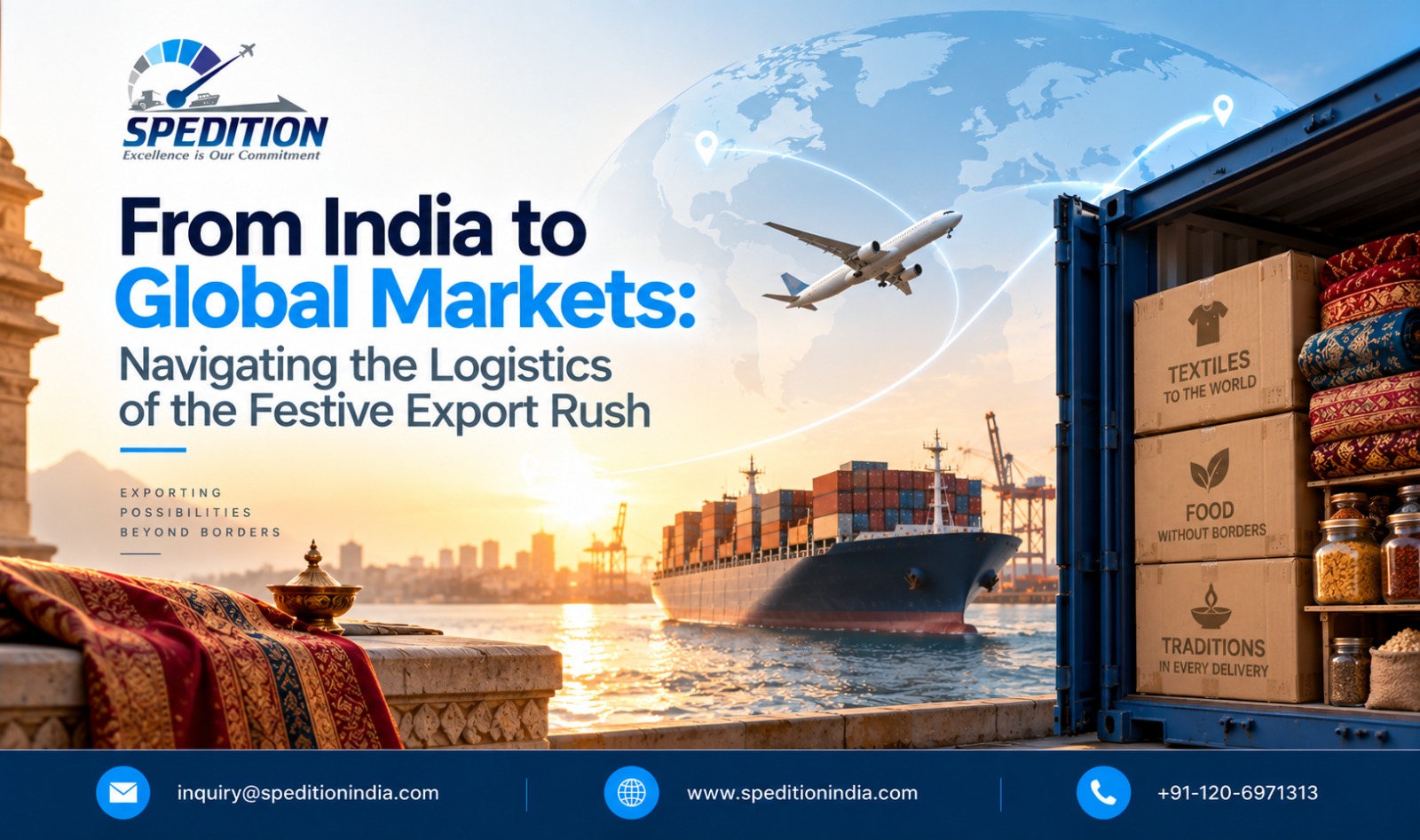
From India to Global Markets: Navigating the Logistics of the Festive Export Rush

From India to Global Markets: Navigating the Logistics of the Festive Export Rush


India’s festive season is creating a fresh wave of demand in international markets.

Textile exporters are reporting a 30–40% increase in US orders for Christmas and New Year, while food exporters are seeing around a 20% rise in ready-to-eat food orders to Europe ahead of Diwali. Demand is also active across the GCC, particularly in Kuwait, Oman and Bahrain.

For exporters, the opportunity is clear. But so is the challenge:

More orders mean more pressure on the supply chain.

📈 Where the Demand Is Coming From

The festive export opportunity is spreading across multiple categories:

  • Textiles & apparel — stronger Christmas and New Year orders from the US
  • Ready-to-eat foods — growing demand in European markets
  • Traditional Indian foods — sweets, savouries, spices, pickles and dry fruits
  • Rice and processed foods — continued buying interest across the GCC
  • Handicrafts — exports grew 29% in August
  • Carpets — exports increased 5% in August
  • Textiles & apparel — exports rose 6.39% in August

India’s processed-food export segment is also expanding, with ready-to-eat and cooked food exports reaching $2.4 billion in FY26, up from $2.1 billion the previous year.

🌍 The GCC: A Key Market for India’s Festive Foods

The festive demand isn’t limited to Western markets.

The GCC continues to be an important destination for Indian food exporters, with active procurement reported across:

  • 🇰🇼 Kuwait
  • 🇴🇲 Oman
  • 🇧🇭 Bahrain

Products range from traditional sweets and savouries to:

Rice | Spices | Ghee | Pickles | Dry Fruits | Paneer | Beverages | Canned Foods

For exporters, this represents an opportunity to take India’s festive consumption beyond domestic markets and into a wider global customer base.

🚢 But Can Logistics Keep Pace?

This is where the festive export story becomes a logistics story.

Strong demand is already being accompanied by several operational challenges:

Higher Freight Costs

Increased demand can put upward pressure on freight, affecting margins for price-sensitive exporters.

Container Availability

Container shortages can make securing equipment during peak periods more difficult.

Customs & Import Compliance

Food shipments may face inspections, food-safety requirements and destination-specific documentation.

Time-Sensitive Cargo

For food products, delays aren’t simply inconvenient—they can affect shelf life and delivery commitments.

Uncertain Trade Conditions

Changing tariffs and import regulations can influence the economics of individual export markets.

⏱️ The Real Challenge: Getting the Timing Right

Festive exports operate against a fixed deadline.

Christmas, New Year and Diwali don’t move because a shipment is delayed.

That makes timing a critical part of export logistics.

A well-planned festive shipment should consider:

  • Early capacity booking
  • Container availability
  • Port congestion
  • Transit-time buffers
  • Customs documentation
  • Destination-country requirements
  • Cargo-specific handling
  • Alternative routing options

The objective isn’t simply to move cargo.

It’s to get the right cargo to the right market at the right time.

🔄 Turning Export Demand Into Deliveries

For exporters, the festive season presents a simple equation:

More Orders + Limited Capacity = Greater Need for Planning

A few proactive steps can make a difference:

1. Plan capacity early Peak-season demand can tighten vessel and container availability.

2. Prepare documentation in advance Avoid preventable delays at origin or destination.

3. Match the mode to the cargo Time-sensitive or high-value shipments may require a different logistics approach than standard cargo.

4. Keep alternative routes open When capacity or schedules change, having another option can protect delivery timelines.

5. Monitor the shipment end-to-end Visibility helps businesses respond before a small delay becomes a missed delivery.

🇮🇳 The Bigger Opportunity for Indian Exporters

India’s festive export momentum reflects something bigger than seasonal demand.

Global buyers are increasingly sourcing a wider range of Indian products—from textiles and handicrafts to traditional and convenience foods.

The opportunity, therefore, isn’t only about securing international orders.

It is about building the logistics capability to fulfil them reliably.

Because in global trade, winning the order is only half the journey.

The other half is getting it there.

The Logistics Advantage

As festive demand accelerates, exporters need logistics strategies that can balance:

Cost | Capacity | Compliance | Transit Time | Reliability

At Spedition, we understand that every international shipment comes with its own requirements.

From freight planning and route selection to shipment coordination, the right logistics approach can help businesses navigate peak-season pressure while keeping cargo moving efficiently.

Because when global demand rises, your supply chain should be ready to move with it.

📩 inquiry@speditionindia.com 🌐 www.speditionindia.com 📞 +91-120-697131

0 0 Continue Reading →

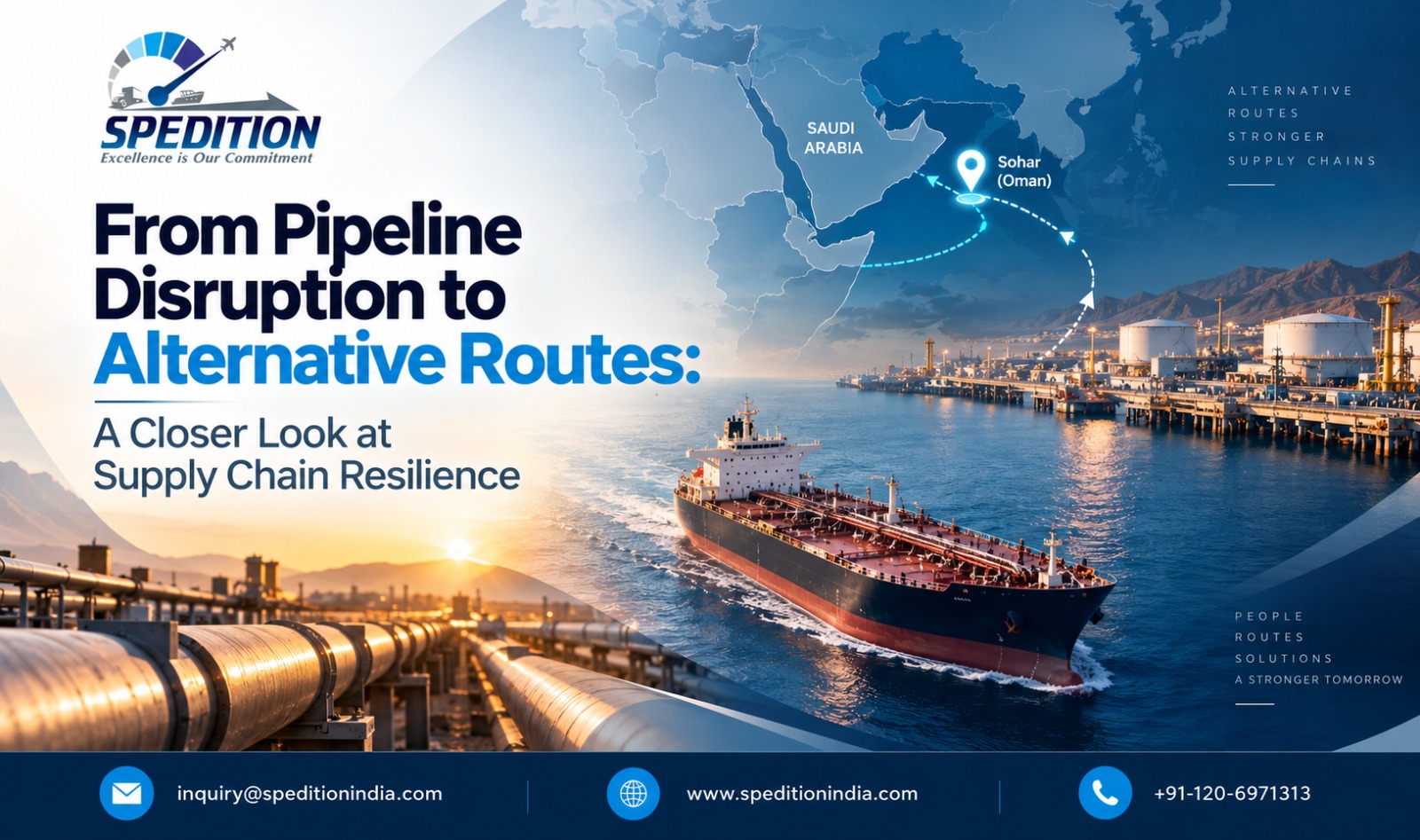
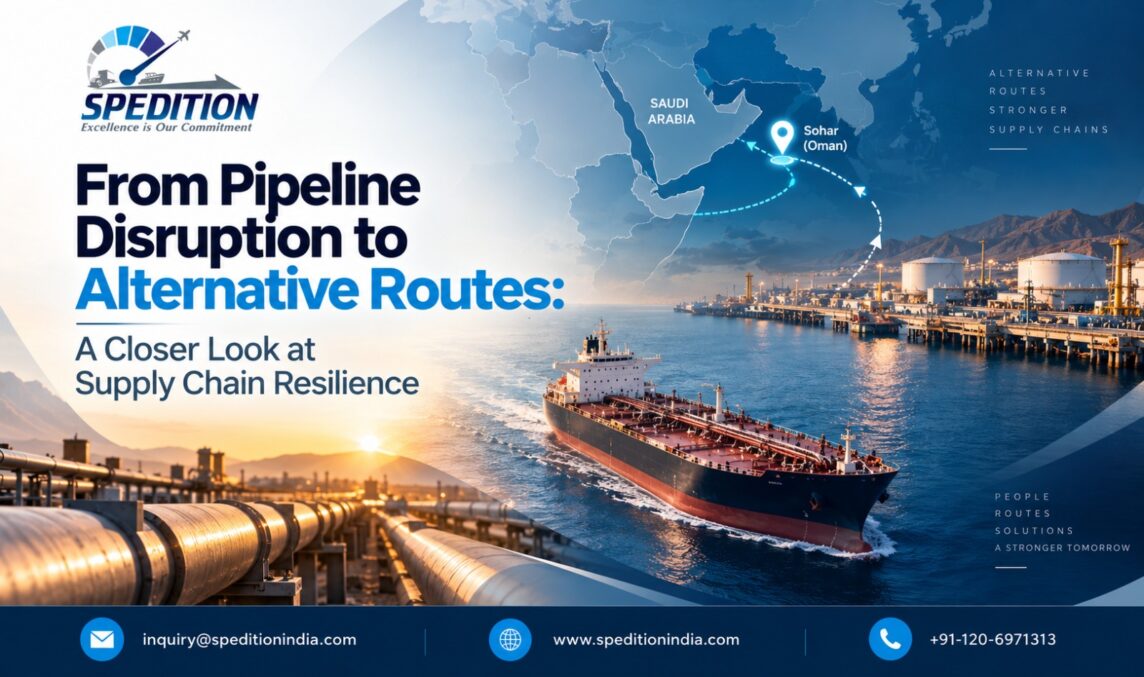
From Pipeline Disruption to Alternative Routes: A Closer Look at Supply Chain Resilience

From Pipeline Disruption to Alternative Routes: A Closer Look at Supply Chain Resilience


A disruption to one major oil pipeline is highlighting a much bigger reality of global trade:

When a critical route is affected, supply chains have to adapt quickly.

Saudi Arabia is exploring alternative ways to move crude after attacks disrupted its East-West pipeline and affected operations at Yanbu. One option involves routing additional crude through Oman’s Sohar port, including ship-to-ship transfers.

Oil prices eased as alternative supply options helped reduce immediate concerns about a prolonged shortage.

But for logistics, the bigger question is:

What happens when the usual route is no longer available?

What Changes When a Route Is Disrupted?

Changing a logistics route can trigger several knock-on effects:

  • 🚢 Different ports: Cargo may need to move through alternative gateways.
  • 🔄 Additional handling: Ship-to-ship transfers or transshipment may become necessary.
  • ⏱️ Transit uncertainty: Alternative routes can affect delivery schedules.
  • 💰 Higher costs: Freight, insurance, fuel and handling costs can increase.
  • 📦 Capacity pressure: New routes may not have immediate capacity for additional cargo.
  • 📋 More coordination: Documentation, customs and operational planning can become more complex.

So while the cargo may still be available, getting that cargo to its destination can become considerably more challenging.

Why This Matters Beyond Oil

The same supply-chain dynamics apply across industries.

A disruption to a:

  • Port
  • Pipeline
  • Canal
  • Shipping corridor
  • Rail connection
  • Road network

can quickly affect:

Routing → Transit Time → Freight Cost → Inventory → Customer Delivery

That is why businesses increasingly need to think beyond a single preferred route.

The question is not only:

“What is the fastest route?”

It is also:

“What is our next-best route if conditions change?”

🇮🇳 What Does It Mean for India?

India’s dependence on imported crude makes developments in Middle Eastern energy logistics particularly relevant.

With Saudi crude supplies facing disruption, Indian refiners are looking for replacement supplies. However, alternative barrels can involve higher procurement and freight costs.

For Indian businesses, the situation highlights three important considerations:

  • Supply availability — Can the required cargo still be sourced?
  • Route availability — Can it reach India reliably?
  • Landed cost — What will the complete cost be after freight, insurance and handling?

Cargo availability ≠ Logistics availability

A product can be available in the market while its transportation becomes more expensive, slower or less predictable.

How Can Businesses Build Resilience?

A resilient supply chain doesn’t depend on one solution.

1. Diversify Routes

Keep alternative ports, carriers and trade lanes identified in advance.

2. Maintain Visibility

Track:

  • Vessel movements
  • Port conditions
  • Route restrictions
  • Freight-rate changes
  • Geopolitical developments

3. Plan Capacity Early

When a major route is disrupted, alternative capacity can disappear quickly.

Early planning can help businesses avoid:

  • Last-minute bookings
  • Higher spot rates
  • Cargo rollovers
  • Unplanned storage

4. Look Beyond the Freight Rate

The cheapest freight option isn’t always the cheapest logistics solution.

Businesses should consider the total landed cost, including:

  • Freight
  • Fuel
  • Insurance
  • Port handling
  • Storage
  • Transshipment
  • Potential delay costs

5. Build Faster Decision-Making

During disruption, speed matters.

Having pre-evaluated alternatives allows logistics teams to respond rather than start planning from scratch.

The Bigger Logistics Lesson

Saudi Arabia’s response demonstrates an important principle of modern supply chains:

Resilience isn’t about avoiding disruption. It’s about being prepared to move differently when disruption happens.

Alternative routes may involve additional costs and complexity, but they can provide businesses with something equally valuable:

Continuity.

For global trade, flexibility is becoming just as important as efficiency.

At Spedition, we believe every shipment needs more than a route, it needs a plan that can adapt.

As trade lanes, freight markets and global conditions continue to evolve, the ability to identify and execute alternatives can make a meaningful difference.

Because when one route changes, the supply chain should already have another way forward.

📩 inquiry@speditionindia.com 🌐 www.speditionindia.com 📞 +91-120-697131

0 0 Continue Reading →

India–New Zealand FTA: A New Chapter for Trade & Logistics

India–New Zealand FTA: A New Chapter for Trade & Logistics


Trade agreements do more than reduce tariffs—they strengthen supply chains, create new market opportunities, and reshape global trade. The recent developments between India and New Zealand are a clear example.

The India–New Zealand Free Trade Agreement (FTA), signed in April 2026, marked a major milestone in bilateral trade. Building on this momentum, both nations have now elevated their relationship to a Strategic Partnership and launched a 2030 Roadmap, shifting the focus from an agreement on paper to long-term economic collaboration.

The FTA That Opened New Doors

The FTA introduced several landmark provisions, including:

  • 100% duty-free access for Indian exports to New Zealand.
  • A USD 20 billion investment commitment from New Zealand.
  • 5,000 temporary employment visas annually for skilled Indian professionals.
  • Greater market access and stronger trade, services, and investment cooperation.

These measures are expected to boost bilateral trade and make Indian exports more competitive.

A Broader Strategic Partnership

Prime Minister Narendra Modi’s recent visit to New Zealand further strengthened bilateral ties with the launch of a Strategic Partnership and a 2030 Roadmap focused on:

  • Trade and investment
  • Resilient supply chains
  • Maritime and Indo-Pacific cooperation
  • Technology, innovation, education, and clean energy

The FTA laid the foundation, this partnership builds on it with a long-term vision for sustainable economic growth.

What It Means for Businesses

Industries such as pharmaceuticals, engineering goods, textiles, food products, gems & jewellery, and auto components are expected to benefit from improved market access and stronger trade ties.

Businesses can look forward to:

  • Increased export competitiveness
  • Diversified supply chains
  • New investment and partnership opportunities
  • Greater confidence to expand into the New Zealand market

Why Logistics Will Matter More Than Ever

Growing trade volumes will increase the demand for reliable logistics, customs expertise, and efficient freight solutions. Businesses that plan ahead with the right logistics partner will be better positioned to capitalize on new opportunities while ensuring smooth cross-border cargo movement.

Turning Opportunity into Growth

The India–New Zealand partnership represents more than a trade agreement—it reflects a shared vision for stronger economic cooperation and future-ready supply chains.

As trade between the two nations grows, efficient logistics will remain the backbone of seamless global commerce.

At Spedition India, we help businesses navigate international trade with reliable freight forwarding, customs expertise, and end-to-end logistics solutions.

📧 inquiry@speditionindia.com 🌐 www.speditionindia.com 📞 +91-120-6971313
0 0 Continue Reading →

Strengthening India’s Pharma Supply Chain

Maersk’s dedicated reefer rail service connecting Hyderabad to Mumbai represents a significant advancement in India’s pharmaceutical logistics infrastructure.

With pharma exports depending heavily on temperature-controlled transportation, this initiative can help create a more dependable and efficient cargo movement network between one of India’s largest manufacturing hubs and its key export gateway.

𝗞𝗲𝘆 𝗜𝗺𝗽𝗮𝗰𝘁 𝗼𝗻 𝗙𝗿𝗲𝗶𝗴𝗵𝘁 𝗙𝗼𝗿𝘄𝗮𝗿𝗱𝗶𝗻𝗴 & 𝗟𝗼𝗴𝗶𝘀𝘁𝗶𝗰𝘀:

• Greater reliability for temperature-sensitive cargo movement • Improved transit planning with more predictable transportation schedules • Stronger multimodal connectivity between inland manufacturing and port operations • Enhanced cold chain capabilities for pharmaceutical exports • Increased operational efficiency across supply chain processes • Support towards more sustainable logistics movement through rail transportation

𝗪𝗵𝘆 𝗜𝘁 𝗠𝗮𝘁𝘁𝗲𝗿𝘀

As India continues to strengthen its position in global pharmaceutical exports, investments in integrated and specialised logistics solutions will become increasingly important.

Developments like these not only improve cargo movement but also enable freight forwarders to deliver more resilient, efficient, and value-driven supply chain solutions to exporters worldwide.


📩 inquiry@speditionindia.com

🌐 www.speditionindia.com

📞 +91-120-6971313
0 0 Continue Reading →

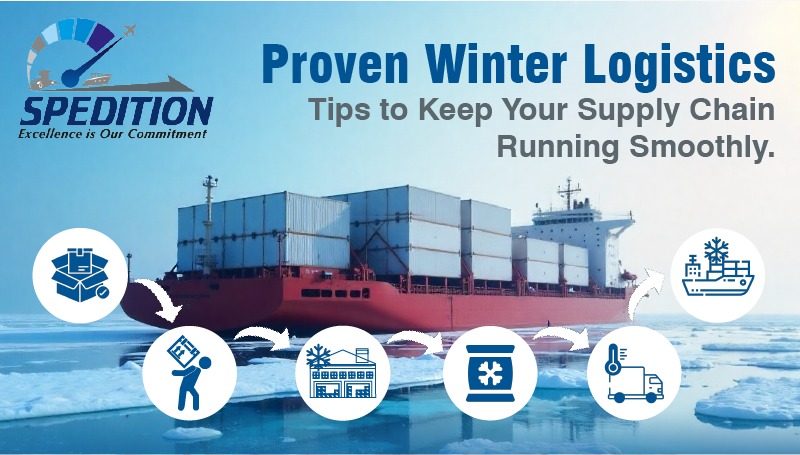
Proven Winter Logistics Tips to Keep Your Supply Chain Running Smoothly

Proven Winter Logistics Tips to Keep Your Supply Chain Running Smoothly

Introduction – When Cold Weather Tests Supply Chain Strength

Winter is pretty, but for logistics companies like Spedition India, it’s a season of obstacles. From icy roads to heavy snow and delayed deliveries, the cold months show how strong — or fragile — your supply chain can be. If you rely on fast deliveries and efficient operations to do business, winter logistics can make or break your brand.

This guide shares proven winter logistics tips and how spedition India helps you maintain operational efficiency, ensure safety, and keep your supply chain moving — even when the weather has other plans.

Understanding the Winter Logistics Challenge

Weather-Related Disruptions

Snowstorms, when they arrive, can close entire transport routes. Icy roads make driving hazardous, and thick fog impairs visibility for both air and road freight. These are the factors that will result in unsteady and uncertain holds which apply torque to the globalized supply chain. This is where Spedition India steps in and aids clients with timely delivery.

Transportation Bottlenecks and Delays

Winter brings chronic rail and port congestion. Ships can be held up because of frozen ports, and trucks face ice-choked highways. This slows the movement of goods and frequently results in inventory stockouts.

Increased Operational Costs 

More fuel, more heating, and more maintenance — winter operations are costly. Businesses spend extra on de-icing, tire replacements, and storage heating, impacting overall profit margins.

The Importance of Winter-Proofing Your Supply Chain

The best way to winter-proof your logistics isn’t merely by simply avoiding disruptions; it’s a matter of anticipating ways to stay ahead. A robust supply chain system reduces risk and customer dissatisfaction, while keeping business expenses in check even through the most extreme weather.

Fleet Maintenance – Keeping Vehicles Ready for the winter logistics 

Regular Inspections and Maintenance Checks

Cold weather affects fuel efficiency, tire pressure, and battery performance. Scheduling routine checks for tires, brakes, and heating systems keeps your vehicles winter-ready.

Essential Winter Logistics Equipment for Fleets

For each vehicle, provide snow chains, antifreeze and deicer in addition to a toolbox for emergencies. Its the small additions that make a big difference when your fleet encounters erratic winter roads.

Driver Safety and Training

Preparing Drivers for Harsh Conditions

Drivers are the engine that drives logistics. Teach them to drive in a defensive manner when there is snow or ice. Encourage the taking of rest stops, wearing of reflective clothing and checking the weather before each route.

Emergency Readiness and Communication Tools

Ensure every driver has access to real-time communication devices and GPS tracking. In case of breakdowns or road closures, dispatchers can quickly reroute or provide support.

Optimize Warehouse and Cold Storage Efficiency

Temperature and Humidity Control

Warehouse insulation in winter is extremely important. You know, if you use smart thermostats or temperature sensors or automated climate systems and don’t spoil your temperature-sensitive goods.

Worker Safety Inside Warehouses

Cool floors could also be slippery and dangerous. Offer anti-slip mats and proper lighting and heating areas where construction workers in the warehouse may slip or trip.

Using Technology for Real-Time Logistics Management

GPS Tracking and Predictive Analytics

Technology allows companies to predict and prevent problems before they occur. GPS systems and AI-based weather analytics help optimize routes and delivery schedules.

IoT Devices and Automation in Cold Chain Logistics

IoT-connected devices track the temperature and humidity of products while in transit, ensuring some level of cold chain requirements are achieved — particularly for medications and perishable food items.

Strengthening Communication and Collaboration

Supplier and Customer Coordination

In addition, strong relationships with both suppliers and customers enable greater coordination during a disruption. This allows all to prepare for potential delays by forecasting jointly.

Transparent Communication During Delays

But if delay is unavoidable, transparency is critical. First Alert: Notify your customers immediately and give updated delivery dates to continue to establish trust and reliability.

Building Supply Chain Resilience Before Winter Hits

Inventory Buffer and Backup Routes

Before winter arrives, stock up on essential goods and map out alternative routes for major delivery corridors. A small buffer can save your operations from long delays.

Strategic Partnerships with Reliable Carriers

Only work with logistics partners like Spedition India that have experience in winter logistics. Proficient carriers are best prepared to get through extreme weather without problems.

Sustainable Winter Logistics Practices in Winter

Cold weather often leads to higher fuel consumption, but sustainable logistics can change that. Use electric or hybrid fleets, optimize routes for minimal idling, and choose eco-friendly packaging materials. These practices save energy and reduce carbon emissions even in tough seasons.

Common Mistakes to Avoid in Winter Logistics

  • Ignoring early maintenance schedules.
  • Failing to plan for alternative delivery routes.
  • Poor communication with customers during delays.
  • Neglecting driver safety training.
  • Overlooking warehouse insulation and temperature control.

Avoiding these common pitfalls ensures smoother operations and fewer surprises during peak winter months.

Conclusion – Stay Prepared, Stay Reliable

Winter logistics can cut down your speed, but with the right logistics partner in way of logistics like Spedition India, one can use obstacles as an advantage. So when you put your money into fleet maintenance, driver safety and technology, you invest in keeping on-the-road time constant and customers happy.

Remember — a resilient supply chain isn’t built overnight, but with the right strategies, it can withstand any storm.

FAQs

  1. Why is winter logistics challenging for supply chains?
    Because of unpredictable weather, icy roads, and temperature-sensitive goods that require special handling. Hold hands with Spedition India and prepare to confront the challenges in a very relaxed manner.
  2. How can I keep my fleet running efficiently during winter?
    Regular maintenance, winter tires, antifreeze, and route optimization are key to preventing downtime.
  3. What role does technology play in winter logistics?
    Technology is used in tracking vehicles and predicting weather disruptions, monitoring product safety and even being aware of what a company is paying.
  4. How do companies maintain warehouse safety in winter?
    By insulating better, keeping humidity under control and with the right anti-slip flooring to avoid accidents.
  5. What’s the best way to communicate with clients during winter delays?
    Be transparent — real-time updates, updated schedules and proactive notifications build trust.

🔹 Ready to strengthen your winter logistics strategy?

Partner with Spedition India, your trusted logistics expert — ensuring smooth operations no matter how cold it gets.
📞 Contact us today and keep your supply chain moving seamlessly this winter!

0 0 Continue Reading →

Unveiling the Dynamics: Supply Chain Management in India

Introduction to Supply Chain Management in India

Getting goods and services to flow freely across myriad industries in India constitutes a complex supply chain management network. THis logistical journey moves forward, with each step finely tuned for maximum efficiency and customer satisfaction—from Mumbai’s lively markets to Chennai’s bustling ports.

Freight forwarders act as the unacknowledged conductors, masterminding this logistical symphony, as they wrestle with obstacles such as regulatory complexity and infrastructure bottlenecks.

supply chain management

This blog delves into the intriguing realm of supply chain managementinIndia, revealing the unseen forces behind its functioning and analyzing innovation and technology are transforming this vital sector.


Evolution of Supply Chains in India

The development of supply chains in India has moved from traditional systems into modernization and global integration. Indian supply chains were initially fragmented, relying heavily on man work with little technology in it. Globalization and technological advancement have all enhanced the transformation of supply chains in India. With modern supply chain management, efficiency, visibility, and agility have been imparted in different sectors and industries, which have created opportunities for the emergence of top 10 logistics companies in India.

Key Components of Supply Chain Management

Key components of effective supply chain management in India include procurement, manufacturing, logistics, distribution, and retailing. All of them together ensure the seamless flow of products from raw materials to the end customers. Procurement refers to the correct sourcing of materials in terms of price and quality. Meanwhile, manufacturing means producing goods in the best possible manner. In addition, logistics involves the coordination of transportation and warehousing activities. Furthermore, distribution means acting upon getting goods to the customer’s doorstep on time. Finally, retailing is concerned with merchandising the sold product to drive maximum sales.

These interconnected processes contribute to the success of Spedition India, one of the top 50 logistics companies in India and others striving for excellence in the field.


Challenges Faced in Indian Supply Chains

Despite progress, several challenges hinder seamless operations in Indian supply chains:

  • Infrastructure Constraints: Inadequate transportation networks and storage facilities impact logistics management.
  • Regulatory Barriers: These cause delays and compliance issues in operations.
  • Technology Adoption: Workforce resistance to using tools like automation and data analytics.

Such challenges are felt across key hubs like Pune, Kochi, Coimbatore, and Gurgaon, impacting the operations of even the best logistics companies in India.


Initiatives and Innovations

Several initiatives aim to overcome these challenges:

  • Government Efforts: Infrastructure upgrades and streamlined trade procedures.
  • Technological Advancements: Autonomous vehicles and AI-driven tools revolutionize operations.
  • Private Sector Innovations: Emphasis on collaboration and technology-driven solutions.

These advancements are evident in logistics companies in Pune, logistics companies in Mumbai, and beyond, showcasing how innovation is reshaping the industry.


Impact of Globalization

Globalization has changed the dynamics of foreign trade and promoted international cooperation, which has had a substantial impact on Indian supply chains. The international marketplaces foster growth for businesses beyond their respective nations nowadays. Cross-border trade has witnessed an increase with the introduction of e-commerce platforms, thus making fast and accurate supply chain solutions of utmost importance to manage international shipments.

For example, companies operating as a logistics company in Kochior a logistics company in Gurgaon are increasingly adopting global strategies to enhance competitiveness.

Sustainability and Green Supply Chains

Sustainability is the primary consideration for almost all companies, including Spedition India, one of India’s top 50 logistics companies. This mounting environmental sentiment is coercing businesses to implement sustainable supply chain processes. Compressing carbon emissions will enhance the corporate image, helping the company to attract environmentally conscious customers.

Digital Transformation in Supply Chains

In supply chain management, the digital revolution is paving the way for inventive advancement. IoT devices enable real-time tracking and monitoring, thus enhancing supply chain visibility. Big data analytics transforms the decision-making process by giving decision-makers useful insights out of vast amounts of data. Also, block chain applications improve security and transparency in transactions between stakeholders to enhance efficiency and build trust in the supply chain.

Future Trends and Projections

The future, as it seems, will see automation and robotics revolutionize the supply-chain industry by accelerating and refining processes. AI will change supply chain management with predictive features that will optimize inventory control and demand forecasting. This means using predictive analytics, which allows specific companies to predict disruption before it occurs and be able to take proactive measures aimed at increased operational resilience.

Role of Startups and SMEs

With flexible methods catered to specific markets, startups, and SMEs are essential to bringing about disruption and innovation in the supply chain landscape. Flexibility and creativity allow smaller players to carve unique industry ecosystem positions. The ability to quickly adapt to changing market requirements makes these smaller players strong contenders for redefining traditional logistics paradigms in innovative ways that challenge established practices.

Furthermore, creativity is embedded in the genetic makeup of startups and SMEs; hence they nurture innovation. Freer from the burden of tradition, these businesses have an appetite for experimenting with new ideas and unconventional approaches. Startups and SMEs are being instrumental for leading disruptive innovations challenging the logistics status quo-such as drone deliveries for last-mile logistics, artificial intelligence predictive analytics, or block chain technology for secure and transparent transactions.


Education and Skill Development

Education and skill development training programs play a pivotal role in enhancing academic curriculums for future supply chain professionals. To assist them better navigate the complexities of supply chain management, students receive real-world case studies, industry-relevant certifications, and hands-on experience. In today’s fast-paced business environment, staying current with new trends and technologies is essential for success in occupations like freight forwarders and logistics managers.


Supply Chain Resilience and Risk Management

Supply chain resilience and risk management have grown into top priorities following worldwide disruptions, such as the recent pandemic. Increasingly in India, top logistics companies are paying attention to pandemic preparedness by implementing acceptable contingency planning to cover vulnerabilities in their supply chains. Agents can then mitigate risks effectively and maintain critical supplies’ continuity through agility, flexibility, and redundancy in core operations. With this proactive approach, the businesses can adjust fast to unexpected challenges and keep working through the crisis.

Collaborative Supply Chain Networks

In today’s global economy, collaborative supply chain networks have completely changed the way firms’ function. Through supplier collaboration and inter-organizational cooperation, businesses can improve efficiency, optimize workflow, and ultimately provide customers with more value.

 Freight forwarders play a key role in this interconnected web of logistics, ensuring that goods move seamlessly from suppliers to end-users. The diverse stakeholders in the supply chain ecosystem have a symbiotic relationship that fosters innovation and sustainable growth in addition to increasing responsibility and transparency.

Regulatory Frameworks and Compliance

Businesses need to engage actively with regulatory frameworks and compliance standards in any way that matters to fulfill legal obligations and ethical considerations inherent in supply chain activities. Strict adherence to legal standards helps mitigate risk and protect reputation, build trust with partners, and assure long-term viability. Today, an ethical business mindset is critical, where environmental impact and social responsibility can no longer be ignored. By embedding these principles into their supply chain management processes, organizations can show that they can operate ethically while complying with changing regulations.

Cultural and Ethical Dimensions

At Spedition India, we prioritize cultural and ethical dimensions in our supply chain management and logistics operations. Embracing diversity

and inclusion is not just a goal but a fundamental aspect of our ethos. Having a varied staff encourages creativity, opens our eyes to new ideas, and improves

our capacity to serve our clients well. Every link in our supply chain follows the highest levels of honesty and accountability, thanks to our dedication to ethical

sourcing procedures. Additionally, by partnering with suppliers who share our values, we create a network built on trust and sustainability. As a result, this

benefits not only our business but also the communities in which we operate.

Metrics and Performance Measurement

In measuring our performance, we rely on various performance indicators and key performance indicators (KPIs) applicable to logistics

and supply chain management. The KPIs assist us in analyzing and optimizing aspects of our operations from managing inventories

to transportation efficiencies. We strive for perfection and newness, finally corroborating against industry-level data and benchmarks.

By being the frontiers in performance measurement, we ensure that quality service attitudes are instilled in clients, with considerations for

cost efficiency and sustainability.Success in the logistics business, according to Spedition India, hinges on the value-adding principle of

providing reliability and integrity throughout the process.

Conclusion

In conclusion, globalization, technical advancement, and a move towards sustainability are all having a significant impact on the supply chain management

scene in India. Moreover, a more effective and robust supply chain ecosystem is being paved over by initiatives and innovations. However, despite these

advancements, ongoing obstacles—such as infrastructure constraints and regulatory barriers—still persist. The dynamics of supply chain management are

changing quickly to meet the demands of a dynamic global economy, from the emergence of collaborative networks and digital transformation to the necessity of ethical sourcing.


At Spedition India, we’re dedicated to handling these challenges with dexterity, vision, and a commitment to quality. We continue to set the standard for value-added solutions delivery that promote efficiency, dependability, and integrity throughout the supply chain by embracing global competitiveness and strategic positioning.

Let’s set out on this transformative adventure together, where every obstacle is met with opportunity and each accomplishment is honored as evidence of our group’s resiliency and resolve.

0 0 Continue Reading →
devnergy